Homily, A Homily About Nothing: An Alternative Reading of the Parable of the Talents
Twentieth-Fifth Sunday after Pentecost, Proper 28A, 2023
Good Shepherd Episcopal Church
Tequesta, FL
The Rev. Derek M Larson, TSSF
Today’s Lectionary Readings:
Judges 4:1-7
Psalm 123
1 Thessalonians 5:1-11
Matthew 25:14-30
In the name of God: Father, Son, and Holy Spirit. Amen.
One of my favorite wisdom teachers, Winnie the Pooh, once said “People say nothing is impossible, but I do nothing every day.”
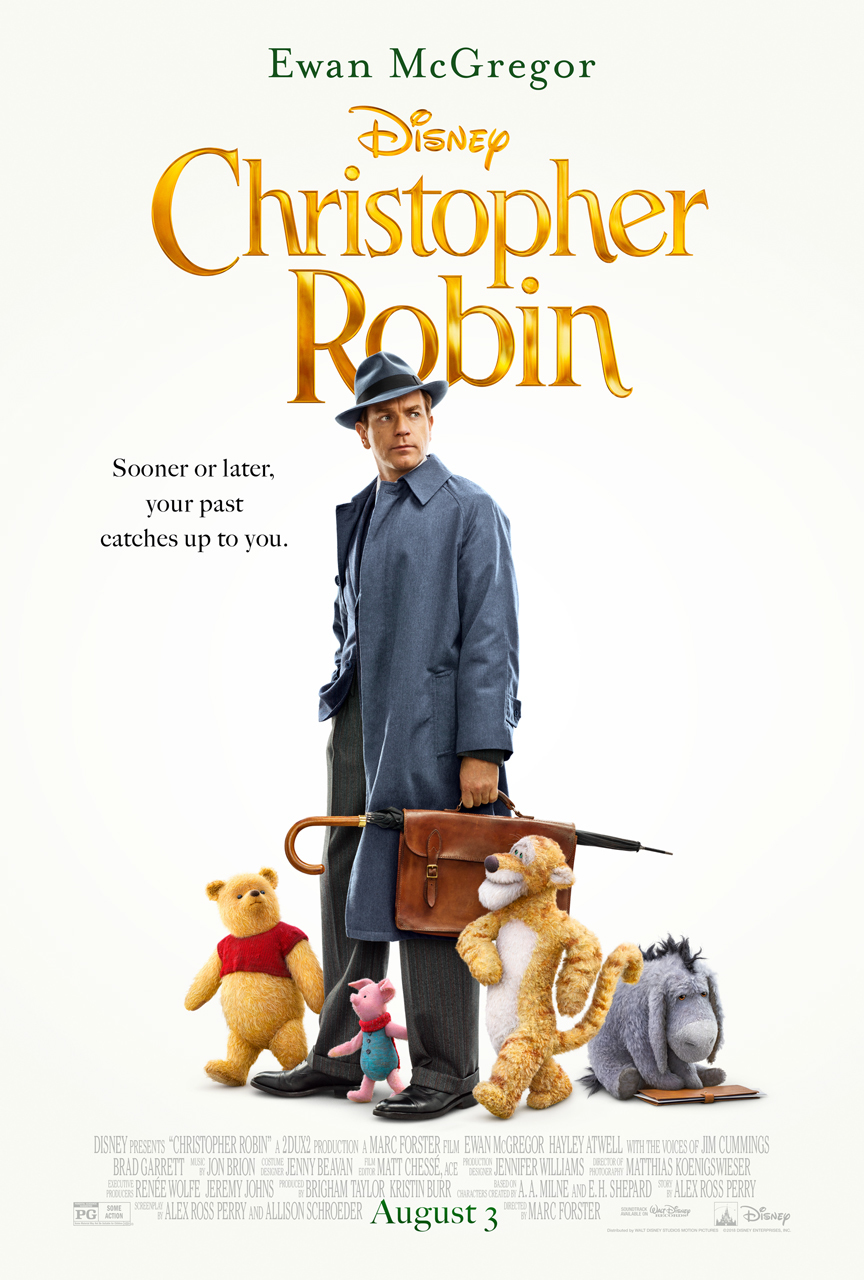
The other night my family watched the 2018 movie Christopher Robin, which tells the story of an imaginative boy who grew to adulthood, leaving behind his Hundred-Acre Wood Friends. All grown up, Christopher works as the Efficiency Manager of Winslow Luggage, but finds himself consumed by work and is home with his wife and daughter very little. One holiday weekend as his family prepares to go out to the country, he finds himself under the finger of his boss, Mr. Winslow who puts the pressure on him to find cost cuts, forcing him to work over the weekend to meet a deadline while he himself spends the day on the golf course. “Dreams don’t come for free,” he tells Christopher, “you have to work for them. Nothing comes from nothing.” A lesson Christopher later conveys to his own daughter as he explains to her why he cannot go with her to the country for the weekend. “Nothing comes from nothing.”
It’s a lesson I imagine that could have also been said by the slave-master in the parable from today’s gospel reading. In it, a man leaves on a journey for a while and gives a task for three of his slaves to manage large pieces of his portfolio. When he returns, two of the slaves have doubled his investment and are rewarded for it, but one, for fear of his master’s corner-cutting harshness, returns the investment as it was given to him, having done nothing with it. And so he is chastised and cast out into the darkness for it. “Nothing comes from nothing,” you can almost hear the slave-master say.
Much like last week’s passage, it’s another difficult parable in this series of parables about false messiahs and the return of Jesus. The traditional interpretation of the passage is that it is our task to use what God has given us to further God’s kingdom. And while that’s a good and important lesson, again, the story itself, carries with it some problems, and I’m concerned that if we read it the wrong way, we might internalize another unintended lesson.
If we are not careful, this parable might seem to suggest that our worth is dependent upon our productivity. The things we accomplish. Our deeds. And in our 21st century, capitalist America, that’s an unintended message to which we are particularly prone.
In this parable, the slave-master calls his slaves “good and faithful” only when they have accomplished something. Only when they have won him a profit, but the one who did not increase the bottom line, he called “wicked, lazy, and worthless.”
The words feel particularly harsh, especially for someone who was simply afraid, but how often do we use those same words for ourselves? How often does the slave-master’s voice creep into our own heads and we feel worthless because we have not accomplished all that which we feel we should have accomplished? How often have we tied our importance to the things we do? And thus how often have we prioritized work in our lives over and against the less productive but the more important things in life, like family, friendships, and rest?
Perhaps that’s what Christopher Robin was feeling under the pressure of Mr. Winslow. “If I can just accomplish this, this, and this, then I will be appreciated. If I do this important work, than I will be seen as important.”
But then, just at the most inconvenient time, like the Holy Spirit, Winnie-the-Pooh unexpectedly shows up in Christopher’s hustle to meet his master’s expectation and calls it all into question by reminding him of his importance. Reminding him that long before he did a single thing, he was important, and that hasn’t changed. Perhaps this Mr. Winslow is, what Pooh calls, a woozle. A fear-mongering creature that makes us forget what is really important in life.

by Clayton & Bell, London,
For St Edith’s Church, Bishop Wilton,
Executed late 19th century,
© St Edith’s Church, Bishop Wilton
As I read our parable again, I wonder if this slave-master is also a woozle. We tend to assume that he represents Christ, but perhaps, like last week, he represents the opposite. Perhaps the bridegroom from last week’s parable and the slave-master from this parable are meant to be read together as examples of what Christ is not, so that they might contrast with next week’s parable about what Christ is. In these two parables the bridegroom and slave-master woo their subjects with promises of feasts and joy, but in the end they only include those who have something to offer them and exclude those who have nothing. “Nothing comes from nothing.” But in next week’s parable, the sheep and the goats, in which Jesus says, “just as you [care for] the least of these…, you did it to me” it is those who have nothing, and those that care for those with nothing that enter the “the kingdom prepared for them from the foundation of the world.” Apparently sometimes something comes from nothing. And in that parable it is not a bridegroom or a slave-master who welcomes them, but a father who loves them.
Perhaps, again, we are reading this parable upside down. Because in God’s kingdom the work we do is important, but it is not the work we do that makes us important. Rather it is our belovedness as God’s children that makes us important. In God’s kingdom the work we do is important, but it is not the work we do that makes us important.
Today, maybe you feel like you’ve not accomplished everything that you feel you should have. Maybe you feel like you’re not important because the work you have done is not important enough. Perhaps you feel like you’ve done nothing in this life, or perhaps you feel like you have given everything in this life, but it has amounted to nothing. Know this: your nothing, in God’s eyes, is most certainly something. Because you are something. Come and enter your father’s joy. Amen.
 Thoughts on Faith