Homily, Counting the Cost
The Fourteenth Sunday after the Pentecost (Proper 19C), 2025
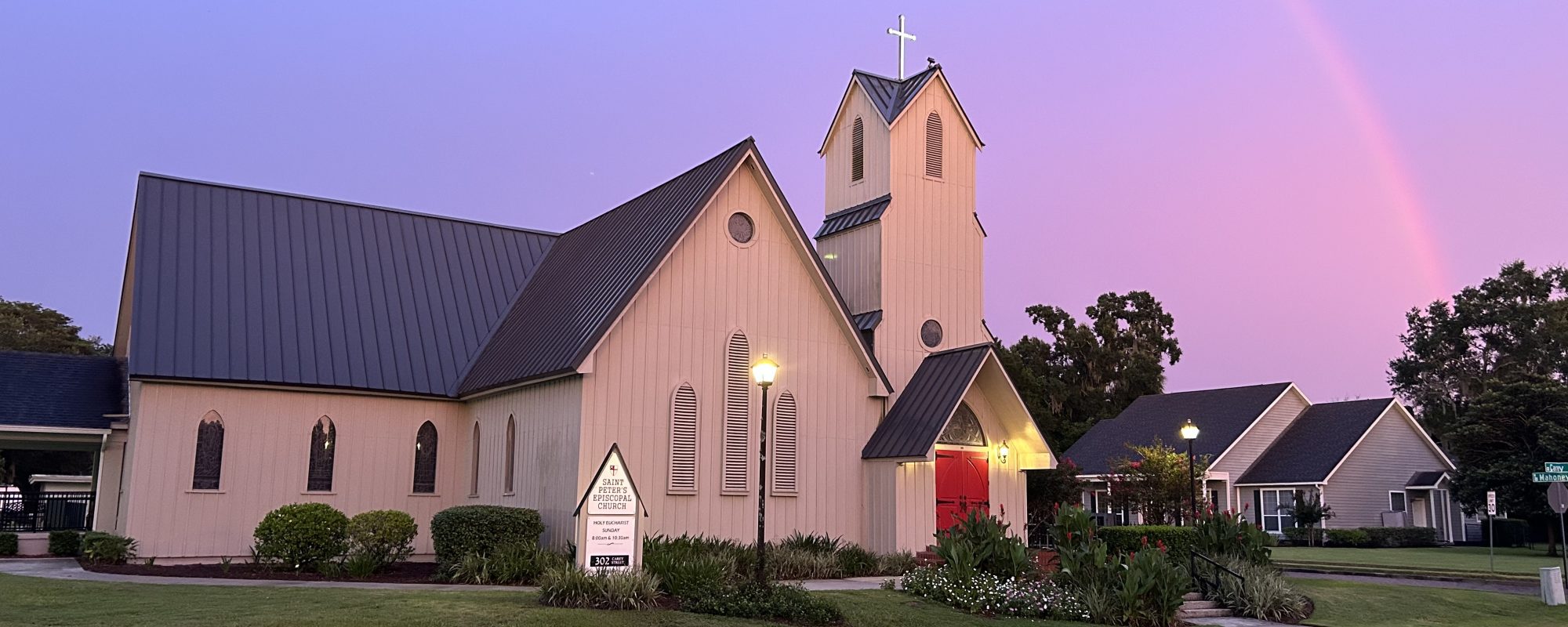
St. Peter’s Episcopal Church
Plant City, FL
The Rev. Derek M Larson, TSSF
Today’s Lectionary Readings:
Jeremiah 4:11-12, 22-28
Psalm 14
1 Timothy 1:12-17
Luke 15:1-10
In the name of God: Father, Son, and Holy Spirit. Amen.

It’s said that when people heard his preaching, some would cry out in fear for their lives. It’s said that some could feel the flames reaching up to lick their heals as they listened. It’s said that his sermon brought many to their knees in prayer to escape God’s condemnation. Have you ever heard preaching like that? I’m talking about perhaps the most famous American sermon of all time, Sinners in the Hands of an Angry God by 18th century preacher Jonathan Edwards, which left behind a long tradition of Fire and Brimstone preaching. Preaching that uses fear to try to scare you into heaven. Preaching that uses condemnation and judgment. Preaching that reminds you of just how horrible of a person you really are. That’s not my style.
But I wonder if that’s the kind of preaching the Pharisees and scribes were expecting from Jesus when they saw the tax collectors and sinners gathering near him. It’s not the kind of preaching they got. Instead, Jesus tells three stories about the love and mercy of God. Three stories (we get two of them today) about all the steps God will take just to find one of God’s lost children.
The first story describes God as a shepherd with a hundred sheep and who leaves his entire flock just to find one that has gone missing. And when he has found it, he lays it on his shoulders and rejoices. The second story describes God as a woman with ten silver coins, who turns the house over looking for one she realize is missing and rejoices when she finds it. The third story, which we don’t hear today, is Jesus’ famous story of the prodigal son, about a young man that leaves his family and squanders his wealth, but upon coming home finds himself in his father’s embrace, rejoicing.
Jonathan Edwards, in his famous sermon, describes a God that is violently angry and whose hands hold all sinners over the flames of fire. Jesus describes a God that is searching and searching everywhere just to find a wayward sinner and bring them home. And when they are found, a joyful party is thrown in heaven.
There are two postures here, and both of them show up in our passage from Luke—the grumbling of the Pharisees and scribes and the rejoicing of the angels in heaven—but only one of them comes from God.
I think most of us already have a fire and brimstone preacher within. We already have a voice within us that tells we’re not good enough, that we’re not lovable, that nobody likes us or wants us, that God is angry or disappointed in us. Most of us have an internal voice that is constantly putting us down. But that is not the voice of God. And so when Jesus preaches, he counters that message with another: you are so beloved by God, that God can’t stand the thought of being without you and God will do whatever it takes to bring you home. You are beloved.
As a preacher, I don’t feel the need to tell you over and over again that you are a sinner, because the voice in your head already tells you of that all the time. The harder message to hear and believe is the message of Jesus: you are beloved.
At St. Peter’s we call this, Affirming Theology. A theology that affirms God’s love for every human being. Not an affirmation of every thought, word, and deed of every human being, but an affirmation of belovedness whatever those thoughts, words, and deeds may be. An affirmation of God’s love that leads to repentance, as Jesus points out in these stories.
Repentance ought not be such a heavy and intimidating word. It is not about judgement and condemnation. Repentance is a homecoming. Repentance is being embraced by the love of God. Repentance is not about anger; it’s about rejoicing. Too often the word repent conjures up images of the flames of hell licking our heals when it should call to mind the tender voice of God calling out to us. Repentance is the laying down of those fire and brimstone preachers within, to listen to the loving voice of God.
Which is a voice we need more of in this world. The truth is there are way too many Fire and Brimstone preachers in this world. Not only pastors, but neighbors, family, Facebook Friends, Social Media influencers, news pundits, politicians, and activists. This world is full of voices of condemnation and judgment. Full of the grumbling of Pharisees and Scribes that have too much to say about the unworthiness of others. Too much to say about the sins of those around them.
You are sinner, but all of us are. We’re wounded beings that find ourselves wounding others. But that is not the end of the story. Because God seeks us out—each one of us—and offers us healing. God isn’t ready to send us to hell; God is ready to go through hell to find us. You are not worthless sinners in the hands of an angry God. You are wounded children in the arms of a loving God. So put away those voices of grumbling, and listen to the voices of angels. God loves you and God loves every sinner on this earth. Can you rejoice in that love? Amen.
Questions for Reflection
- How do I perceive God’s love for me, and in what ways does this perception affect my self-worth and actions?
- In what areas of my life am I holding onto the voice of condemnation rather than embracing the message of being beloved by God?
- How can I embody Affirming Theology in my interactions with others, especially those who I may see as unworthy?
- What does the concept of repentance mean to me, and how can I view it as a joyous homecoming rather than a burden?
- How can I actively challenge the voices of grumbling and condemnation in my life, replacing them with messages of love and acceptance for myself and others?
 Thoughts on Faith