Homily, Enough Humility to Change Your Mind
The Eighteenth Sunday after the Pentecost, Proper 21A (2026)
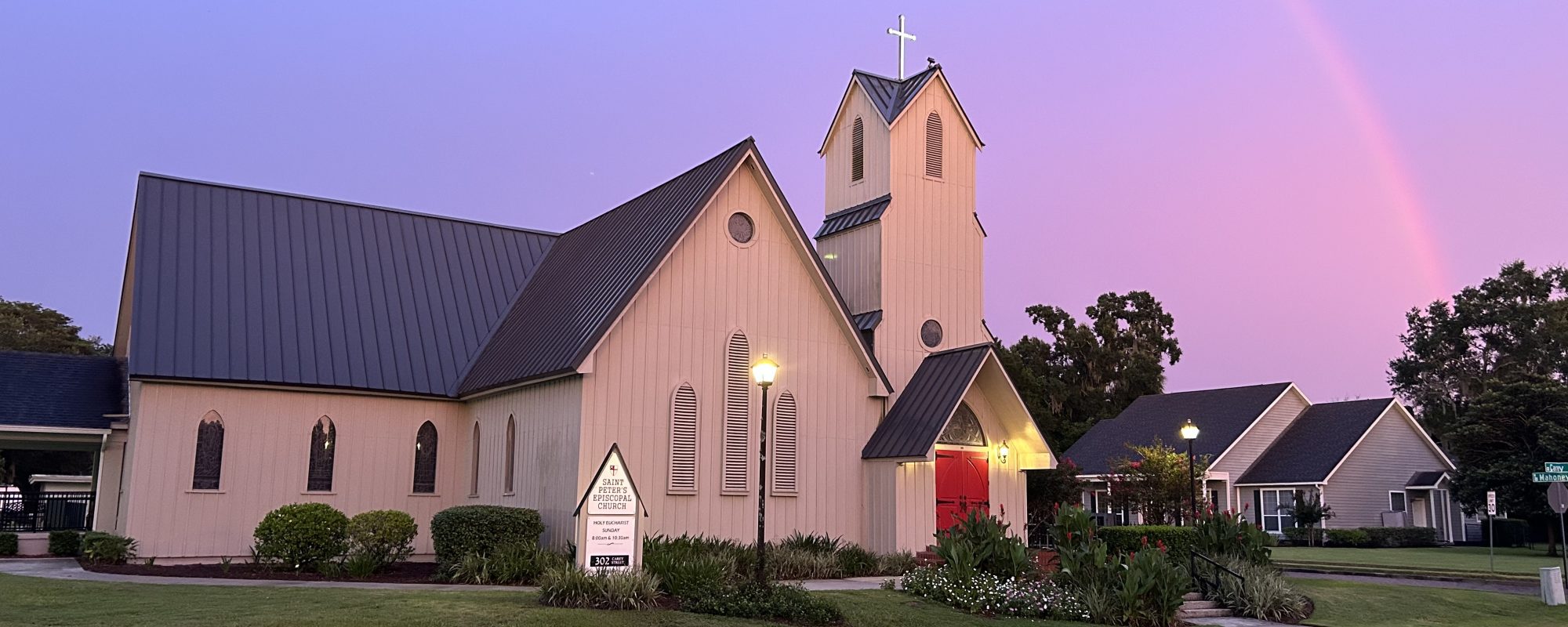
St. Peter’s Episcopal Church
Plant City, FL
The Rev. Derek M Larson, TSSF
Today’s Lectionary Readings:
Ezekiel 18:1-4,25-32
Psalm 25:1-8
Philippians 2:1-13
Matthew 21:23-32
In the name of God: Father, Son, and Holy Spirit. Amen.
“Nothing you say can change my mind.”
Have you heard someone say that? Or maybe you’ve said it yourself?
Depending on the context, that can feel like power. That’s something we can admire. To be unwavering in your beliefs. To stand firm. To be consistent. Reliable. Decisive. Those things are valuable to us, and in our society we often idolize people like that.
And on the flip side, when someone changes their mind, we often criticize them for it. We call them a hypocrite, a flip-flopper, a flake. We say they are fickle, unstable, or weak-spined. Especially when it comes to our leaders.
And yet, maybe all of that isn’t always particularly helpful or healthy.
Because after all, changing your mind can also be a sign of personal growth.
It can be a sign of empathy—allowing yourself to see something from the perspective of another.
It can be a sign of intellect—collecting new information and adjusting your perspective accordingly.
It can be a sign of courage: stepping out of a comfort zone into something new.
It can be a sign of humility—the ability to admit that you were wrong.
And that matters. Not only for our own growth. It matters for the life we share with one another. A community cannot grow very deep if everyone in it must always be right.
Over the past few weeks, we’ve been talking about Christian community. We’ve talked about what happens when conflict arises, about making room for differences in belief, and about walking together toward a common goal. But today we bring it all together with a final tool for Christian community: humility and the capacity, when necessary, to change our mind. A healthy Christian community necessarily depends upon those skills.
That is the challenge of Christ in our gospel reading today.
Today we reach a point of the Gospel of Matthew when Jesus enters Jerusalem and finds himself challenged by the religious authorities there. In fact, over the coming weeks, the gospel readings will keep returning to this tension between Jesus and the religious leaders of his day. And that tension that we encounter in the story of Jesus is meant, for us, to be not only descriptive of his day, but also a lesson for us. Where might tension show up in our communities? Why does it emerge? How do we handle that tension?
For Jesus’ community, it came from a certain level of pride and attachment to beliefs that incapacitated their ability to see God working among them. They were so attached to their religious belief structures—their theological boxes—that when Jesus said and did things that challenged then, they completely rejected him. Even as they witnessed with their very own eyes the fruit of the work God was doing in their community—healing, repentance, joy, prayer, mercy for those in need—they couldn’t wrap their minds around it.
And so in our gospel passage today, Jesus tells them a parable. A man had two sons whom he asked to go work in the vineyard. The first son said no, but then changed his mind and went. The second son said yes, but then refused to go. So which son did the will of his father?
“The first,” they responded.
And Jesus essentially replies, “In the same way, it’s not enough to simply say that you follow God; you have to actually do it. And you have to do it, even when it requires you to change your mind.” “You didn’t believe God sent John the Baptist” Jesus continues, “He didn’t fit into your theology. And even after seeing the good fruit of his ministry, you refused to change your mind about him. And the same thing is happening now. And because you are unable to change your mind, even when the fruit is right before you, you are missing out on the kingdom of God.”
See, the chief priests and elders were unwavering in their belief. They stood firm. They were dependable. Decisive. But in the face of what God was doing, they were being asked to let go of something. They were being asked to have some humility. They were being asked to change their minds. And they were unable to do it.
Sometimes God asks us to stand firm in what we believe. But sometimes—hear this—sometimes God asks us to let go of something we believe. Sometimes the things we believe are actually preventing us from seeing the fruit of God’s work among us. And the question is: will we have the courage and the humility to change our minds so that we can follow Jesus to unexpected places?
It’s a question we also hear in the background of St. Paul’s words to the Philippians in our epistle today. Paul is speaking to a Christian community about how they are to live together. “Do nothing from selfish ambition or conceit,” he writes, “but in humility regard others as better than yourselves.” Look not only to your own interests, but to the interests of others. “Change your mind, and let the same mind be in you that was in Christ Jesus. Though Christ was in the form of God, he did not cling to his status. He emptied himself. He took the form of a servant and became human, sharing our life even to the point of death on a cross.”
Christ, the God who never changes, changed his status and position in this world, to draw near to us.
And St. Paul says: Let that same mind be in you. A mind of humility. A mind willing to change itself in order to come alongside of another.
Here are St. Peter’s, we call that spiritual curiosity. A posture of humility which recognizes that we still have things to learn. That there are things that we may not yet understand. That the people beside us, even the ones that rub us the wrong way, may have something to teach us. It is the capacity to change our mind and to grow.
I’m not talking about having a wishy-washy faith. I’m not talking about relativism. I’m talking about having a faith strong enough to follow God even when God leads us outside of our own personal ideologies. A faith strong enough to grow, and to change, and to draw ever closer to God as God is, and not as we think God should be.
And I’m talking about the kind of community in which we can do that together. The kind of community in which we can at times, admit that we were wrong, change our mind, and do something different.
That is the kind of humility the first son shows in the gospel. He said no. Then he changed his mind and went into the vineyard. His first answer was not his final answer.
So what are the things that we are holding onto that are preventing us from fully participating in God’s kingdom? What beliefs do we have about ourselves, or others, or the world around us, or about God that we cling to so tightly that, even when Jesus asks us to let go of them, we are unable to do so?
To be part of a Christian community we have to have humility. To follow Jesus, we sometimes have to change our mind. So let us, then, have that same mind that was in Christ Jesus, that we may follow him beyond our attachments and comfort zones into the vineyard and wherever it is that he leads. Amen.
Questions for Reflection
- What beliefs or convictions am I currently holding onto that may be preventing me from seeing the work of God in my life or in my community?
- Can I recall a time when I changed my mind about something important? What led to that shift, and how did it impact my relationships or my understanding of my faith?
- How do I typically respond when faced with differing opinions or beliefs? Am I open to change, or do I tend to hold firm to my views?
- In what areas of my life do I feel called to practice greater humility? How can I demonstrate this in my interactions with others?
- How can I cultivate a mindset of spiritual curiosity, remaining open to learning from those around me, even when it challenges my current perspectives?

