Homily, Every Earthy Atom of Our Being
Advent Lessons and Carols, 2025
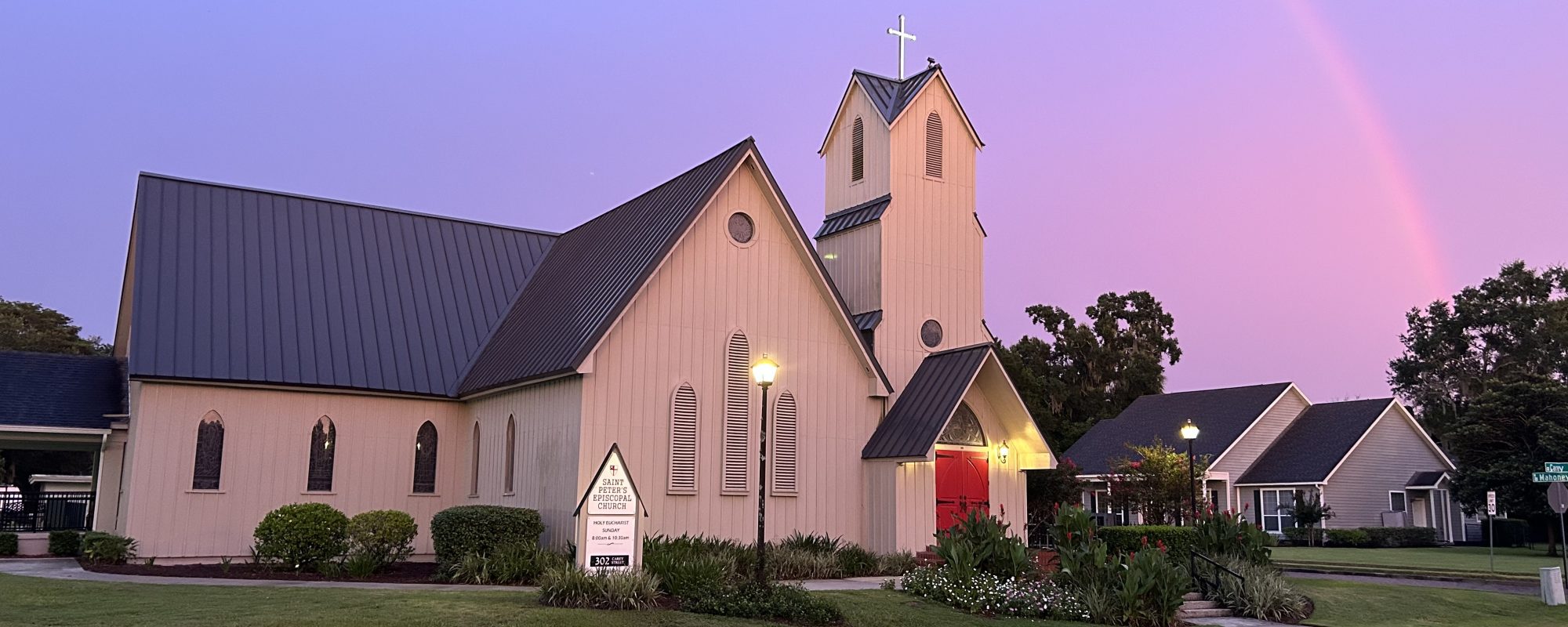
St. Peter’s Episcopal Church
Plant City, FL
The Rev. Derek M Larson, TSSF
In the name of God: Father, Son, and Holy Spirit. Amen.
Every Tuesday morning, I awake and pull out my phone and open up my favorite app and it says to me, “Your baby is as big as a blueberry” or “Your baby is as big as a strawberry” or, as it said this week, “your baby is as big as a cucumber.”
As many of you know, LauraAnn and I are expecting our third child, a baby girl, and even though this is our third child, I am no less amazed by the miracle that is pregnancy. In the old days a child grew within the womb unseen, in darkness and in mystery. Today we can open an app or watch the baby move in an ultrasound, and yet it is no less miraculous and mysterious. How is it that a child comes into being? How is it that a baby grows little by little in a womb? I can’t seem to wrap my mind around it.
And yet however miraculous it is, I am also reminded of how utterly natural it is. This is the way of things. Enormous oak trees come from little seeds. Twelve foot gators come from small eggs. Even the mountains are pushed forth from creeping tectonic shifts. We are creatures of this earth. With bodies and flesh that grow from the primal elements.
Sometimes in the seasons of Advent and Christmas we over-spiritualize the message of the Incarnation. We think of Christ’s coming as an unseen moment in the heart. A coming that was perhaps once historical, but for us is spiritual. Supernatural. Beyond the physicality of this life.
But the message of the gospel is physical. It is natural. It is earthy.
In the grand story of today’s Lessons and Carols we began with Adam and Eve—in Hebrew the names mean earth and living— and how sin entered their bodies through saying no to God and the eating of forbidden fruit. We end our lessons with the story of Mary, and how salvation entered her body through saying yes to God and carrying within her womb the blessed fruit.
Eating, conceiving, birthing. This is an earthy story. And that is what is so shocking about it. That the God of heaven drew near to the dust of earth. That through the Holy Spirit God became a holy body.
Can you imagine?
What must it have been like to be God and the size of a blueberry slowly being shaped in a sac of amniotic fluid in the darkness of a womb?
And in becoming a body, God began the work of making every body holy. So that Christ comes to us not only in our spirits and in our hearts, but in the earthiness of our bodies, which is exactly where we long for him. In our aching backs. And broken knees. And wrinkled faces. And dirty, calloused hands. And stomach pains. And strained lungs. And clogged arteries.
These are the places that long for Jesus. These are the signs of Advent. The groaning expectation of the earthy, fleshy creation that St. Paul writes about in Romans 8. These are the voices of John the Baptist crying out in the wilderness, prepare the way of the Lord. Christ comes not just to spirits but to these, creatures of the earth.
Poet Scott Cairns puts it this way in his poem about the Annunciation, “Deep within the clay, and O my people, very deep within the wholly earthen compound of our kind…we all become the kindled kindred of a King.”
In this Advent season, pay attention. Listen to the cries of your body. Listen to the aches of the earth. Christ is coming, making all flesh holy. Not only in the womb, but in every earthy atom of our being. In holy darkness, God is becoming flesh.
Questions for Reflection
- How do I experience the physicality of my faith in my daily life? In what ways do I acknowledge the connection between my spiritual life and my bodily experiences?
- What are some areas in my life where I feel a deep yearning for God’s presence? How can I invite Christ into those physical and emotional spaces?
- Reflect on a moment when you experienced God’s presence in a bodily way. How did it impact your faith journey?
- In what ways can I cultivate awareness of the natural world around me during this Advent season, and how does that awareness enhance my understanding of the Incarnation?
- How do the stories of Adam and Eve and Mary resonate with my personal journey of saying yes or no to God? What might I need to prune in my life to prepare for Christ’s coming?
 Thoughts on Faith