Homily, Go Deep
The Fifth Sunday after the Epiphany (Year A)
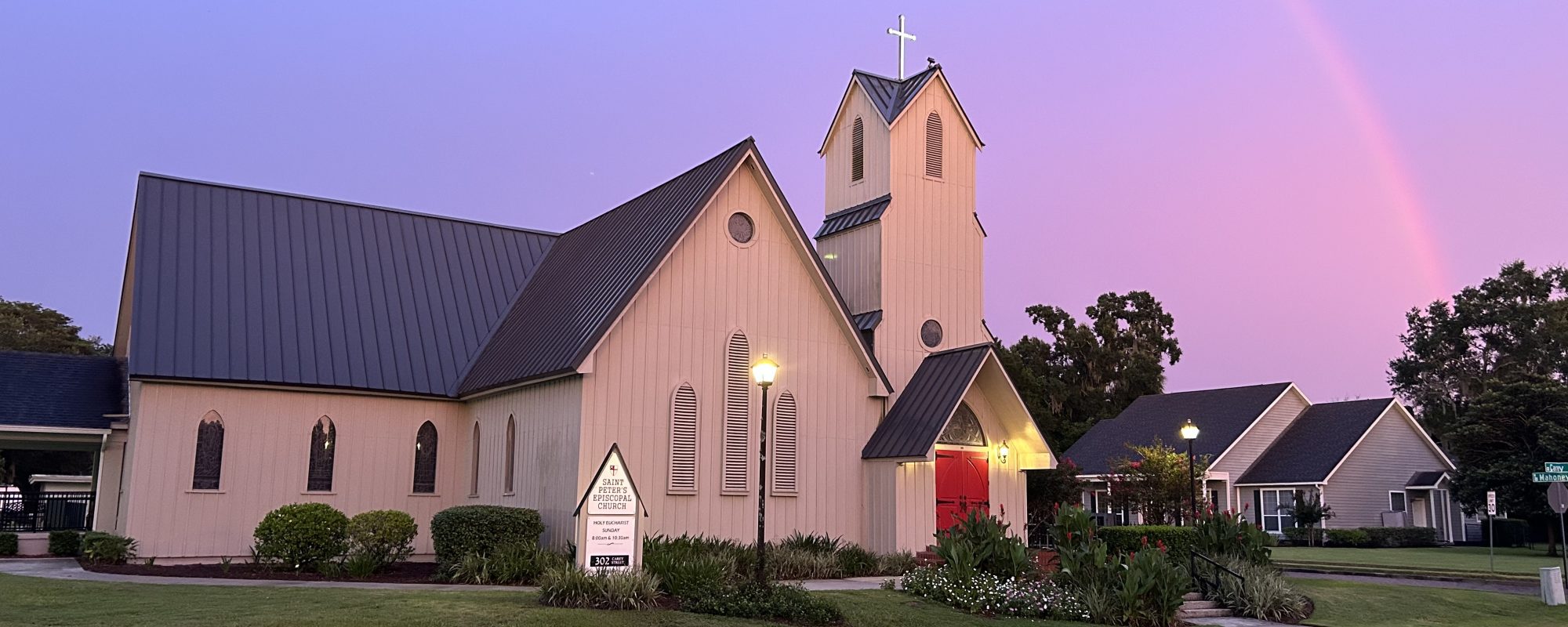
St. Peter’s Episcopal Church
Plant City, FL
The Rev. Derek M Larson, TSSF
In the name of God: Father, Son, and Holy Spirit. Amen.
It was the Notre Dame fighting Irish against the Army Black Nights, and Notre Dame was out matched in the bulk strength of the Cadets. Weighing on average 15 pounds more per man, it would be difficult to force that ball through the wall of opposition—a locomotive, some called it, but Notre Dame had a secret weapon.
The year was 1913, and up to that point the “forward pass” had barely been used. It had only been added to the rule book a few years prior, and all the teams continued to depend on brute force to carry the ball down field.
And that’s how the game started. But then came the play that changed everything. The ball snapped. The receiver took off. The quarterback launched it. And a 40 yard pass was completed. Touchdown. Jaws dropped. No one had ever seen it before.
And after doing it again and again, Notre Dame went on to win the game, make national headlines, and—most importantly—change football forever.
Brute force matters, but it is not the only thing that matters today. When the ball flies speed, agility, and accuracy are what matter. Players have to learn how to play close and how to play deep. They use the whole range of the field. When we hear those words “go deep!” we know to look down the field rather than where all the action is in the huddle. Because in the end whether forced little by little and or by a Hail Mary pass, what matters is the end zone and getting down the field.
By looking and passing deep, Notre Dame changed the game forever.
In our gospel passage for today Jesus says, “Go deep.” Don’t just play here in the shallow huddle. Go deep. Look to that end zone. Go deep.
A question, an accusation, about Jesus’ teaching had come up. The pharisees and others had accused him of abolishing the law and throwing out the Scriptures. And so Jesus sets the record straight. “Don’t think I’ve come to abolish the law and the prophets. I haven’t. I’ve come to fulfill them.” And in coming to fulfill them, Jesus changed the game.
For so many, living according to the Scriptures had become a sort of shallow, outward rule-following. It had become legalistic. Moralistic. It had everything to do with going through the motions and little to do with what happened in the heart. And lest we think this was a problem just for Pharisees in Jesus’ day, it’s not, but one that each one of us faces.
And so in his sermon Jesus tells his listeners to “go deeper.”
Don’t just follow the rules, be transformed by them. Don’t just go through the motions, allow those motions to draw you closer to the heart of God. Don’t just pay attention to the action of the huddle, turn your eyes down field. To the end zone. Go deep.
And in going deep, the law is not only obeyed, it is fulfilled. It is accomplished. That’s what Jesus means by those words “fulfill” and “accomplish”. He doesn’t mean double down on the law or get stricter on the rules or stronger on the enforcement. He means go deeper to their heart—to their purpose. For the point of the game is not the obeying of rules, but getting into the end zone. And the end zone is the kingdom of heaven—or what we could also call, the presence of God both now and forever.
Jesus’ sermon invites us to consider our motives, our intentions, and our purpose in our faith. Why are we here? What’s the point? What is the end zone?
I was reading a book a few weeks ago from an Evangelical author who offered a passing critique on mainline traditions like the Episcopal Church. He said that too often the faith of our churches have become places of therapeutic moralism. And I winced.
Therapeutic moralism. What he means by that, is that too often we come to church or practice our faith solely for the purpose of feeling better about ourselves as we seek to be nice people. And I think in large part, he’s right. We often come to the church feeling down so that we can hear a pep talk and prayers that will make us feel better, all the while emphasizing niceness as Christian living. Our goal is often to feel nice and to act nice. And there is a lot of good in that, and we need that, but if that is all there is, it is a shallow reflection of the gospel.
For the purpose of the gospel is transformation.
God loves you as you are. And God wants to bring deep healing to your soul. But healing comes not from pep talks and being nice, it comes from going deep. From opening ourselves up to the work of the Holy Spirit within through regular practices of prayer and service to the world.
Niceness is not the point of the game. It may be where much of the game is played. But the end zone is dwelling in the presence of God. Is allowing ourselves to be utterly transformed into the love of Christ.
The Pharisees mistakenly took rule following to be the point. We often mistake niceness to be the point. And so Jesus invites us to go deeper.
What is the point of your faith? What is the purpose of your presence here in this place? And are you willing to go deep? Are you willing to look further down the field to where God is drawing you closer to the end zone? Does your prayer life reflect, what St. Paul calls in today’s epistle, the depths of God? Or does it live in that shallow place of niceness, that helps you feel good but does little to change your heart?
Lent begins in a week and a half. And Lent is a beautiful season in which we make a 40 day commitment to deepen our faith, through prayer and service.
What will that look like for you? In what way will you allow God to transform you in that season? How will you set aside time each day to go beyond the shallow huddle of niceness to dwell in the depths of God?
Jesus says, I have not come to abolish the law but to fulfill it. He could’ve also said I’ve not come to abolish feeling nice and acting nice, but to fulfill it. There is something more than this shallow huddle—and Jesus is already down the field, calling us forward. So go deep, and find him there. Amen.
Questions for Reflection
- In what areas of my life am I currently following rules or practices without truly engaging with their deeper meaning?
- How can I shift my understanding of faith from mere moralism to a genuine transformation of my heart?
- What specific practices can I implement during Lent to deepen my connection with God and enrich my spiritual journey?
- How do I define my “end zone” in faith, and what steps can I take to move closer to that goal?
- In what ways can I be more intentional in my prayer life to explore the depths of God as described by St. Paul?
 Thoughts on Faith