Homily, Green Pastures and Still Waters
Fourth Sunday of Easter, Year B, 2024
Good Shepherd Episcopal Church
Tequesta, FL
The Rev. Derek M Larson, TSSF
Today’s Lectionary Readings:
In the name of God: Father, Son, and Holy Spirit. Amen.
There is a place where the water of the Loxahatchee flows under the empty branches of a magnificent, old, white tree, whose roots are exposed from years of soil drifting away. It’s quiet there, and though the tree looks like it is close to death, you can almost hear it whispering wisdom to the younger, greener trees surrounding it. I went there once, in my kayak, and touched its roots, and there I heard the voice of God, and there I felt my soul revived.
There is a place where the path stretches high across a hill of green grass and scattered rock along the coast of the cold, clear waters of the North Atlantic as far as the eye can see. If you reach the end of the path, you will find yourself at the shore standing in a bed of smooth stones, just out of reach from White Point Island, where only the birds go. I went there once and picked up a stone, and there I heard the voice of God, and there I felt my soul revived.
There is a place, not far from here, where I like to lay down in the grass at night and watch the stars under moonlight. Listening to the quiet night sounds and thinking about the ones I love. I went there and I heard the voice of God, and I felt my soul revived.
Have you encountered a place like that? Is there a place in the beauty of nature where your soul has been revived—where you could hear clearly the voice of God?
Our Psalmist, this morning, describes a place like that.
We don’t know much about the Psalmist. Who they are or where and when exactly they lived. It could have been King David, or it could have been someone else entirely, perhaps a woman, but it’s clear in her words that she was going through something hard. She describes it as a death shadow. She speaks about those who trouble her. And so we can imagine that her soul was somewhat weary from the stress and worries that she was experiencing in life. She probably felt weighed down and trapped by those things, unable to get out from under them. I wonder if that sounds familiar to anyone.
And yet in the midst of it she finds solace, and she composes this beautiful poem. A song that describes God as a Shepherd. And as she lays out the scene for us—green pastures, still waters, natural pathways—you can almost imagine that these images are coming from her own experience. That perhaps she even composes these very words while standing in a field, gazing at the beauty of the natural world around her. I wonder what it was she was looking at. I wonder if she felt a breeze in her hair. I wonder what bird songs there were. This Psalmist draws a picture for us of a time she found God as her shepherd in the beauty of nature.
It’s a common theme in the Psalms, actually. In fact, in the very next Psalm—Psalm 24–the Psalmist speaks vividly about the earth, the seas, and the rivers of the deep all belonging to God. We tend to think churches and temples are the places we meet God, but the Psalmists continually testify that God also meets us in the natural world.
And so our Psalmist is led through green pastures and beside still waters by the Lord, who is her shepherd, and she feels her soul revived.
It’s interesting that the second half of the Psalm, then, shifts in orientation. Suddenly, the Psalmist is at a table, and in a house. But something is different. The God she met in nature, is still with her. She feels God’s presence. Her soul continues to be strengthened by the comfort that the shepherd brings her—even when those who bring trouble are right there before her. And even the way she speaks is different. While in the beginning she speaks about God as her shepherd, now she speaks directly to God her shepherd, “You spread a table before me.” “You anoint my head with oil.” The presence of God has come back with her into the grind of everyday life, as her companion, and promises to remain with her all of her days.
Something about her experience of walking with God through green pastures beside still waters gave her the strength to walk beside those who trouble her back home in daily life.
We don’t know much about the Psalmist. Who she is or where and when exactly she lived, but her experience is one that resonates with us. We who also walk among those people and things that trouble us. That worry us. That weary us.
So, if that’s you, today, I have a very, very practical question for you. When was the last time you went for a nature walk? When was the last time you looked up at the stars? When was the last time you paid attention to the natural world?
When we make ourselves available to God’s creation, we come to experience the presence of the God of creation. Something in us awakens in the natural world, and leads us to the very dwelling place of God. And when we set aside time to spend in nature with God, to let our souls be revived in it, then it gives us the strength to go back to our daily lives.
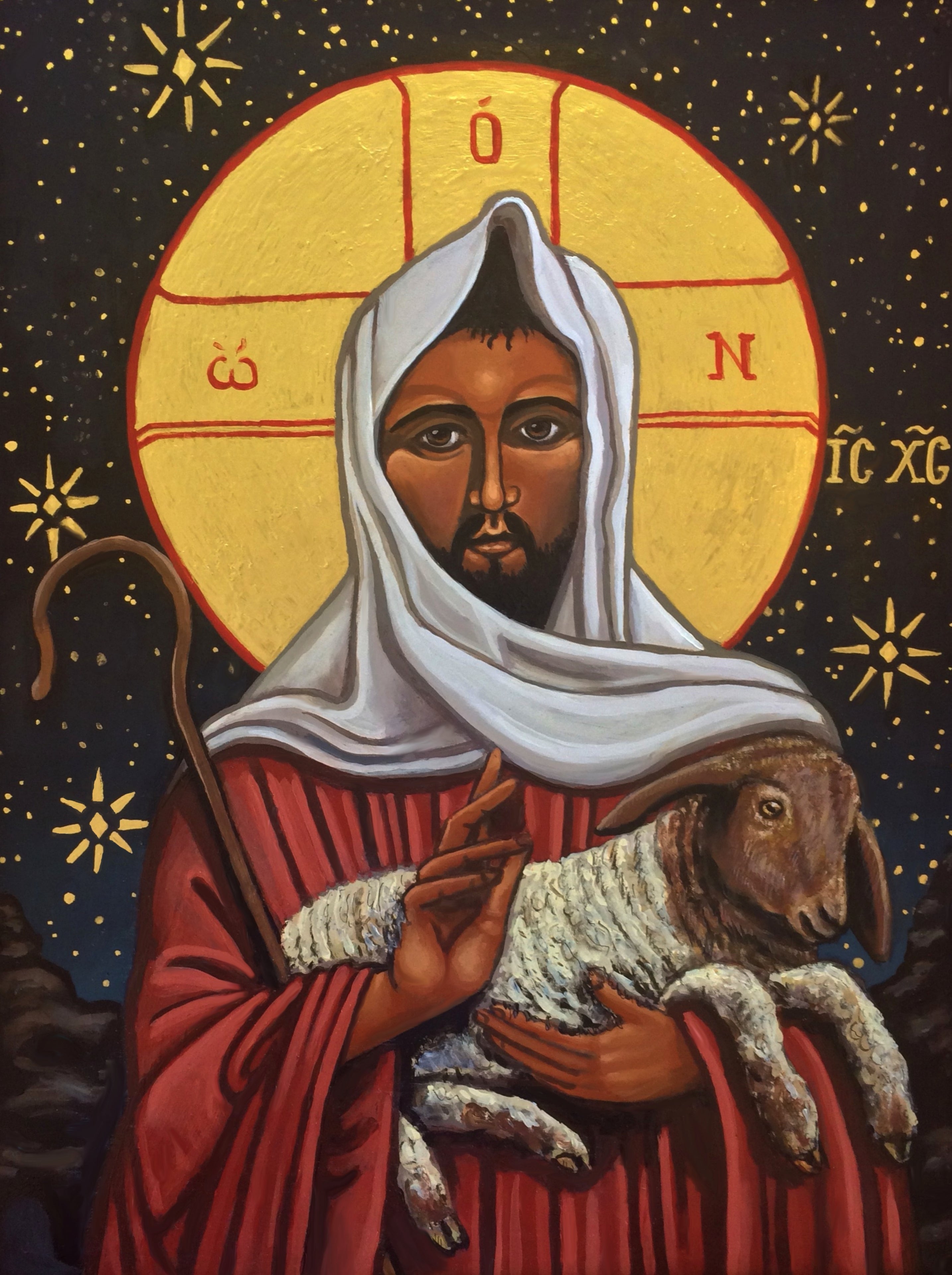
God is always our shepherd. The one who walks with us and cares for us amongst life’s troubles, but sometimes to experience God as shepherd—to remind ourselves of God as our shepherd, we have go to green pastures and still waters and rocky hills and ocean beaches and swampy wetlands and prickly scrubs and quiet forests.
The practical question of the last time you went on a nature walk, is actually a profoundly spiritual question. Because as powerfully as we meet God in this place, sometimes we also need to meet God in the wild beauty of all that God has made.
Tomorrow is Earth Day. So go, get outside and bask in the beauty of nature, and take a walk in green pastures beside still waters with the God of creation, who is your shepherd. Amen.
 Thoughts on Faith