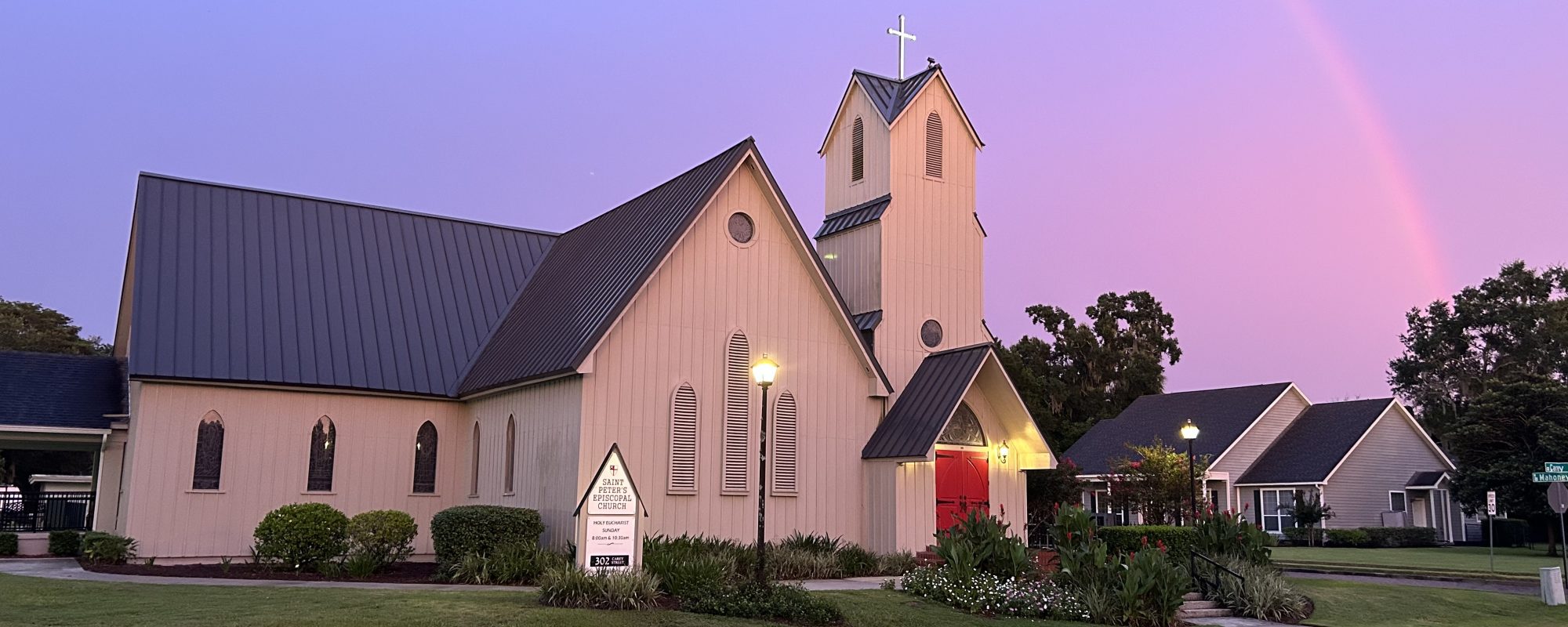
Homily, Growing Down: Welcoming Christ in Children
The Eighteenth Sunday after the Pentecost, Proper 20B, 2024
St. Peter’s Episcopal Church
Plant City, FL
The Rev. Derek M Larson, TSSF
Today’s Lectionary Readings:
Proverbs 31:10-31
Psalm 1
James 3:13-4:3, 7-8a
Mark 9:30-37
In the name of God: Father, Son, and Holy Spirit. Amen.
A British nanny must be a gen’ral!
The future empire lies within her hands
And so the person that we need to mold the breed
Is a nanny who can give commands!

So sings Mr. Banks in the classic 1964 movie, Mary Poppins. Mr. Banks is the father of Jane and Michael Banks, his young and mischievous children who need a nanny. And so Mr. Banks puts an advertisement in the Times for a nanny that will help form his children for the real world. And perhaps he’s a bit too rigid in his desire for a nanny that takes charge of his children like a military general, but the heart of his request is a desire that his children would grow up in such a way that they will be good and successful in their lives. And so on the east wind, Mary Poppins arrives to care for the Banks children.
If you watch the film carefully, however, you will notice that at the end of the film it is not the children that have benefited the most from Mary Poppin’s presence, but Mr. Banks himself. Mr. Banks, who is able to let go of his serious and grown up demeanor to see the joy in life through the eyes of a child. If you watch carefully, you’ll notice the core of this film is not actually about the children growing up, but about Mr. Banks growing down.
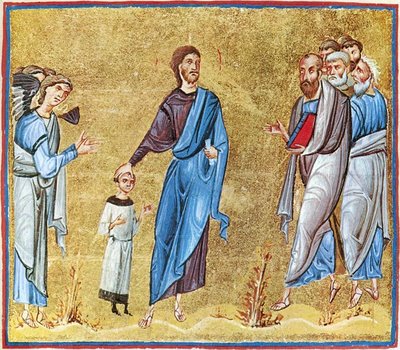
In our gospel passage this morning Jesus brings a child among the disciples and says to them, “Whoever welcomes one such child in my name welcomes me, and whoever welcomes me welcomes not me but the one who sent me.” And I love this passage because it models for us what it means to center children in Christian community, which is something that is important to us here at St. Peter’s. When my family was thinking and praying about coming here, we were excited about the steps you all have taken to emphasize the importance of children and youth in the parish. The monthly family service, Sunday School, worship resources for children at each door—even writing into the mission statement, “we are a community that celebrates children and youth”—you are doing what Jesus did when he brought a child into the center of his community of disciples.
“St. Peter’s Episcopal Church is a welcoming Christian community of all ages that embodies God’s word and sacraments, invites spiritual curiosity, celebrates children and youth, and embraces the world with God’s love.”
Mission Statement from St. Peter’s Episcopal Church
But I’d like to take a moment to pause and ask ourselves why. Why is it important that children and youth are central in our community? Why do we want to emphasize their role among us? For most of us, our initial response might be something about helping them grow up. We want them to be molded and shaped and educated in the love of God. We want them to know the stories of Scripture and the way to discern right and wrong. We want them to grow to be good and successful people in life. We want the best for our children, knowing that they will lead the future of the church. We want to help them grow up.
And those are good and important things that the Bible talks about. But it turns out that when Jesus talks about children, that is not what he is talking about. For Jesus, the role of children in Christian community is not so that they can learn to grow up but so that the adults around them can learn to grow down. Like Mary Poppins for Mr. Banks, the hope of Jesus is that we allow the children in our lives to shape us, so that we can see the world in a new way.
Today and for the next two weeks we’re going to look at three statements that Jesus makes about children and ask ourselves how those statements inform our view of the role children play among us. It’s my first sermon series here at St. Peter’s, and it’s call not Growing Up, but Growing Down. Because what we’ll see in these three passages is that Jesus lifts up children as teachers and examples to the rest of the Christian community, rather than simply those to whom we are to impart wisdom. And what I’d like to show you is that what that means for St. Peter’s is that we celebrate youth and children not just so that we can form and shape them in God’s love, but so that they can form and shape us in God’s love.
So let’s briefly look again at today’s passage, our first statement of Jesus about children. Jesus is teaching his disciples as they travel through Capernaum about humility, because evidently the disciples had been bickering about who among them was the greatest. And so after saying to them, “Whoever wants to be first must be last of all and servant of all,” he brings a child into the group and continues, “Whoever welcomes one such child in my name welcomes me, and whoever welcomes me welcomes not me but the one who sent me.”
Notice two things about this passage. First, the child is not the one being educated here. The disciples are being educated and the child is being lifted up as an example for them. How many of us look to our own children in this place as an example of holy living? Second, Jesus identifies himself with the child and with all children. He says, “If you welcome a child, you welcome me.” Wow. What are the sacramental implications of that statement? That to be among children is to be among Jesus. So often we want our children to come to church so that we can give them Jesus, but in this passage we see that children are the ones bringing Jesus to us. And if we want Christ to be in this community, we have to have children among us. Because that’s where Jesus is. Welcoming children is about welcoming Christ.
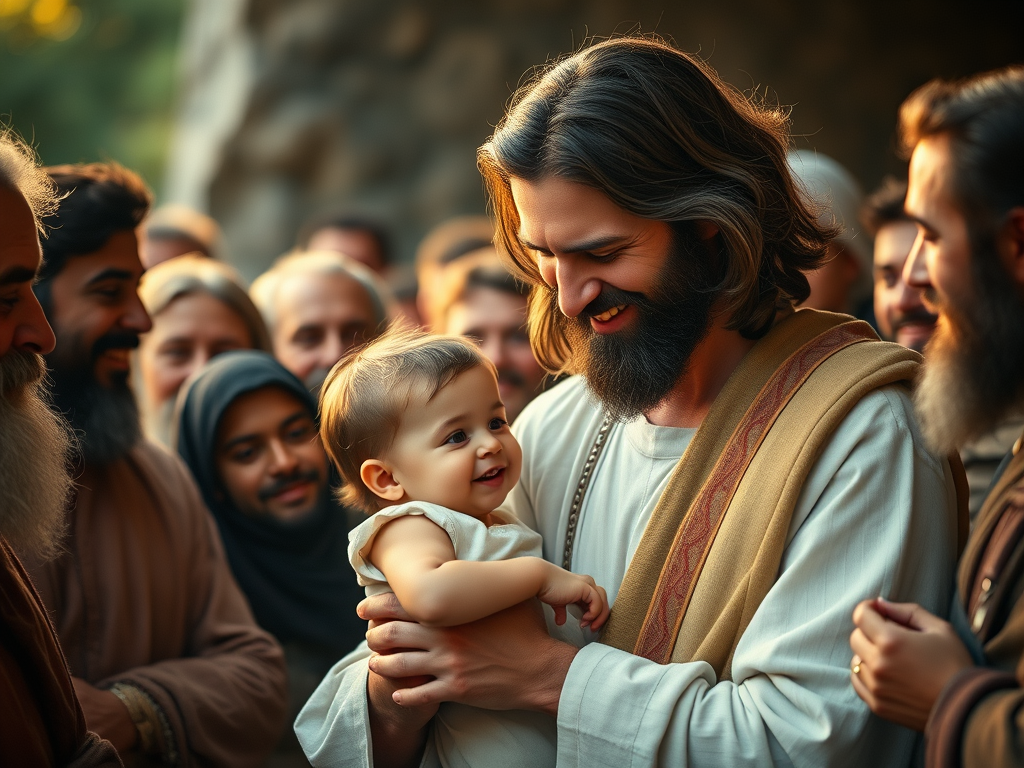
Do you see the distinction I’m trying to make here? If children are to be a central part of St. Peter’s, we have to recognize that it’s not always about us bringing Christ to them, but them bringing Christ to us.
That’s the first statement. We’ll look at another one next week.
But, I wonder if like Mr. Banks, God is calling us to shift our perspective so that we might be able to see the world in a new way. I wonder if like Mr. Banks, we are so focused on the education and the forming of children that we are missing how they might educate and form us. I wonder how we are being open to Christ’s presence in this place through the presence of children.
So let’s consider this question for the next couple weeks and learn how Christ, through the presence of children, may actually be calling us not to grow up, but to grow down. Amen.
Questions for Reflection
- In what ways do I currently prioritize the presence of children in my community, and how might I shift my perspective to recognize the lessons they can teach me?
- How can I create a welcoming environment that allows children to bring their own experiences of Christ into our shared community?
- What specific qualities or characteristics of children inspire me to reflect on my own faith journey and humility?
- As I think about my role in supporting children’s spiritual growth, how can I also be open to their influence on my understanding of God and faith?
- In what areas of my life do I feel challenged to “grow down” and embrace a more childlike perspective, particularly in my interactions with others?
Resources for Further Reflection
Movie: Mary Poppins (1964)
A classic film. If you haven’t seen it recently, watch it again! And this time notice how the film may actually be about Mr. Banks growing down rather than the children growing up.
Movie: Mary Poppins Returns (2018)
This is a rare instance when a sequel made for a classic does an incredible job. This movie honors the first while balancing a timeless feel and contemporary relevance. This is one of the Larson family’s favorite films, which we watch a few times a year. Since first seeing it, I’ve thought a lot about how Mary Poppins carries a lot of Christological characteristics in this film, particularly in the notion of returning. I’ve pondered offering a Bible study with Mary Poppins Returns as an Advent series.
Book: The Gifts they Bring: How children in the Gospels can Shape Inclusive Ministry by Amy Lindeman Allen
This is a great book by a New Testament Scholar which analyzes a select passages of Scripture with a lens focused on the presence of children. After interpreting the passage, Allen then offers some possible applications and reflections for contemporary children’s ministry. I liked the book a lot, and I used it to teach a Bible Study series once before.
Bonus: Listen to this week’s postlude by our amazing and playful organist, Helen Jones!
 Thoughts on Faith