Homily, Into the Wardrobe
The Fourteenth Sunday after the Pentecost, Proper 16B, 2024
St. Peter’s Episcopal Church
Plant City, FL
The Rev. Derek M Larson, TSSF
Today’s Lectionary Readings:
1 Kings 8:[1, 6, 10-11], 22-30, 41-43
Psalm 84
Ephesians 6:10-20
John 6:56-69
In the name of God: Father, Son, and Holy Spirit. Amen.
“[Lucy] immediately stepped into the wardrobe and got in among the coats and rubbed her face against them, leaving the door open, of course, because she knew that it is very foolish to shut oneself into any wardrobe. Soon she went further in and found that there was a second row of coats hanging up behind the first one. ‘This must be a simply enormous wardrobe!’ thought Lucy, going still further in and pushing the soft folds of the coats aside to make room for her…Next moment she found that what was rubbing against her face and hands was no longer soft fur but something hard and rough and even prickly. ‘Why, it is just like branches of trees!’ exclaimed Lucy. And then she saw that there was a light ahead of her; not a few inches away where the back of the wardrobe ought to have been, but a long way off.”
From The Lion, the Witch, and the Wardrobe by C.S. Lewis
Thus begins the classic story of the Lion, the Witch, and the Wardrobe by C.S. Lewis, in which four children become kings and queens of Narnia, a hidden world discovered by walking through a magic wardrobe. It’s a great story. My son, Barret, and I just finished reading it this week, for the second time together, and we love it. Barret and I, we’re fans of fantasy, you see. We love tales of giants and elves and dwarfs and knights and dragons and distant lands. We love reading together the works of Tolkien and Lewis and Rowling and even the old Norse myths. We love fantasy. We love that they open our eyes to new worlds and new ways of seeing this world.
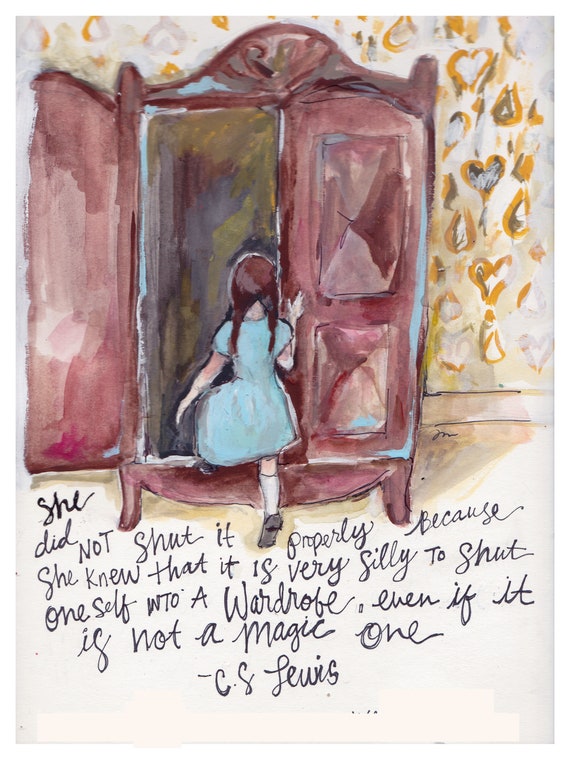
Purchase her art here.
This morning as we read the end of Paul’s letter to the Ephesians, I can’t help but think of Narnia. Because here we are sitting in our pews dressed in perfectly acceptable attire for a Sunday in the 21st century and suddenly Paul has us outfitted and commissioned for battle. We are called to take up swords and put on breastplates and to take up shields and put on helmets. Like Lucy in the wardrobe, Paul has transported us to an entirely new reality! And in this new world, we find ourselves as members of an ancient and cosmic quest to reconcile all things to God, which is what the letter to the Ephesians is all about.
And it’s really quite clever here, what Paul does in this passage. Because that’s a message the Christians of Ephesus needed to hear. The Ephesians were living in a time of profound division and violence. As Christians, they lived on the margins of society, persecuted by both the pagan Roman Empire and the Jewish siblings from which they came. And even within the Church, there was some tension. On one side were Jewish believers in Christ and on the other, Gentile believers in Christ, and they often saw the world in significantly different ways. Can you imagine what their vestry meetings might have been like?
This was a community of people that had been pressed and stretched and wearied by the waring divisions around them that often pressured them to take sides and be at odds with one another.
And so in some sense, this is exactly the last image they want to hear in a letter from St. Paul. They are tired of the battles that surround them, and they don’t want to hear their pastor tell them to gear up for a fight.
But that is what is so clever about the words of St. Paul, because as it turns out, this battle is not like all those others battles. This battle is to end those battles. This battle belongs to a greater reality. As the passage says, this battle is not against blood and flesh, and thus this battle is not about us versus them, this battle (which is not really a battle at all) is about peace and reconciliation.
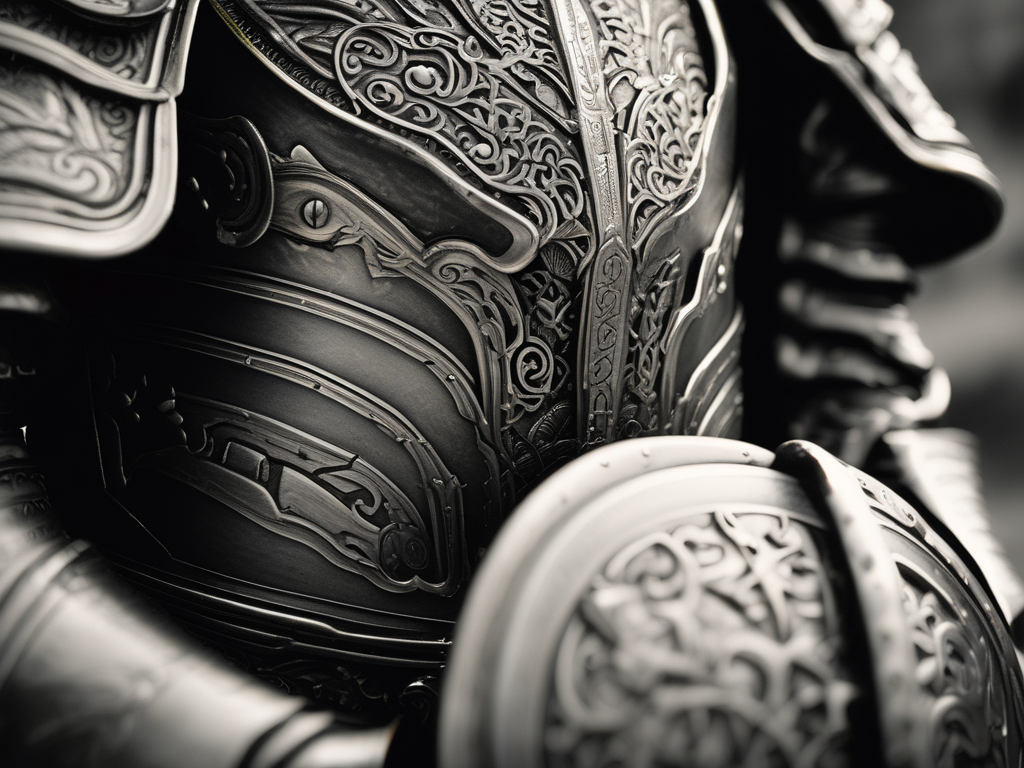
Paul is essentially asking the Ephesians: what battles are you fighting? Are you fighting battles against one another, or are you fighting battles against that which separates you? Are you fighting battles against blood and flesh or are you fighting battles against the evil that draws you to war with one another? What weapons are you using? Are you using combat boots or shoes of peace? Shield walls or deep faith? Piercing swords or the voice of God? What battles are you fighting? Because God is on a cosmic quest to end the waring divisions of this world and to bring reconciliation. Will you be a part of that? Will you open your eyes to a new reality and to what God is doing in the world?
In our own time, we may find that we relate to the circumstances of the Christians in Ephesus. We, at times, have also been wearied by the language of battle used to separate us into sides of us vs. them. Whether that be in politics or family relationships or church life, and we’re tired of it.
And so the question Paul gave to the Ephesians is also a question for us in the midst of our weariness. What battles are we fighting? Are they the battles against blood and flesh? Against people? Against our neighbors and family members and those we don’t even know? Or have we awakened to a greater and more cosmic battle—and joined in God’s epic quest to wage peace and to build reconciliation in the world?
Today, the message for St. Peter’s is to follow St. Paul into the wardrobe. To leave the battles of this world behind and to open our eyes to a new reality. To deepen our commitment to love our neighbors as ourselves, no matter who they are, and to respect the dignity of every human being. To lay down our weapons of war, and to take up the armor of God. So that we might truly be at peace with one another and Christ may be all in all. Amen.
Resources for Further Reflection
Resources for Further Reflection
Book: The Lion, the Witch, and the Wardrobe by C.S. Lewis (1950)
This delightful story by C.S. Lewis is the opening to the Narnia series. My son and I love to read these stories. They are quite accessible for kids starting around age 7, but I think its important for adults to read literature meant for children. I tend to prefer Tolkien over Lewis, though I love Lewis too. The Narnia stories are full of Christian allegory that opens the gospel in wonderful ways.
Song: Bind Us Together by the Porter’s Gate
The Porter’s Gate is a sacred ecumenical collective arts group that produces a couple albums of music a year around various themes relevant to the world and the Church. Their most recent project (currently underway) is called The After Party, which is a collection of songs addressing the political polarization we are experiencing in the United States from a Christian perspective. This song, “Bind Us Together” is a beautiful prayer for Christian unity, and speaks to the theme St. Paul wrote about in his letter to the Ephesians. I didn’t speak about the end of our lectionary passage from Ephesians in my homily this week, but Paul emphasizes the role of prayer in wearing the armor of God, and in particular, prayer for one another. As you reflect on the battles you are fighting, whether they be battles against people or the cosmic battle against evil and division, let this song be a prayer for the victory of God in the cosmic quest for reconciliation.
Book: The After Party: Toward Better Christian Politics by Curtis Chang and Nancy French
I have not yet read this book, so I recommend it with that caveat, but it is the book (and curriculum series) the Porter’s Gate are teaming up with to address the political polarization we are currently experiencing in the United States. I look forward to diving into this book.
 Thoughts on Faith