Homily, Into the Water
The First Sunday after the Epiphany, 2026
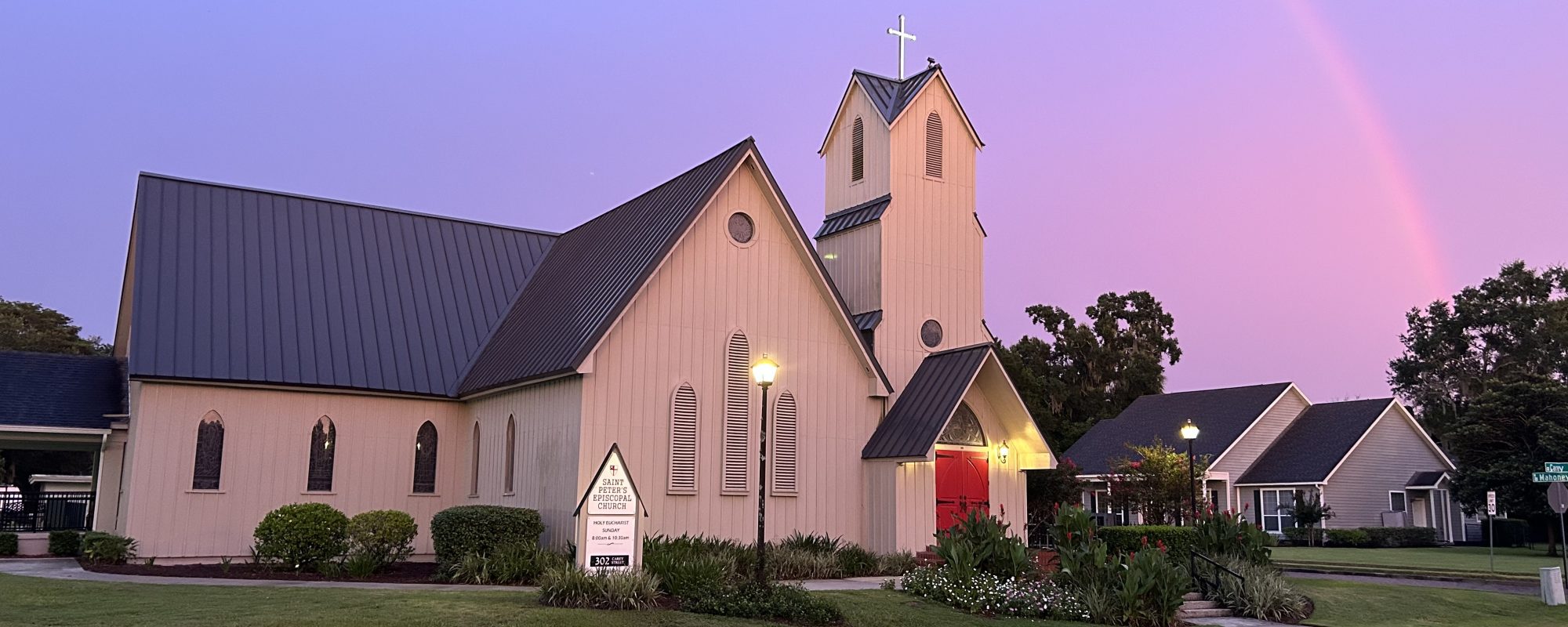
St. Peter’s Episcopal Church
Plant City, FL
The Rev. Derek M Larson, TSSF
In the name of God: Father, Son, and Holy Spirit. Amen.
On Tuesday, not far from here in Tarpon Springs, 74 boys jumped into the chilly waters of the Spring Bayou to retrieve a cross thrown into the water by Archbishop Elpidophoros (ElpiDAphoros) of the Greek Orthodox Archdiocese of America in the church’s annual Epiphany celebration. It’s an event that happens all around the world. At the highest peak of the Colorado mountains on the continental divide, the cross is retrieved from the snow. In Moscow sometimes the cross is retrieved from a hole cut in the ice. In Greece, they swim for the cross off the coast of every major port town in the area. Wherever it is, water hot or cold, shallow or deep, calm or choppy, you’ll find folks getting in the water. And not only those retrieving the cross, but many others will take a dip alongside of them. Or at the least they will take with them a small container of that water with which to sprinkle their foreheads or the corners of their home. What a beautiful way to celebrate Epiphany. Everyone touches the water.
Today we also partake of that tradition as we hear the story in the gospel of Jesus’ baptism in the Jordan River.
But not without some hesitation.
In the passage John is preparing the way for Jesus with the baptism of repentance when Jesus, himself arrives and asks to be baptized as well. And in that moment, John hesitates. “I need to be baptized by you, and do you come to me?”
And at first, that sounds like humility. And in many ways it is. But it’s also a humility that keeps Jesus at a distance. A humility that insists on unworthiness as a way of staying in control. When John hesitates, he is using his humility as a form of resistance to Jesus, of keeping arms length.
But Jesus is persistent and tells John, “Let it be so” and so John “consents”.
“Let it be so”. John “consents”.
It’s the same word in Greek and a really fascinating one that can be translated in a hundred different ways. Aphiemi. It can mean to give up, to permit, to allow, to go away, to let go.
Jesus is asking John to let go. To let go of his hesitations. To let go of his control. To let go of his false humility. To let go and join him in the water.
Interestingly, in other passages aphiemi can also be translated as “forgive”. In fact, the word we hear in this passage as “let it be” and “consent” is the same word we find in the Our Father when we pray, “forgive us our trespasses as we forgive those who trespass against us.” Aphiemi. It’s the same word Jesus uses on the cross, “Father, forgive them for they know not what they do.” Aphiemi. There is a close relationship between the act of forgiveness and the act of letting go. In the mind of Jesus, they are the same thing. Forgiveness is often less about pardon and more about letting go of that which separates us from God. Did you hear that?
Forgiveness—aphiemi—is letting go of that which separates us from God.
Often it is Christ that lets go. It is Christ that lets go of whatever could be held against us. It is Christ who lets go of our imperfections, our mistakes, our sin—he forgives us. But sometimes, it is us that need to do the letting go. To let go of our control. To let go of our shame. To let go of our pride that sometimes even masks itself as humility.
And so as Jesus tells John to let go, he is also inviting him to experience forgiveness. Aphiemi. As Jesus enters the water with John, though it is Jesus being baptized, it is John who experiences the fullness of forgiveness. Because he consented. Because he let go.
See, baptism is not primarily about washing away sins. It does that, but that’s not it’s objective. Baptism is primarily about presence—about being with God. We tend to get stuck, like John, on questions of who has the power to baptize and who has the need to be baptized. Who is at fault and who is free of guilt. But baptism is less about that, and more about simply sharing the water with Jesus.
When John consents to baptizing Jesus, he is not consenting to bestow upon Jesus the forgiveness of sins, he is consenting to the presence of Jesus. To sharing the same waters as Jesus. And the same is true for each of us. Baptism is not primarily transactional. It is not primarily about the pardon of sins, though it certainly includes that. The primary action of baptism is about presence. It is about joining Jesus in the same water. Sharing the same water. It is about letting go and consenting to the presence of Jesus. Pardon is simply the fruit of presence.
And yet we, like John, hesitate. When Jesus comes to us and says, “Let’s get in the water” we hesitate. We prefer, at times, to be in control than to be in the water. We prefer at times, to hold onto our pride, than to be in the water.
And sometimes that very desire for control and pride clothes itself in the religious language of humility, “I am not worthy,” we say. “Someone else would be better at this.”
We may even put conditions on getting in the water, “I’ll get in the water and can you offer me forgiveness, Jesus, but then I’ll get out of your way.” “Just help me feel a little better about myself, but I don’t want to take up too much of your time.” And so Jesus asks us to let go—aphiemi—to let it be.
Christ isn’t interested in a brief, transactional, or therapeutic encounter with us. Christ wants us to let go and consent to the presence of God. Our part of baptism is that consent.
Some of us were baptized many years ago. Some of us more recently. And some of us have yet to take the plunge. If you haven’t been baptized and you are feeling God’s call, I will be glad to baptize you right here and right now this very day. I’ll pause after the homily if anyone would like to come forward. But for those of us who have been baptized, we are about to renew our baptismal vows. Like those boys each year down in Tarpon Springs we are about to get wet.
But before we do, I ask you, what is it that Jesus is asking you to let go of? What is Jesus asking you to forgive? What is Jesus asking you to let be? To aphiemi?
Today with our Orthodox siblings, we remember the baptism of Jesus as a celebration of the presence of Jesus so that we might hear the invitation of Jesus: join me in the water. Let go of that hesitation and join me in the water. Be present to me. Don’t stand far off upon the shore.
Join me in the water. Amen.
Questions for Reflection
- What feelings arise within me when I consider the symbolism of water in my own life? How do I relate to the notion of stepping into the water alongside Jesus?
- In what areas of my life do I struggle to let go of control? How might surrendering this control allow me to experience a deeper connection with God?
- How do I understand the concept of forgiveness as “letting go” in my relationships with others? Are there specific situations or individuals I need to practice this with?
- Reflecting on my own baptism, what does it mean for me to renew my baptismal vows today? How can I embody this renewal in my daily life?
- What hesitations do I experience that keep me from fully embracing the presence of Jesus? How can I address these hesitations to deepen my spiritual journey?
 Thoughts on Faith