Homily, Jesus the Midwife
The Twenty-Sixth Sunday after the Pentecost, Proper 28B, 2024
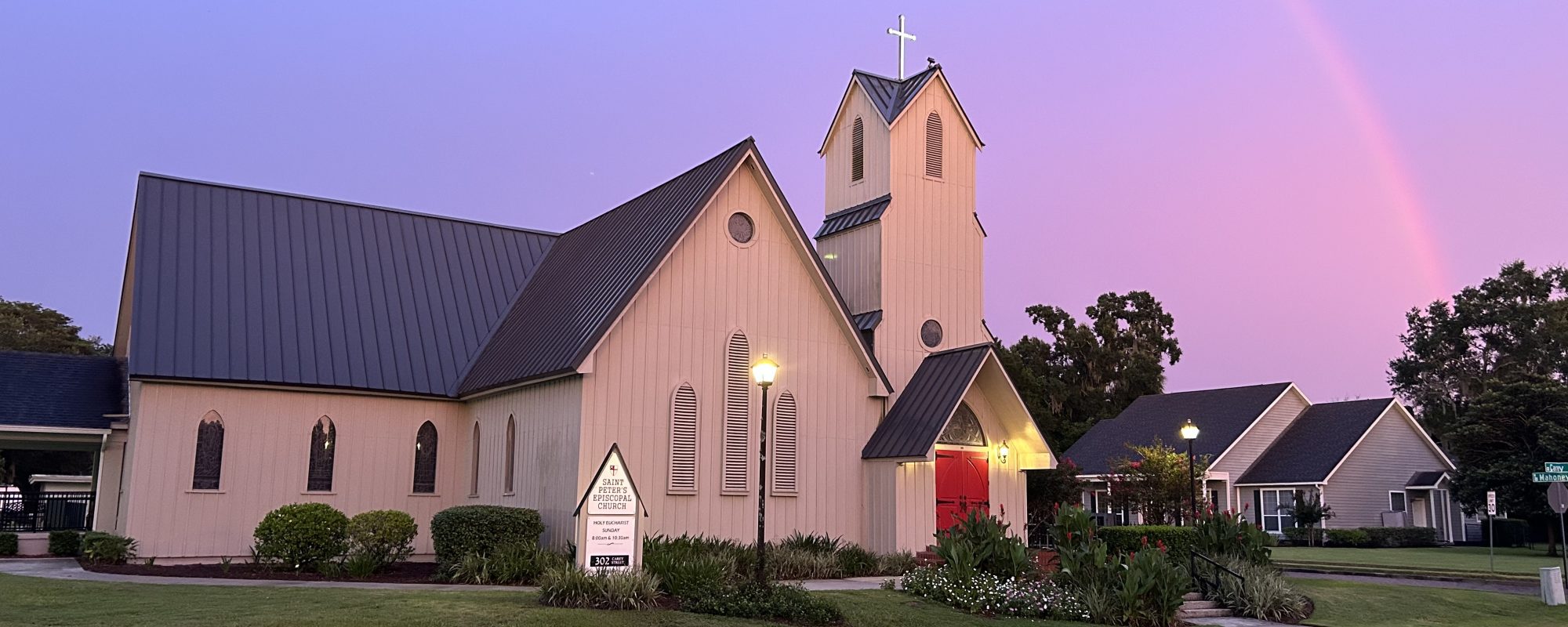
St. Peter’s Episcopal Church
Plant City, FL
The Rev. Derek M Larson, TSSF
Today’s Lectionary Readings:
1 Samuel 1:4-20
1 Samuel 2:1-10
Hebrews 10:11-14 (15-18) 19-25
Mark 13:1-8
In the name of God: Father, Son, and Holy Spirit. Amen.
In the middle of the 5th century a bishop named Hydatius predicted the world would end on May 27, 482. Observing the violence and waring factions around him on the western edge of the Roman Empire, along with some earthquakes and famines, he thought he must be seeing biblical signs of the end times. But while it may have felt like the end of the world, it wasn’t the end of the world.
In the middle of the 17th century a puritan group called the Fifth Monarchists predicted the world would end in the year 1666. Having lived through the bubonic plague and the Great Fire of London, they thought they must be witnessing signs of the end times. But while it may have felt like the end of the world, it wasn’t the end of the world.
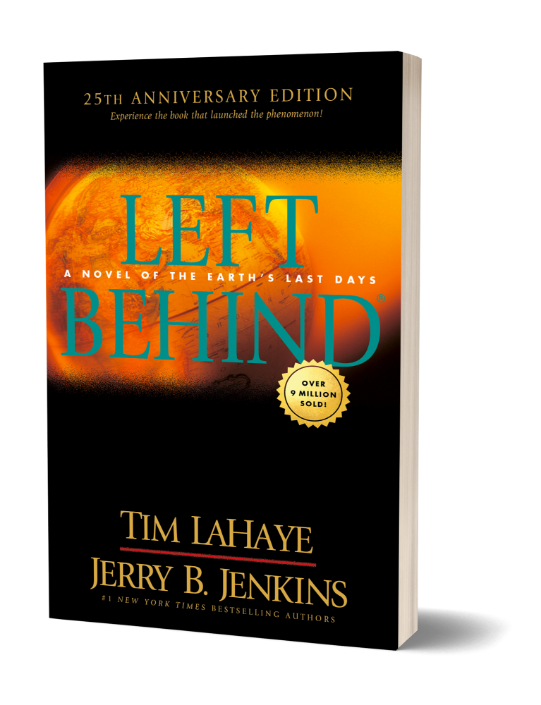
At the end of the 20th century many Christians like Tim LaHaye and Jerry B. Jenkins, the authors of the famous Left Behind book series, predicted the world would end in the year 2000. Watching the world grow more and more connected through the internet and anticipating a global crash of the economy, they thought they must be living in the end times. But while it may have felt like the end of the world, it wasn’t the end of the world.
Last week when I went to Publix and they were out of my favorite Ben and Jerry’s Ice Cream, I thought it was the end of the world, but it wasn’t the end of the world.
It can be easy to feel like the world is ending can’t it? When it feels like everything around you is falling apart. When you’re not sure if there’s anything really solid that you can hold on to. It could be you feel that way because of wars you see on the news, or hurricanes in your backyard, or politicians in Washington. It could be because of illness in your body, or the death of a loved one, or the loss of a job. Whatever the reason, when the feeling comes it brings with it fear and uncertainty; it can feel like your whole world is crashing down.
When St. Mark wrote down the story of Jesus we read in the gospel today, the people to which he was writing it felt like that. Now keep in mind, even though the story we hear is about Jesus, Mark wrote it to a community 30-50 years after Jesus. And in that time the world had changed. Jerusalem was now not just occupied by the Romans but surrounded by soldiers armed to the teeth ready to put down a Jewish revolt. War and violence was all around them. The temple, which the disciples marvel at in this passage, was on the cusp of being completely destroyed—just as Jesus said—and the people to which Mark is telling this story were swimming in fear and felt like their whole world was coming to an end. And so this passage that takes place as a conversation between Jesus and his disciples, is also a passage that is meant to be a message for Mark’s community in the face of their fear.
And what is that message? Do not be alarmed. Or in the KJV, do not be troubled. Though the world around you is crashing down, it’s not yet the end. And while there may be much to fear, you need not let fear take over your trust in our strong and loving God. Do not be alarmed.
And then Mark, through the words of Jesus, warns them to be careful, because there are people and things that try to take advantage of you in times like these. They try to exploit your fear. They will say that they are your savior. But the true savior, Jesus, does not fan the flames of fear, the true Jesus is the one that tells you, “do not be alarmed.”
It’s a message that was important to Mark’s community, and it also a message for all of us that experience moments when it feels like our world is ending. Do not be alarmed. Trust in Christ.
And then there’s this wonderful little phrase at the end of the section we read today, “This is but the beginning of the birth pangs.”
In other words, while everyone around you may be talking about the end of the world, there Jesus is talking about a new beginning. The birth of something new and holy. That even in the midst of fear and pain and destruction, Jesus is ushering in the birth of new life. The image that Mark is using here is like the image of some kind of Divine and cosmic midwife. One who brings you through the pain to the other side where there is new life. Someone that reassures you over and over again, do not be alarmed.
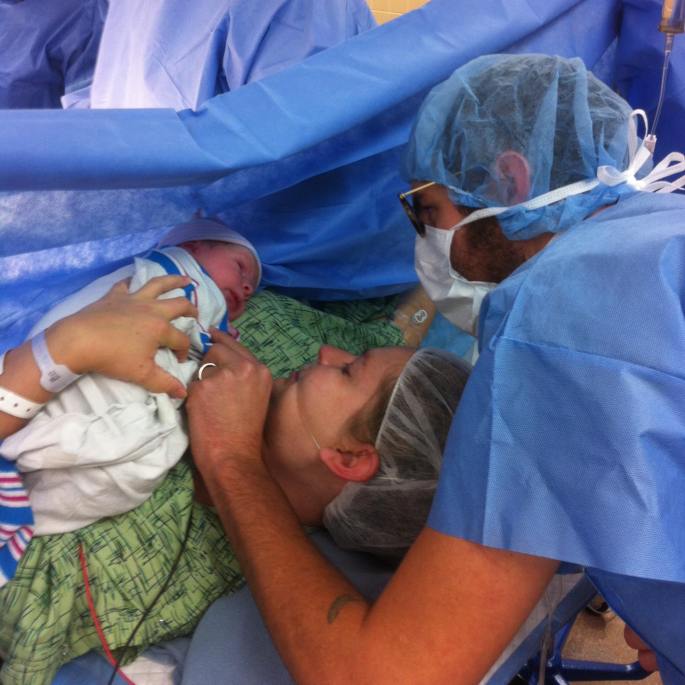
When my wife, LauraAnn, was pregnant with our first child, we worked with a midwife. It was a beautiful midwifery practice in Lakeland. Not everyone chooses midwifery, but we did because we wanted a birth environment that was intentional about empowering women in childbirth—a place where fear wouldn’t rule. If you’ve ever expected a child, you know how people love to tell you horror stories. But birth is also a natural, beautiful thing that’s been happening for millions of years. It’s something to be celebrated. And so, LauraAnn did all her prenatal care there, and it was wonderful. And when she went into labor, it was still wonderful. The way the midwives gathered around her and supported her was incredible. They were there, calm and steady.
But then, after 30 hours of labor without progress, she ended up just down the street at the hospital for a C-section. It wasn’t what we planned, and in those moments, we faced fear, frustration, and real disappointment. But I’ll never forget how, even there in the hospital, I looked over and saw the midwife. She had come with us. Even though things hadn’t gone as planned, she was there, steady and supportive, offering encouragement and grounding us in the face of our fear. The midwife was there.
That’s what Jesus is like. When it feels like your world is ending, when plans fall apart, when everything that felt solid starts to crumble, and the future is filled with uncertainty, Jesus is there. He’s there with us through the pain and fear, and he ushers us through it to the other side, where there is new life. Whatever it is that you are facing, Jesus is there.
This passage is not about the end of the world at all; it’s an invitation to resist fear when it feels like the end of the world. It’s an invitation to trust in the One who is steady and present, even when everything else falls apart, so that we will keep going. It is a reminder that we can trust in Jesus, who is like a midwife to us, leading us to new life and encouraging us again and again, “this is not the end, keep going, do not be alarmed.” Amen.
Questions for Further Reflection
- In what ways can we identify moments in our own lives when fear feels overwhelming, and how might we apply the message of “do not be alarmed” to those situations?
- What does the metaphor of Jesus as a cosmic midwife mean to you, and how can it encourage you during times of personal turmoil or fear?
- How can we cultivate trust in our lives, as described in the homily, amidst the uncertainties and challenges we face in today’s world?
- In what practical ways can we support others who may be feeling like their world is ending, reflecting the calm and steady presence of the midwife as portrayed in this message?
 Thoughts on Faith