Homily, John the Witness
Third Sunday of Advent, Year B, 2023
Good Shepherd Episcopal Church
Tequesta, FL
The Rev. Derek M Larson, TSSF
Today’s Lectionary Readings:
In the name of God: Father, Son, and Holy Spirit. Amen.
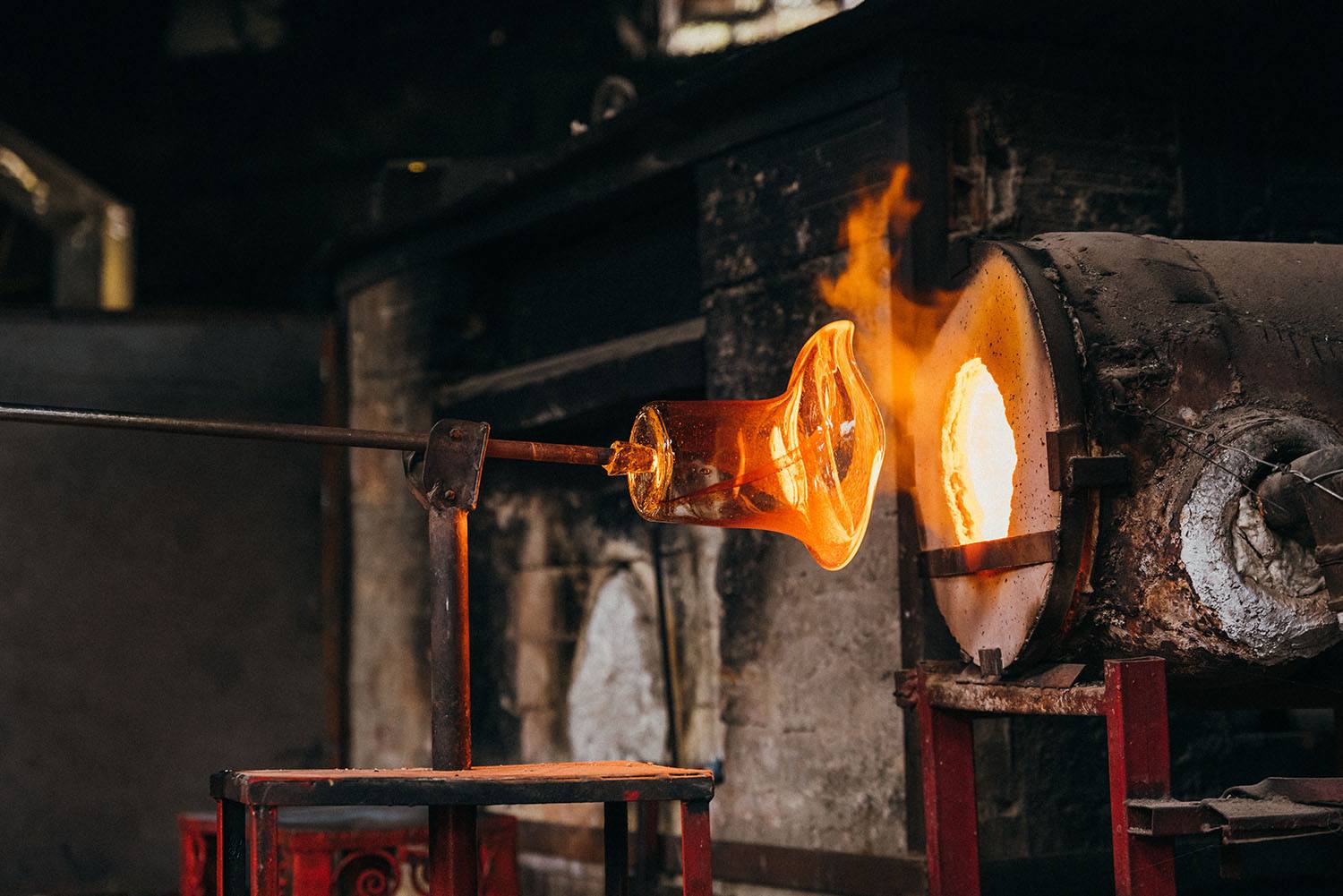
Through shaded lenses the artist holds the glass at the tip of a pole and places it into the fire. When she pulls it from the flames, the glass itself glows as if it lit from within. Cautious not to touch its burning surface, with her tools she begins to shape the glass with the expert skills of turning, blowing, squeezing, and pulling. What was once cold, hard, and unmoving, the artist finds soft, malleable, and burning—ready to let go of itself to become something new. What that something is, only the artist knows. Perhaps a glass for water, a Christmas ornament, the figure of a horse, or beads on a necklace. But in this moment, the glass is fire. Almost indistinguishable from the flame it touches. It burns bright as if one with that which lights it. And while the artist sees where glass ends and fire begins, the passerby, at first, may not even notice the difference between the two. In this moment, passing in and out of fire, it is all flame.
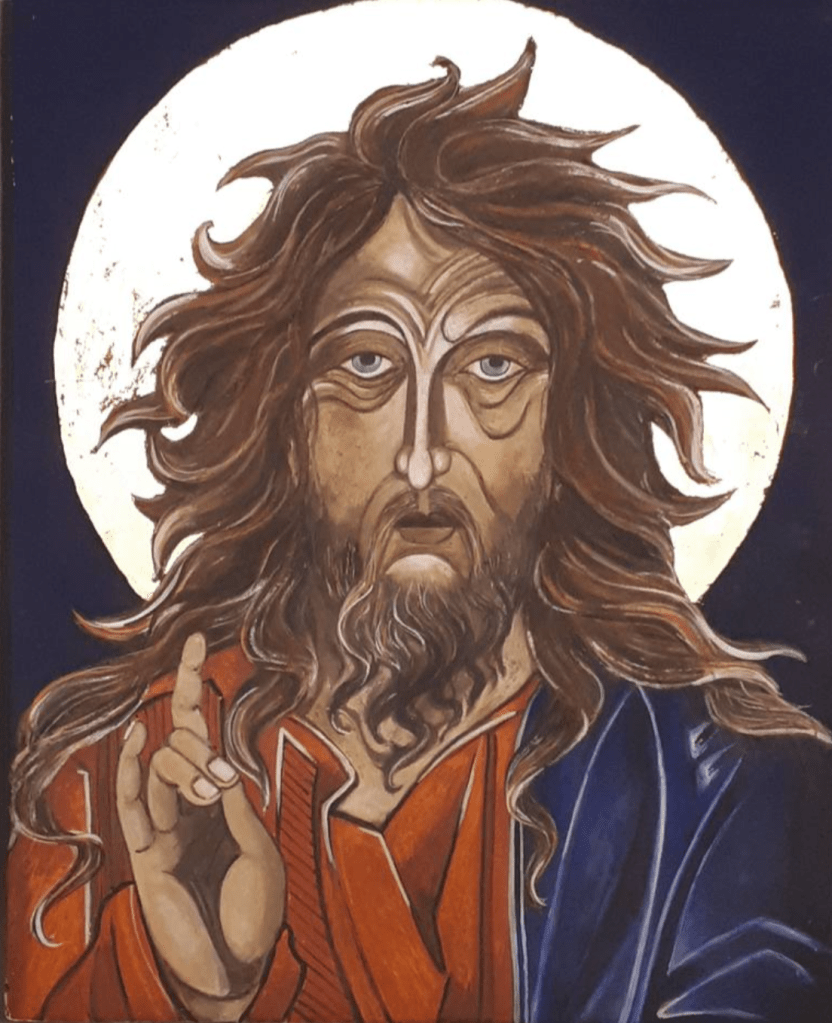
In today’s gospel we encounter John: the wild man of the wild land. And if you think you are experiencing deja vu at the reading of this text, that is because we heard the same story last week. This is the story of John, the one crying in the wilderness—John, the one baptizing others into repentance—John, the one unworthy to tie the sandals of the one to come. But whereas last week we hear this story from the perspective of the Gospel of Mark, this week we hear it from the Gospel of John.
And the Gospel of John does have something different to say. For the writer of this gospel, he is not simply telling a story of history, he is telling the story of history. Whereas in the Gospel of Mark it begins, “The beginning of the good news of Jesus Christ,” the Gospel of John orients the story in the cosmos, with the words, “In the beginning was the Word…and all things came into being through him, in him was life, and that life was the light of all people.” The writer of this gospel is telling the story of the universe all the way back to the Big Bang—all the way back to the first light—the true light—which is Christ.
And so when the Gospel of John tells the story of John the Baptist, it wants to place him in the context of this cosmic story of light.
“Who are you?” John is asked. For the people of Israel had flocked to him like moths to a flame. They saw him radiant and enflamed with a message from God. So bright was John—so on fire—that people began to wonder if he might be the messiah, or some other holy prophet of old. But the passage is clear in its telling of the cosmic story, “He himself was not the light, but he came to testify to the light.”
While in other gospels John is named as the baptizer—the baptist, preparing the way for Jesus’ ministry, in this gospel John is named as messenger and witness of the Divine story of the universe. John is a witness to the light which gave birth to the universe. John is one who has touched the sun and lived to tell the tale.
And as one who has drawn so close to the light of Christ, he himself has begun to glow with that light. John shines with a light which is not his own. John has become one in flame with Christ.
“Who are you?”
I am glass blown by a torch which has come out of the furnace.
I am one who has been shaped by the tools of an artist.
I am one who has seen the light which gives birth to the universe.
I am myself am not the light.
I am not the Christ.
I am not the prophet.
I am a witness.
Pointing to the true light, which enlightens the world.
“Who are you?”
The are many ways that we might answer that question for ourselves. We might say Father, Mother, Lawyer, Priest, Singer, Builder, Episcopalian. We might say where we’ve come from or where we are going. We might share who we love or what we fear.
But today, on this Third Sunday of Advent, we are invited to see ourselves according to the cosmic story in which we see John. We are invited, like him, to draw so close to the light of Christ which permeates the universe, that we ourselves might shine with its radiance. We are called to be glass in a furnace, ready to leave behind ourselves to become one in flame with the true light.
And then to be witnesses. To be those who point to the light of Christ. To be those who share with others the cosmic story which undergirds our existence. “There is one among you whom you do not know,” John says, “behold the Lamb of God.” We are called to do that. Pointing to Christ wherever people are.
“Who are you?”
As ourselves, we are not the light, but those called to testify to the light. We are Witnesses. Those who have been birthed into being by the light of Christ. Called to draw near that light so that we may shine it upon others, lest we become cold, hard, and unmoving like glass left out of the furnace.
Who are you?
We are messengers telling the cosmic story of Christ the true light of the world. Amen.
 Thoughts on Faith