Homily, Keeper of Keys
Confession of St. Peter, 2025
St. Peter’s Episcopal Church
Plant City, FL
The Rev. Derek M Larson, TSSF
Today’s Lectionary Readings:
In the name of God: Father, Son, and Holy Spirit. Amen.
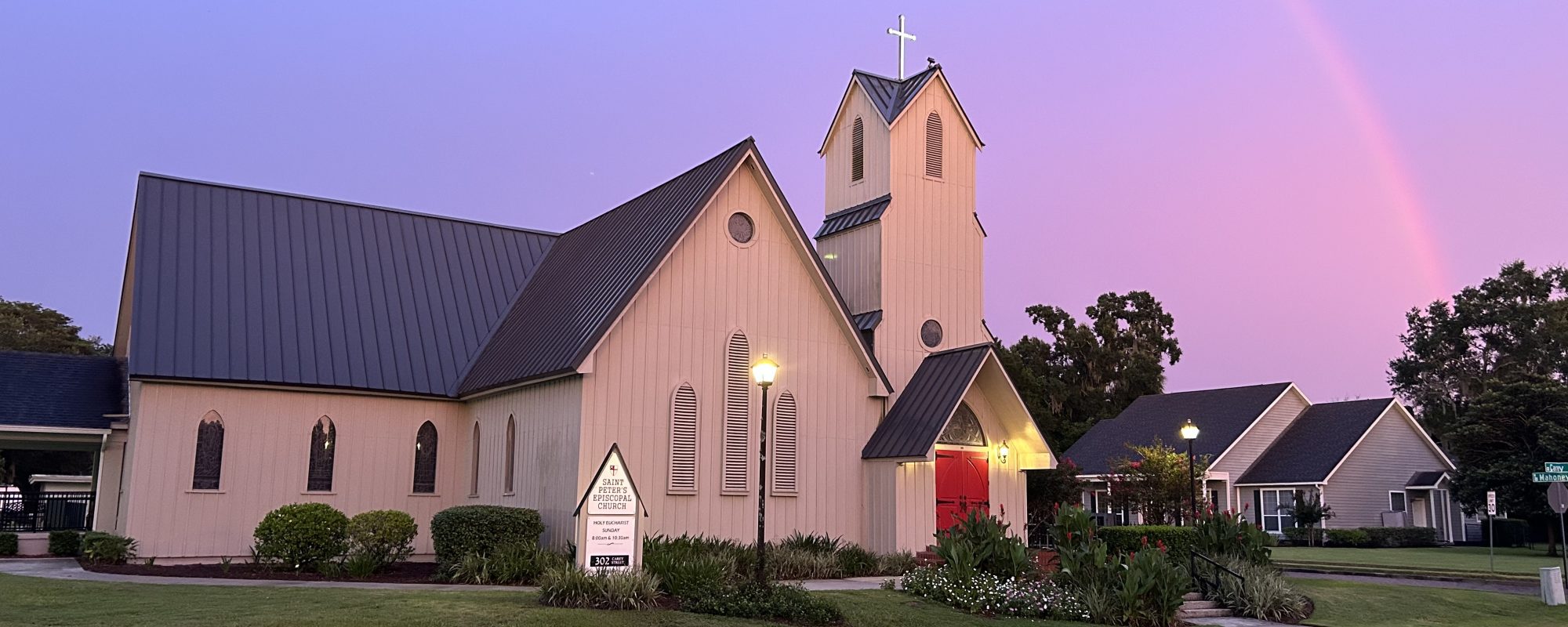
Every morning is the same beautiful routine. I walk out the rectory front doors, take a deep breath, cross the street, and open the doors to the church. I start with the south door, the door closest to the rectory. The church is dark when I enter and the alarm is saying its morning prayers, asking me to turn it off, and I do. I then open the door to the sacristy where I put my things down and put on my cassock. I turn on the lights and then unlock the north door, checking outside to see if anyone is waiting or if a neighbor has taken shelter in our cloister. Finally, I unlock the door to the narthex, the entrance of the church, and place the welcome sign out by the road, and ring the bell. It has been surprising just how spiritually moving this simple routine has been over the last few months. Unlocking the doors is a prayer itself.
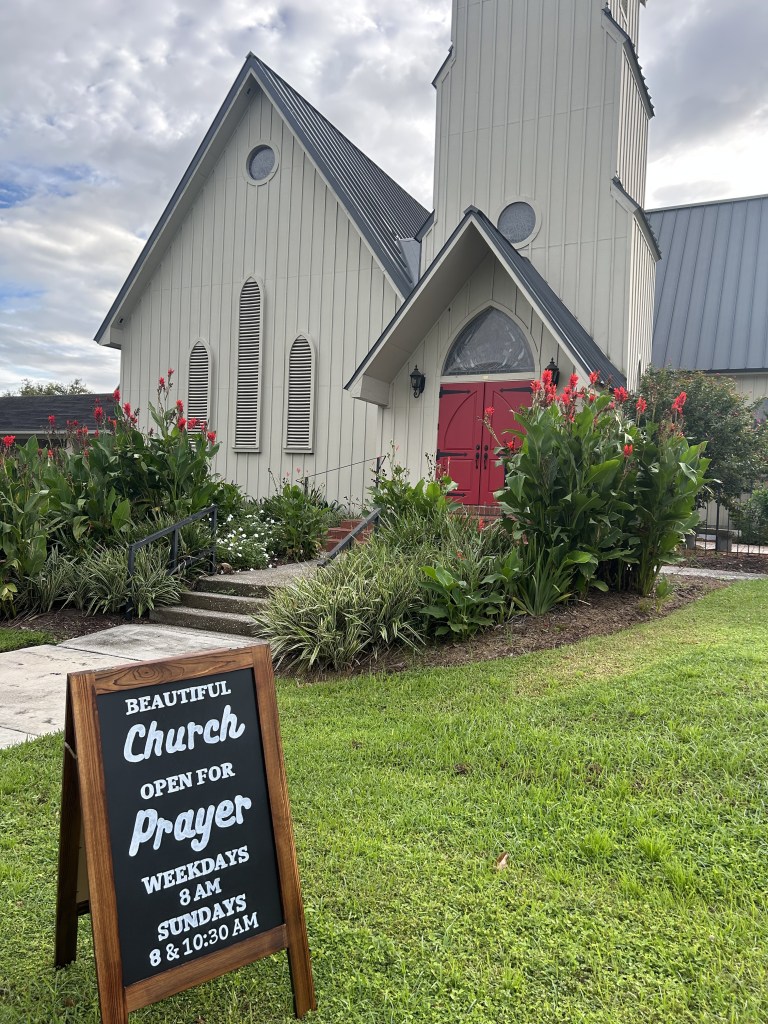
This past Wednesday it was the same. I had unlocked the doors to the church and sat down in the Lady Chapel for some quiet meditation before the beginning of Morning Prayer. Sometimes its just me that shows up, as it seemed to be Wednesday morning, but I still pray. I was just about to begin the service, when from the back of the church Brian walked in, just a couple minutes late. “I heard the bells ring” he said, “but the door was locked.” It turns out that that morning I had forgotten to unlock the north door, and Brian had been sitting out there waiting to come in. Luckily he found another door open and was quite forgiving of my mistake. But it was a reminder to me, that the one who carries the keys is the one with the responsibility to let people in.
Today we recognize the Feast of the Confession of St. Peter. And as he is our namesake, we consider today to be one of our patronal feast days. In the Gospel reading we hear the famous story of Jesus asking his disciples who they believe him to be. And in boldness Peter speaks up, “You are the Christ. The Son of the Living God.” Jesus commends him, or he had listened to the Spirit of God speaking within, and gives him the name Peter, which means rock. “And upon this rock I will build my church,” Jesus says, “I will give you the keys of the kingdom of heaven, and whatever you bind on earth will be bound in heaven, and whatever you loose on earth will be loosed in heaven.”
It’s an important passage of Scripture, and one that has been used through the centuries to support important theological doctrines such as the authority of bishops passed on from Peter to all those who would follow through apostolic succession, or in the Roman Church the primacy of the papacy. I’m wondering though if too often the focus of our attention in this passage has been on power rather than responsibility. We often read this passage as if Jesus is rewarding Peter for his confession with some kind of privilege to be in charge or to wield power over others. But I wonder if this passage is more about the responsibility that comes with confessing Jesus to be the Messiah.
When Jesus tells Peter, “I give you the keys to the kingdom,” what he is really saying is “I give you the job—the responsibility—the charge to make sure that people are able to get into the kingdom. Whatever you leave bound, will remain bound. If you don’t do your job, people will be left out in the cold.” Jesus isn’t giving Peter power over people; he’s giving Peter a sacred responsibility to serve people. Because if you’re the one with the keys, then you’re the one that has the responsibility to open the door for people. If not you, then who else? Jesus is calling Peter not to be king, but to be porter, servant, doorman.
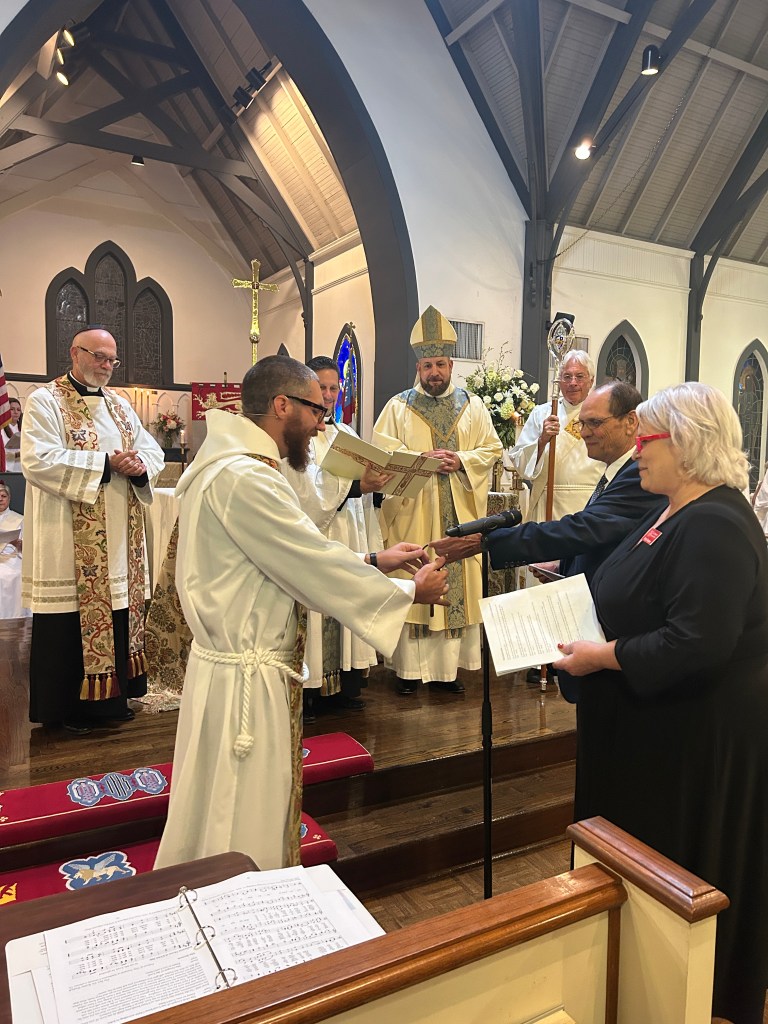
I am reminded of when I was installed as rector at St. Peter’s just three months ago. Patti and Ron, our wardens, came forward and gave me a set of keys, saying, “Receive these keys, and let the doors of this place be open to all people.” I take those words seriously.
And yet that charge—to let the doors of this place be open to all people—is not solely my responsibility. We share that charge. It is our shared responsibility to keep the doors of our community open to every person we meet. At times that simply means unlocking the doors each morning and placing the sandwich board sign outside or contributing financially to keep our bills paid. At other times that means fostering a spirit of welcome and grace for those around us. Greeting others we may not know. Sharing stories with one another. Getting to know people who are different than us. And at other times opening the doors to others involves going outside of these walls entirely, into the community, and meeting people where they are—at work, in the grocery store, at school, or even in their moments of struggle. Opening the doors isn’t just about this building, as important as it is. It’s about opening the doors of our hearts, our lives, and our faith to others, wherever we find them.
Each of us carries a key—not a physical one necessarily, but a spiritual one. Each of us has been given the joyful and sacred responsibility to help others encounter the presence of God. We open the doors to the kingdom when we embody Christ’s love, when we listen with compassion, when we invite someone into our lives, and when we offer kindness to another. The keys Christ gives us are ours to use, but they are not ours to hoard. They are meant to unlock the grace of God in the lives of others. And if we don’t use our keys, then who will?
Who in your life is waiting for you to open a door? Who is standing just outside, waiting for an invitation, a welcome, a sign that they belong? Maybe it’s a neighbor, a coworker, a family member, or even a stranger who crosses your path. When was the last time you invited someone to St. Peter’s? And when was the last time you invited someone into your own heart and into the presence of God? If you don’t use your key, then who will?
Today, we celebrate the Confession of St. Peter and the sacred charge Jesus gave him as keeper of the keys—a responsibility he embraced with passion and faith until the end of his days. Tomorrow morning, as I unlock the doors of this church, I will pray that we, too, may follow our patron’s example—opening doors not just to this place, but to the boundless love of God wherever we go. For if we don’t, then who will? Amen.
Questions for Reflection
- In what ways can I actively open the doors of my heart to those around me, fostering a spirit of welcome and grace?
- Who in my life might be waiting for an invitation to belong, and how can I ensure they feel valued and included?
- How can I embody Christ’s love in my daily interactions, allowing others to encounter the presence of God through my actions?
- Reflecting on the keys that I carry—what responsibilities do I have to serve others and support my community?
- When was the last time I invited someone to join me at church or in a spiritual conversation, and how can I make that a regular practice?
 Thoughts on Faith