
Homily, Listen
The Last Sunday after the Epiphany, 2025
St. Peter’s Episcopal Church
Plant City, FL
The Rev. Derek M Larson, TSSF
Today’s Lectionary Readings:
In the name of God: Father, Son, and Holy Spirit. Amen.
Have you ever come across someone with the Gift of Gab?
One of my closest friends in college had the Gift of Gab. He could, and often did, talk from the moment he woke up in the morning to the moment he laid down in bed at night. He is a self-identified extrovert and an external processor, which means he thinks best when he talks it out aloud, especially with others. Now I, on the other hand, am an introvert and an internal processor. In other words, I need alone time and quiet to think through things. I like silence! It’s a wonder we are friends!
Over time, though, I realized that we really weren’t so different. Because even though I was more quiet on the outside, I had just as much chatter on the inside. While my friend was busy talking on the outside, I was busy on the inside planning, and overthinking, and replaying conversations, and overthinking, and making to-do lists, and worrying, and overthinking. I came to realize that it was actually pretty noisy inside of myself, as it is for most of us. So whether its external or internal, I think most of us certainly do have the Gift of Gab.
And so did our beloved patron, Peter. He sure did have the Gift of Gab. Time and time again, he is the first one to speak, the first one with an opinion, the first one to get it right, and the first to get it wrong. Peter had the Gift of Gab, which he demonstrates again in today’s gospel reading.
The passage tells us in its opening words that it is about prayer. Jesus takes Peter and James and John up the mountain to pray. And in this time of prayer, something startlingly spectacular happens. Jesus is transfigured before them. His clothes are dazzling bright, and beside him are two heroes of the faith, one hero of the law and one hero of the prophets, Moses and Elijah. And as soon as Peter realizes what it is that he is seeing, what does he do? He says something. He doesn’t know what he is saying, the passage says, but he says it anyway. “Master, it is good for us to be here; let us make three dwellings, one for you, one for Moses, and one for Elijah.” Peter hasn’t fully thought this through. And he doesn’t know exactly what he is saying, but Peter has to say something. Has to do something. He can’t just sit there and experience the moment. He wants to preserve it. To domesticate it. To control it. Even as he takes on the role of servant, Peter seeks to do something with this experience.
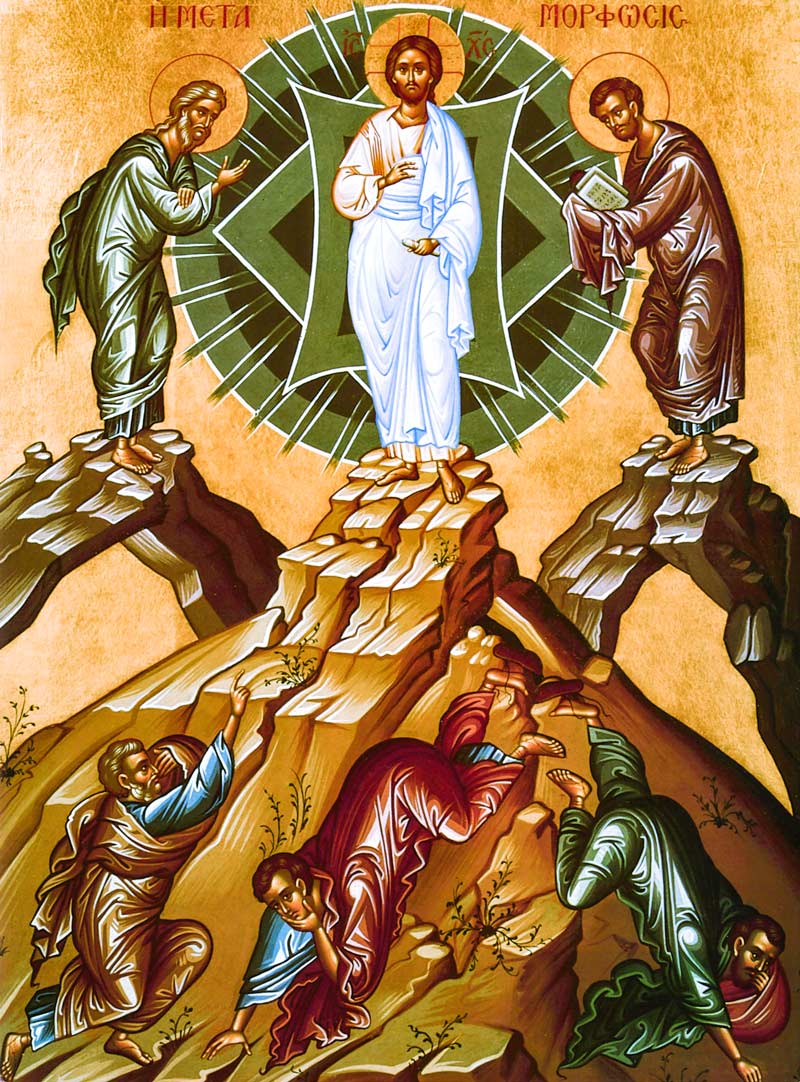
What’s interesting to me about the passage though, is that while Peter speaks, no one seems to acknowledge his request. No one seems to respond to him. Jesus never gives an answer. And in fact, Peter is interrupted. Suddenly overshadowed by a terrifying cloud up there on the mountain. And a voice speaks, “This is my Son, my Chosen. Listen to him.” Listen. Listen.
It’s almost as if that is the response to Peter’s request. “Peter, listen.”
And when the moment ends, perhaps for the first time in his life, Peter is silent as he goes down the mountain with Jesus and James and John again.
We are often like Peter in our prayers. When we sit down to pray we often feel as if we need to do something. To fill the space with words. To shape into something useful. To make sure we order it in the right way. And when we do sense God’s presence—when we feel a moment of clarity, peace, or awe—we often want to cling to it. To control it. To domesticate it.
But in the story of the Transfiguration, the invitation to Peter, is to let go of that impulse, and to simply listen. To witness. To experience. To let go of the desire to do, and to instead simply be.
God didn’t ask Peter to do anything. Jesus, Moses, and Elijah did not need Peter to build three dwelling places. God simply asked Peter to listen. To listen to Jesus.
And when Peter’s words and impulses to do were interrupted by the cloud of silence that came down and overshadowed them, Peter was terrified. It made him feel vulnerable, uncomfortable, in danger, even. But in reality, the cloud that overshadowed him was the very presence of God embracing him. And it came not through any effort or request of Peter’s own. It came simply by the will of God. To let go of our impulse to fill the silence is to entrust ourselves to the will of a loving God.
I wonder what role silence plays in your prayer life. Not just external silence, but internal silence. I wonder what happens when you get past the mental chatter and the impulse to control your experience with God, so that you can simply listen to and be with the presence of God. Have you experienced that before?
If you haven’t, maybe you’d like to try. Lent is coming up on Wednesday. I wonder what it would like to dedicate some time each day in this season to silence. To letting go. To listening. There are a number of methods you could use. But I wonder what it might be like to learn from Peter this Lent, to go up the mountain with Jesus and to come back down again in silence, wrapped in the experience of his love. It might be worth a try.
God doesn’t need you to do anything. God may call you to do something, but God doesn’t need you to do anything. God doesn’t need you too say anything. God may call you to say something, but God doesn’t need you to say anything. God just wants to be with you. God just wants your attention. God just wants you to listen. Amen.
Questions for Reflection
- How do I typically respond during moments of silence in my prayer life? Do I feel the need to fill the silence with words, or can I simply be present?
- In what ways do I try to control or domesticate my experiences with God? How might I let go of this impulse and invite a deeper sense of trust?
- What distractions or internal chatter prevent me from fully listening to God? How can I create a more peaceful environment for myself to hear His voice?
- As I prepare for Lent, what specific practices or habits can I adopt to cultivate silence and listening in my daily life?
- How might dedicating time to simply be present with God, without the need to do or say anything, transform my relationship with Him?
Resources for Further Reflection
My personal practice of silence is called Centering Prayer. Here are some resources where you can learn more.
Book: Centering Prayer and Inner Awakening by Cynthia Bourgeault
In Centering Prayer and Inner Awakening, Cynthia Bourgeault introduces readers to a simple yet profound prayer practice designed to deepen one’s relationship with God through silent contemplation. Aimed at those unfamiliar with contemplative prayer, this accessible guide explains how to engage in Centering Prayer, encouraging parishioners to quiet their minds and open their hearts to divine presence. Through practical insights and gentle guidance, Bourgeault invites readers to embark on a transformative journey of inner stillness and spiritual awakening, enhancing their faith and connection with God.
Book: Open Mind, Open Heart by Thomas Keating
In Open Mind, Open Heart, Thomas Keating (the spiritual father of this practice) offers an accessible introduction to Centering Prayer, a method of silent prayer that invites individuals to deepen their relationship with God. Through clear guidance and practical insights, Keating shares the principles of this contemplative practice, helping readers to quiet their thoughts and open their hearts to God’s presence. This book serves as both a thoughtful exploration of the spiritual journey and a gentle encouragement for those seeking to experience the transformative power of silence and stillness in their prayer life.
Website: Contemplative Outreach
Contemplative Outreach is a dedicated organization focused on promoting the practice of Centering Prayer, a method of silent prayer that opens individuals to a deeper relationship with God. The website serves as a rich resource for anyone interested in exploring this transformative spiritual practice.
Visitors to the Contemplative Outreach website can find a wealth of materials, including:
- Introductory Resources: These include guides and articles that explain the principles of Centering Prayer, making it accessible for those new to the practice.
- Training Opportunities: The site offers information on workshops, retreats, and online courses designed to help individuals deepen their understanding and experience of contemplative prayer.
- Books and Publications: A curated selection of literature, including works by renowned authors in the contemplative tradition, provides further insights into Centering Prayer and its spiritual benefits.
- Community Engagement: The website fosters a sense of community among practitioners, featuring group prayer opportunities, forums, and local chapters where individuals can connect and practice together.
- Meditation Resources: Visitors can access guided meditations, audio recordings, and other tools that support silent contemplation and enhance one’s prayer journey.
 Thoughts on Faith