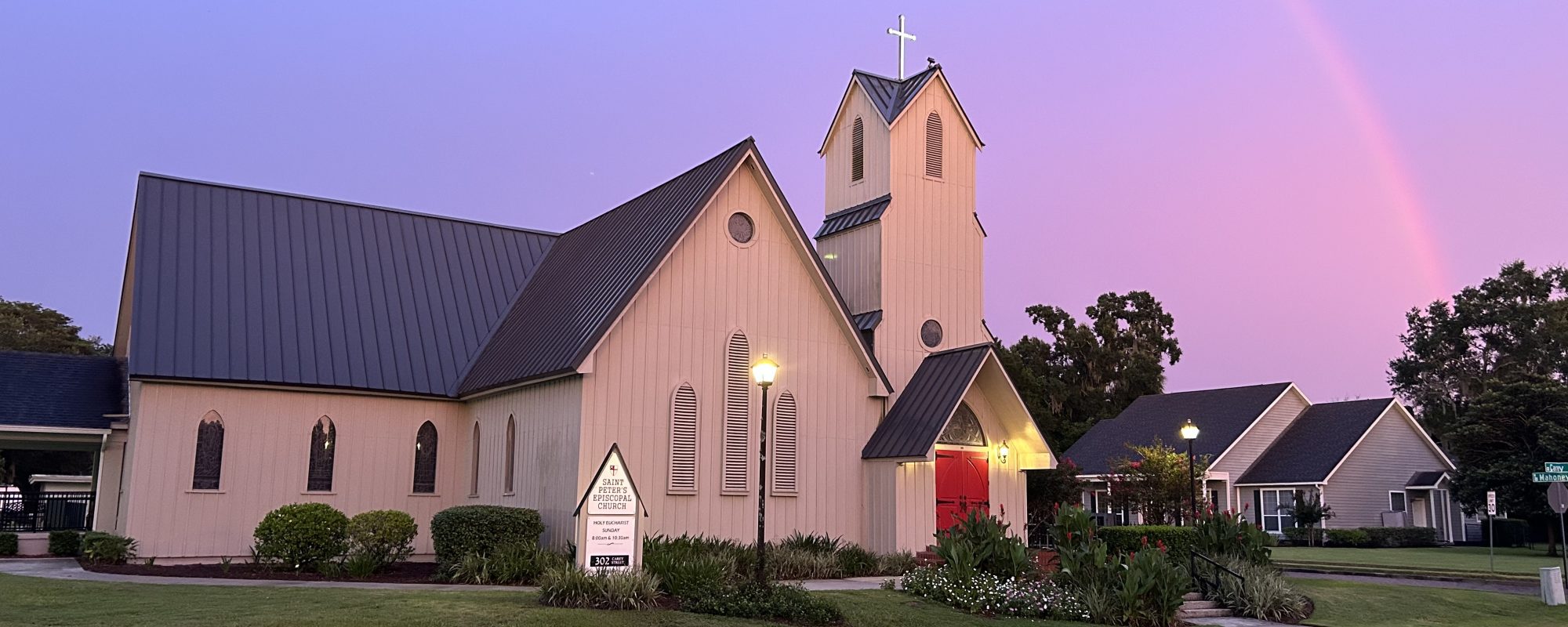
Homily, What is Your Epilogue?
Third Sunday in Easter, 2025
St. Peter’s Episcopal Church
Plant City, FL
The Rev. Derek M Larson, TSSF
Today’s Lectionary Readings:
In the name of God: Father, Son, and Holy Spirit. Amen.
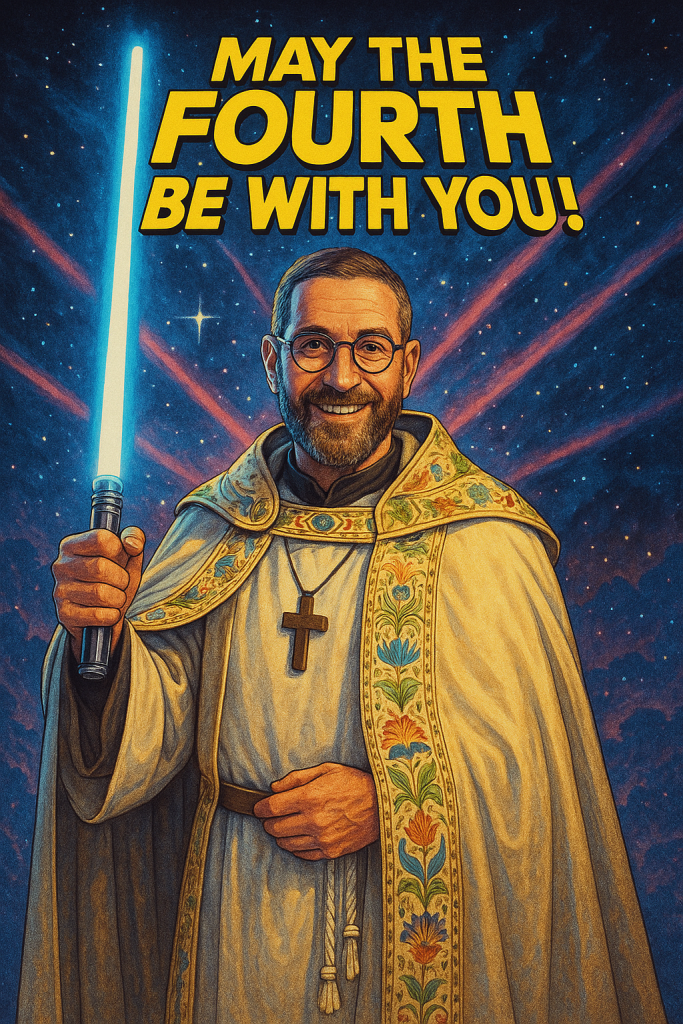
May the Fourth be with you! That’s right, today is that delightfully, pun-filled day in which fans all across the galaxy celebrate the epic story of Star Wars. May the Fourth be with you.
It’s amazing how a movie that first came out almost 50 years ago, continues to capture the attention of so many people. The Star Wars franchise continues to produce movies and TV shows connected to the story, and I don’t know if you’ve noticed, but as they add to the story they also adapt and change the originals.
For example, last night we watched Return of the Jedi, which was the third film that came out in 1983. When I was growing up I can remember the last scene of the movie, when the battle had ended, the Death Star destroyed, and the emperor defeated, and there was a great feast around campfires with the Ewoks of Endor. And there in the midst of the feast there appeared three heroes of the force that had died earlier in the films: Obi-Wan Kenobi, Yoda, and Darth Vader, who in the end had sacrificed his life for his son, leaving behind the dark side. Do you remember this scene?
Well, if you go back and watch the movie today, you’ll find that they have changed the ending. At least a little bit. Now you’ll find celebrations not only on Endor but other planets across the galaxy that were featured in the later films, and they have switched out the actor that played Darth Vader with the younger actor who played him in the prequels as Anakin, the child before he had gone over to the dark side. They have literally spliced in characters and images from decades later into the 1983 film.
Some fans loved this revision; others found it jarring. But whatever your opinion, it raises a larger question: Why change the ending? Why revisit a scene that seemed complete?
I think it’s because for George Lucas, the creator of the series, the story of Star Wars is a living reality. And as the story grows and continues, Lucas feels free to revisit the original with new perspectives and implications for how the story goes on. In that sense, this last scene of Return of the Jedi is like an epilogue, and its function is to help us frame the story just told in the context of a living reality.
Something very similar happens in our gospel reading today, and not just because of a campfire feast and the appearance of a resurrected hero. This scene too functions as an epilogue.
Most scholars believe the original ending to the Gospel of John was our reading from last week in chapter 20, which concludes, “Now Jesus did many other signs in the presence of his disciples, which are not written in this book. But these are written so that you may come to believe that Jesus is the Messiah, the Son of God, and that through believing you may have life in his name.” It is a very clear ending.
But you turn the page and suddenly the story goes on. The disciples are back home in Galilee, and we have no idea how much time has passed. We are zoomed in on Simon Peter, who would become so important to the life of the early church, perhaps to offer him some closure after his three denials of Jesus, and we hear just a bit more about the disciple whom Jesus loved, whom scholars say early Christians had questions about. And so it’s almost as if this part of the story had been changed or tacked on decades after the original was produced to fill in some gaps. It is an epilogue, and its function is to help us frame the story just told in the context of a living reality.
That’s what epilogues do. When the final chapter of the story ends, the epilogue picks it up again and begins a new story, related to the one that came before, but one that begins to answer “What’s next?”
And that is precisely the question to be asked in the season of Easter: What is next? Because the story of the life, death, and resurrection of Jesus doesn’t simply end that we might treasure it’s memory. It begins a new story. A story that lives on in the lives and communities of those that follow. A story in which we can participate so that we too experience the Risen Christ.
This epilogue is Simon Peter’s, and how the Risen Christ continued to shape his life. Our first reading from the Book of Acts today is Paul’s epilogue, and how the Risen Christ appeared to him. What is your epilogue story? How has the Risen Christ appeared to you? In your life? In your context? In your world?
Easter is not a memorial; it is a living reality. A story that goes on long after the final chapter is recorded and the canon sealed. The resurrected Christ continues to appear to us in each and every moment leading us into new life, offering us grace and forgiveness, calling us to live out our mission. And thus we pray in our opening collect for today, “Open the eyes of our faith, that we may behold him in all his redeeming work.” We do not pray that we may remember him. We pray that we may behold him. The story we tell of Jesus is a story that continues.
And so what will it take for us to open the eyes of our faith? What tools or practices might we use to open ourselves to the appearance of the Risen Christ in our lives? So that a new story—related to the first, but new—might begin in us?
Here’s one. I wonder what it might look like to write your own epilogue to the story of Jesus. To sit down and write about how the Risen Christ has made himself known in your life. And then to take that epilogue and fold it up and put it right here between the pages of your Bible alongside of Simon Peter’s epilogue as a reminder that this story too is a living reality, a reality that lives with you. I wonder if an exercise like that might help grow our attention to watch for Christ’s appearance in our own lives.
Because the story of Jesus is not over. It continues even now, even here, even with you. So may this story be a living reality for you, may the eyes of your faith be opened to behold it, and may the Risen Christ be with you. Amen.
Questions for Reflection
- How have I personally experienced the presence of the Risen Christ in my daily life, and what moments stand out to me as significant?
- In what ways do I see and understand my own life as part of the ongoing story of Jesus, and how might I articulate my personal epilogue?
- What can I do to open the eyes of my faith and remain attentive to the ways in which Christ is revealing himself to me?
- Are there any practices or tools I can incorporate into my routine that would help me recognize and embrace the living reality of Easter in my life?
- How can sharing my experiences of the Risen Christ with others create a sense of community and encourage them in their faith journeys?
 Thoughts on Faith