Homily, Shaped by Love
The First Sunday after the Epiphany, 2025
The Baptism of Our Lord
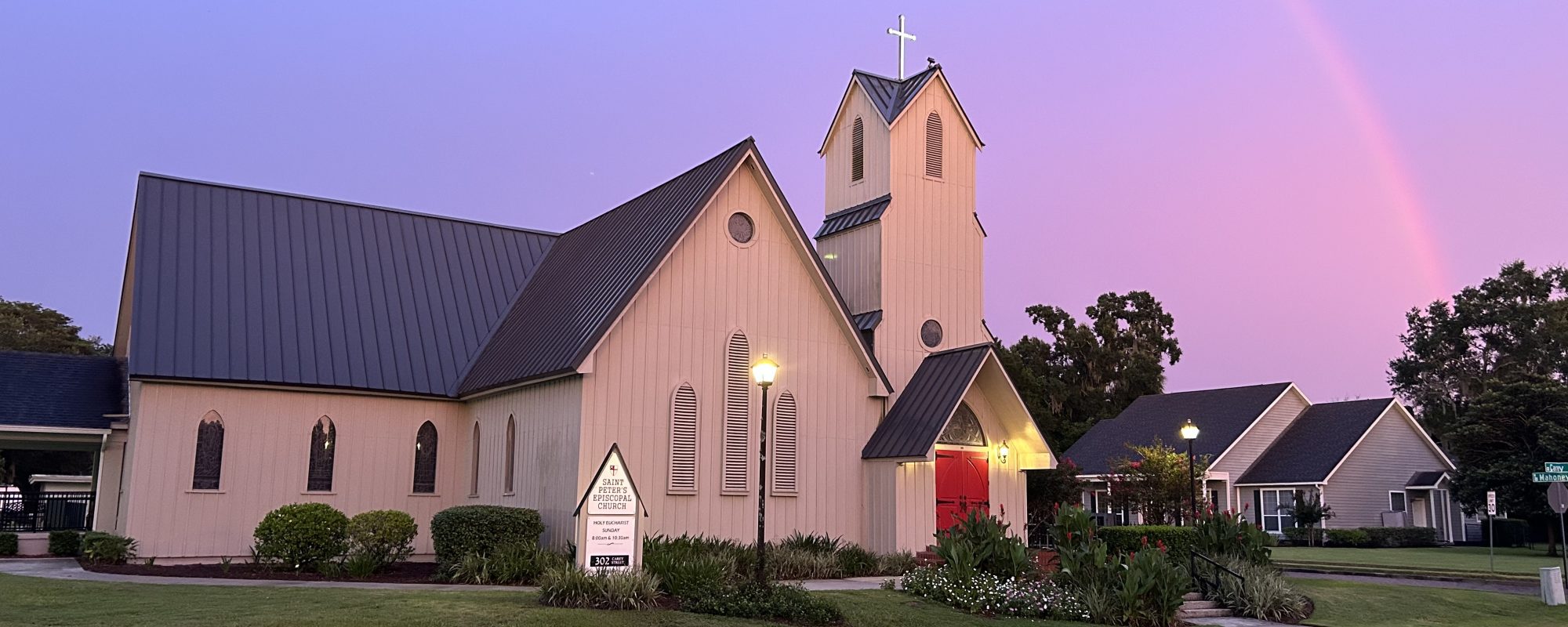
St. Peter’s Episcopal Church
Plant City, FL
The Rev. Derek M Larson, TSSF
Today’s Lectionary Readings:
In the name of God: Father, Son, and Holy Spirit. Amen.
Six million years ago there was a grassy plateau through which a trickle of water moved. Through the years, as the landscape and weather changed, the trickle became a creek, which became a stream, which became a river. You can imagine the fish that swam in it. The birds that washed in it. The deer that drank from it. Over the course of a million years, the river got bigger and smaller and bigger again. Slowly the rushing of its water made a mark on the earth below it. Over time it began to shape that earth, carving it to expose rocks hidden deep within the ground. Those rocks became boulders. Those boulders became cliffs. Until the river itself was no longer water flowing across a plateau, but through an enormous canyon. A mile deep. Eighteen miles wide. Through its persistence and the passing of time, the water had sculpted one of the most breathtaking, beautiful things an eye may ever see. Because of water. And water’s power to shape the earth.

In the sacrament of baptism, water also has power to shape the soul.
In our gospel reading today, Jesus is baptized by John in the Jordan River. And after he was baptized the heavens opened and the Spirit of God came down upon him and a voice rang in the air, “This is my Son, the Beloved. With him I am well pleased.”

Now on one hand, this story is a story about the identity of Jesus. It is a story that tells us that Jesus is the very Son of God. Or as the Evangelist John tells it, “God’s only Son.” The story tells us that Jesus has a profound and special relationship with God, that no one else has. That he, himself, is Divine. This is a story about Jesus.
But on the other hand, this is a story about our own identity. Because when Jesus calls his followers to also be baptized, his story becomes our own. So that when we are baptized, though we may not see or hear it, the heavens are also opened, and God says to each one of us, “You are my child. And I love you.”
Baptism, then, at its core, is an affirmation of our own belovedness. Pause for a moment and say, “I am loved.” That’s what baptism tells us. That we are each divinely, profoundly, and deeply loved. No matter who we are. No matter what we have done. No matter how many dishes are in our sink. No matter how many Facebook friends we have. We are loved. That is the core of our faith. That is the heart of what it means to be a Christian. To be loved.
And the moment we are baptized, the moment that water passes over our heads, that affirmation of belovedness becomes the guiding force of our lives. To be baptized, is not simply to be loved, but to be shaped by belovedness. So that the love of God which flows through us in the waters of baptism begins to sculpt and carve and mold and shape us so that we become that which God affirms us to be. In other words, baptism is not a single moment in history, but an eternal movement of the Spirit. We were not baptized. We are baptized.
Bishop Scharf, when he talks about baptism, likes to compare it to another sacrament, marriage. If we only look at our marriages as something that happened in the past on our wedding day, we’re forgetting what marriage really is. In the same way, to be baptized is not to have had the love of God wash over us, but to have the love of God wash over us. So that bit by bit, like a river that sculpts a canyon, we are shaped by love. So that God’s love for us becomes our love for God. So that’s God’s love for us becomes our love for one another. So that’s God’s love for us becomes our love for the earth. So that God’s love for us becomes our love for ourselves. Baptism is that which eternally shapes us so that in the end there is nothing left but the beauty of love (this is what we call in church doctrine, theosis, or divinization, or sanctification. To be a Christian is to be shaped by love.
Of course we get in the way of that sometimes. Some of the rock within us which the waters of baptism reveal are harder than others, and take more time to shape and break down, but the eternal flow of God’s love continues, and the more we allow ourselves to be softened by its force, the more we will find ourselves shaped by its power.
Say it again, “I am loved.” Does that truth shape your life? Does that truth guide and direct what you say and what you do? Is that truth reflected in your relationships? Is that truth present in the way you treat yourself? Is that truth present in the way you pray?
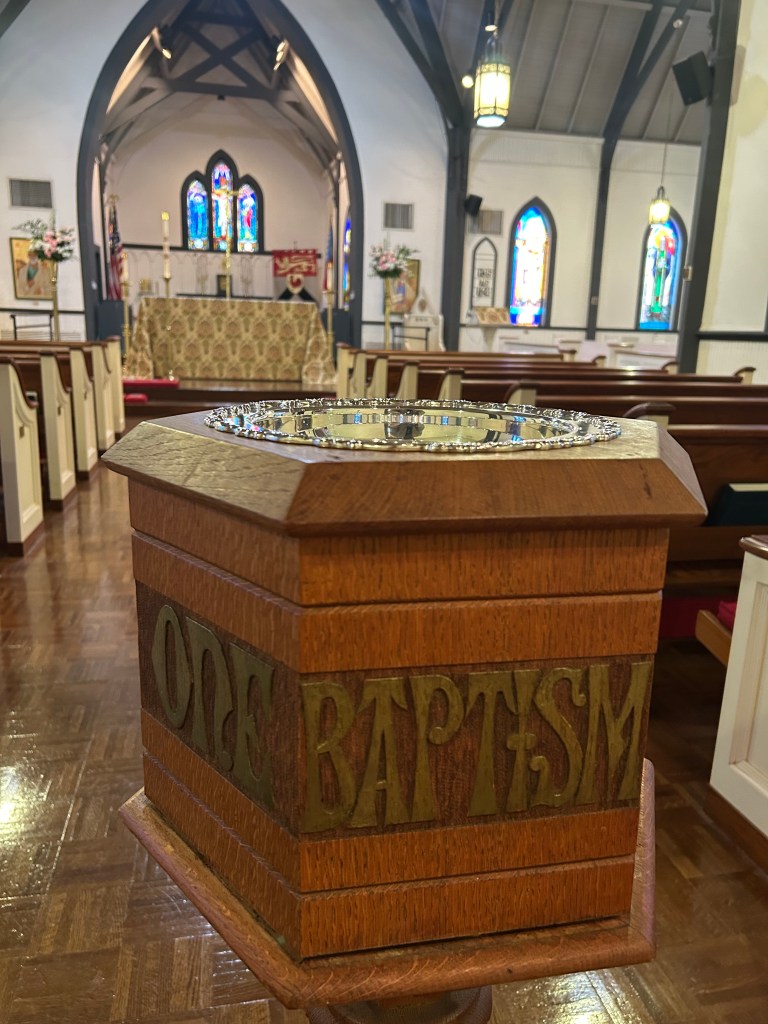
At the entrance of this church, is a font, you’ll notice the window behind it that tells the story we hear today, the story of Jesus and the story of ourselves. Some of us began our journey of baptism right there, and some of us began our journey in other places like it. I invite you, then, when you enter and go forth from this place to touch that water, and to place it upon your forehead, and your heart, and your shoulders to remember your baptism and your own belovedness. And to remember that like a canyon sculpted by the persistent flow of the river, in baptism we are ever being shaped by love. Amen.
Questions for Deeper Reflection
- How has the understanding of my baptism influenced my identity, and in what ways do I recognize myself as “beloved” by God?
- Reflecting on the metaphor of the river shaping the canyon, what aspects of my life need God’s transformative love to break down barriers and reveal the beauty within me?
- In what ways can I actively allow the love I receive from God to shape my relationships with others, myself, and the world around me?
- How do I experience the presence of God’s love in my daily life, and what practices can I adopt to remain mindful of this love?
- What are some specific challenges or “hard rocks” within me that I need to surrender to God’s love in order to be shaped more profoundly by it?
 Thoughts on Faith