Homily, The Cross We Carry
The Seventeenth Sunday after the Pentecost, Proper 19B, 2024
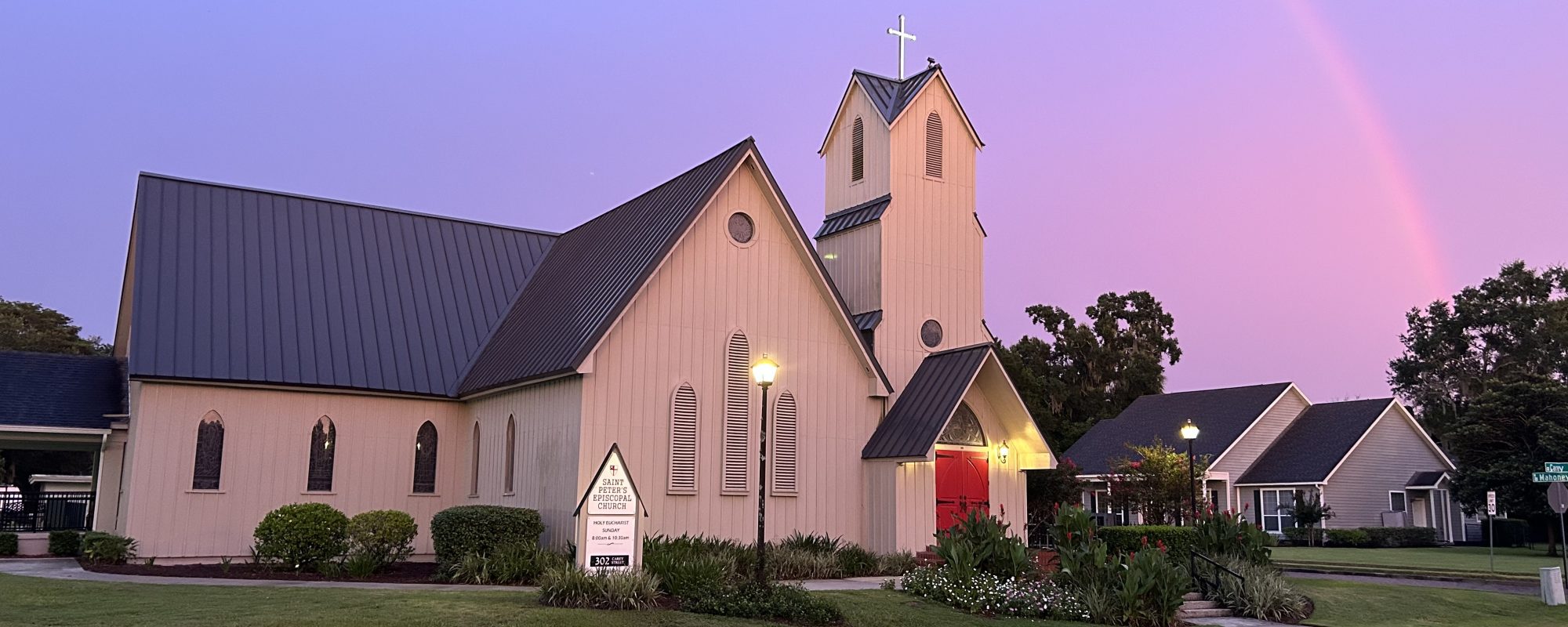
St. Peter’s Episcopal Church
Plant City, FL
The Rev. Derek M Larson, TSSF
Today’s Lectionary Readings:
Proverbs 1:20-33
Psalm 19
James 3:1-12
Mark 8:27-38
In the name of God: Father, Son, and Holy Spirit. Amen.
Does anybody happen to have a cross necklace on today? A number of years ago when I was a youth minister I was doing some shopping for cross necklaces. Our youth were going a on pilgrimage to Italy where we would walk in the steps of St. Francis, and I wanted us to carry a cross around our neck throughout the trip to remind us of why we were there. But as I searched online, it turns there are about a million different kinds of crosses you can wear around your neck. There are Franciscan crosses and Benedictine crosses, wood cross and metal crosses, there are crosses from Jerusalem and crosses made in the USA. Big and bold crosses, small and subtle crosses. Crosses adorned with gems and diamonds and crosses of 24k gold.
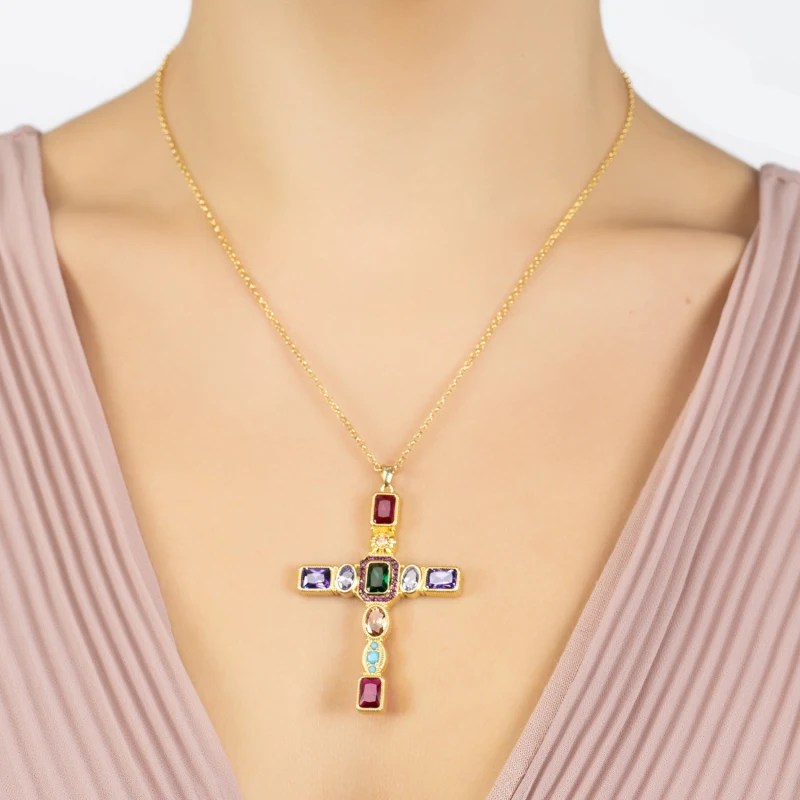
I remember reading a description on a jeweler’s website about its wide selection of crosses, “While some people wear this appealing design to express their convictions, most individuals wear it to make a fashion statement.” It went on to say that wearing a gold cross “conjures up images of luxury, success, and obviously, glam and beauty.” I chose a small wooden cross.
I wonder if that’s what Peter had in mind in our gospel passage this morning though: “luxury, success, and obviously, glam and beauty.” Because when Jesus asked his disciples who they thought he was, Peter, in his unending zealousness, proclaimed, “You are the Messiah”, which of course was the correct answer. But it appears that Peter’s vision of the Messiah was pretty different than what Jesus had in mind.
You see the people of Israel had been suffering for a long time. They were weary with oppression under the Roman Empire. And the Messiah, according to some interpretations of the Hebrew Scriptures, was supposed to be a king. A king that would bring back the good ole days of David and Solomon, when Israel was at the peak of its fame and status and wealth. The Messiah would be a king who would bring relief to a suffering people and bring them again the comforts of luxury, success, glam, and beauty. And so when Peter boldly says, “You are the Messiah” he is also saying, “Finally, some relief from the weariness of my people.”
Imagine the shock, then, when the next thing out of Jesus’s mouth is that he will suffer, be rejected, and killed, and if any want to be his followers, they must take up their cross as well. It sounds exactly like what Peter was trying to avoid. So much for glam and beauty! And so he rebuked Jesus.
It can feel easy for us to see how Peter got it wrong, but don’t we want the same thing as Peter? Aren’t we also tired of our anxieties, pains, worries, sicknesses, insecurities and grief? Aren’t we also looking for ways to avoid more of that? In a world where we hope wearing a cross will conjure up images of luxury, success, glam, and beauty? In a world where wearing a cross is a tiny prayer that our faith will somehow protect us from more pain and suffering? We’re not so different than Peter. Perhaps our suffering is not the same as Peter’s, but it is no less real. And even on our ears, the words of Jesus are exhausting. “Take up your cross and follow me. Those who want to save their life will lose it, and those who lose their life for my sake, and for the sake of the gospel, will save it.”
What do we do with Jesus’ words when we’re already weary from the burdens we’ve been carrying?
I wonder if the answer lies not in the suffering itself, but in what lies beyond it. What if, in Jesus’ command, he is not calling us to suffering but through suffering? Jesus, after all, doesn’t carry his cross aimlessly, but to Golgotha, where he will leave it and then find new life. In this passage Jesus does say, the Son of Man must undergo suffering, be rejected, and killed, but then he also says and after three days rise again. Jesus is not calling us to suffering; Jesus is calling us through suffering, to something greater. To a place where real healing and transformation can take place.
Like Peter, we often spend a lot of time trying to avoid suffering. But in trying to avoid it, what we often do is really ignore it. We bury it deeper within. We sweep it under the rug. We put on a stiff upper lip. We turn the other way. And while ignoring suffering can sometimes alleviate the surface pain, it almost always ends up strengthening it too. So that we fuel our fears and anxieties and worries and anger. And then what happens is it spills over on to others. Without even realizing it we take our pain and try to export it to those around us. We take our pain and take it out on others. We buy into false narratives of prejudice. We play the blame game. In fact, I believe if you look around the world, most of the violence and human suffering we see comes from unacknowledged pain. We don’t know what to do with suffering, whether it be our own or others.
To pick up our cross, then, is an invitation to acknowledge the places within us that hurt. And to follow Jesus to a place where we can find relief. It’s not that Jesus wants you to have a cross. It’s that Jesus sees that you already have a cross. And he wants you to follow him to the only real place where you can lay it down.
And yes, it will feel like more pain. It will feel like a death. It is not an easy thing to do. It is always easier to pop an Advil than to go to the doctor. But Jesus knows, that the only way to healing is not by avoiding suffering, but by acknowledging it, taking it up, and bringing it to God.
And the good news—the good news of this passage—is that you don’t have to do it alone. Jesus speaks not just to you, but to the whole community of disciples. So that side by side, with Jesus accompanying us, we carry our crosses to Golgotha, and lay them down in the grave together. The church is a place where we can acknowledge our pain together, and support one another, as we give it to God.

Whatever the world may say, the crosses around our necks are not meant to be symbols of luxury, success, glam, and beauty. But neither are they meant to call us to suffering for its own sake. The cross is a symbol of God seeing our pain. And showing us the way to healing and new life. So don’t spend your time avoiding the pain within. Acknowledge it. Let God see it. And then take it up, and follow Jesus to the place where you can lay it down. Amen.
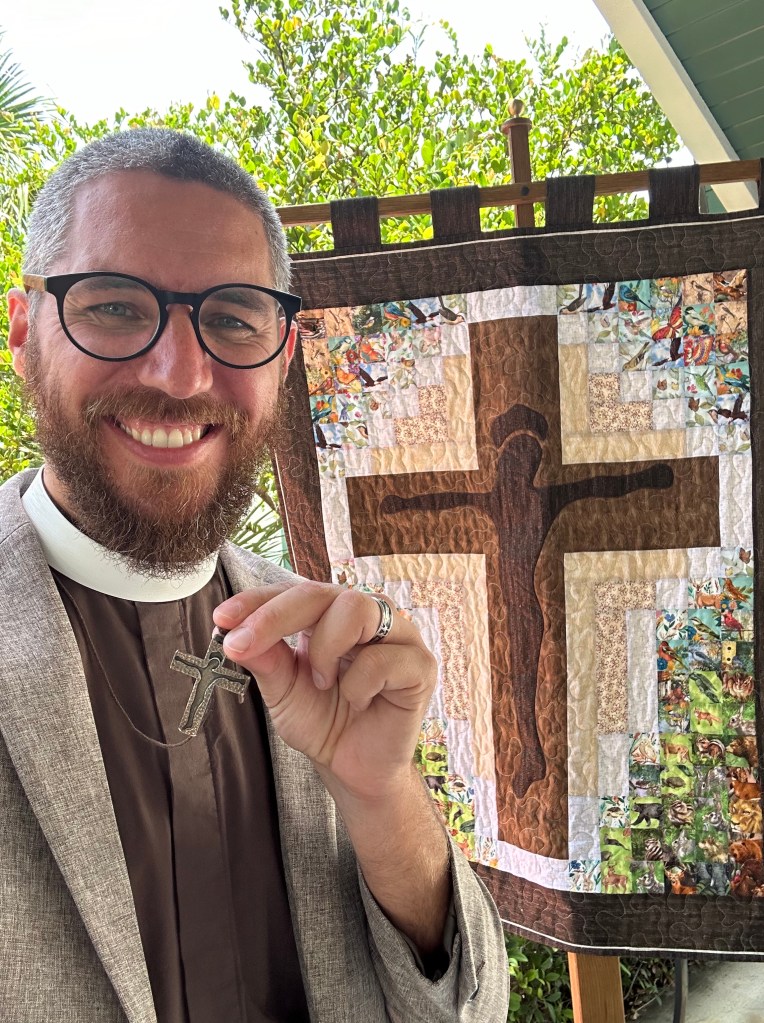
Questions for Reflection
- Jesus asked his disciples, “Who do you say that I am?” An extension of that question is this: What does the symbol of the cross mean to you? Is it protection? A badge? A reminder? A scandal? A symbol of status? A symbol of humility? What does it mean to you?
- What pain in your life are you being called to acknowledge? What does it mean to take it up and follow Jesus?
- What pain in the world are you being called to acknowledge? What does it mean to walk beside those in pain as they carry their cross?
Resources for Further Reflection
Book: The Universal Christ: How a Forgotten Reality Can Change Everything We See, Hope for, and Believe by Richard Rohr
Richard Rohr is a Franciscan, Catholic Priest who writes a lot about spirituality and the Franciscan tradition. In this book, Rohr writes about how the notion of Christ is much bigger than we often recognize. He also spends some time talking about the cross and the crucifixion. In chapter twelve he writes a beautiful meditation about the cross as the place to acknowledge our suffering and be seen by God.
Song: “Come, All Who Are Weary” by the Porter’s Gate
The same Jesus who said, “Take up your cross and follow me” is the one who said, “Come to me, all you who are weary and are carrying heavy burdens, and I will give you rest” (Matthew 11:28). This week’s sermon has really been a wrestling of the tension between these two sayings of Jesus. What if they aren’t so opposite as they seem? Listen to this song from my favorite music group and let the words of Jesus wash over you.
Religious Jewelry: Tau Franciscan Cross Necklace
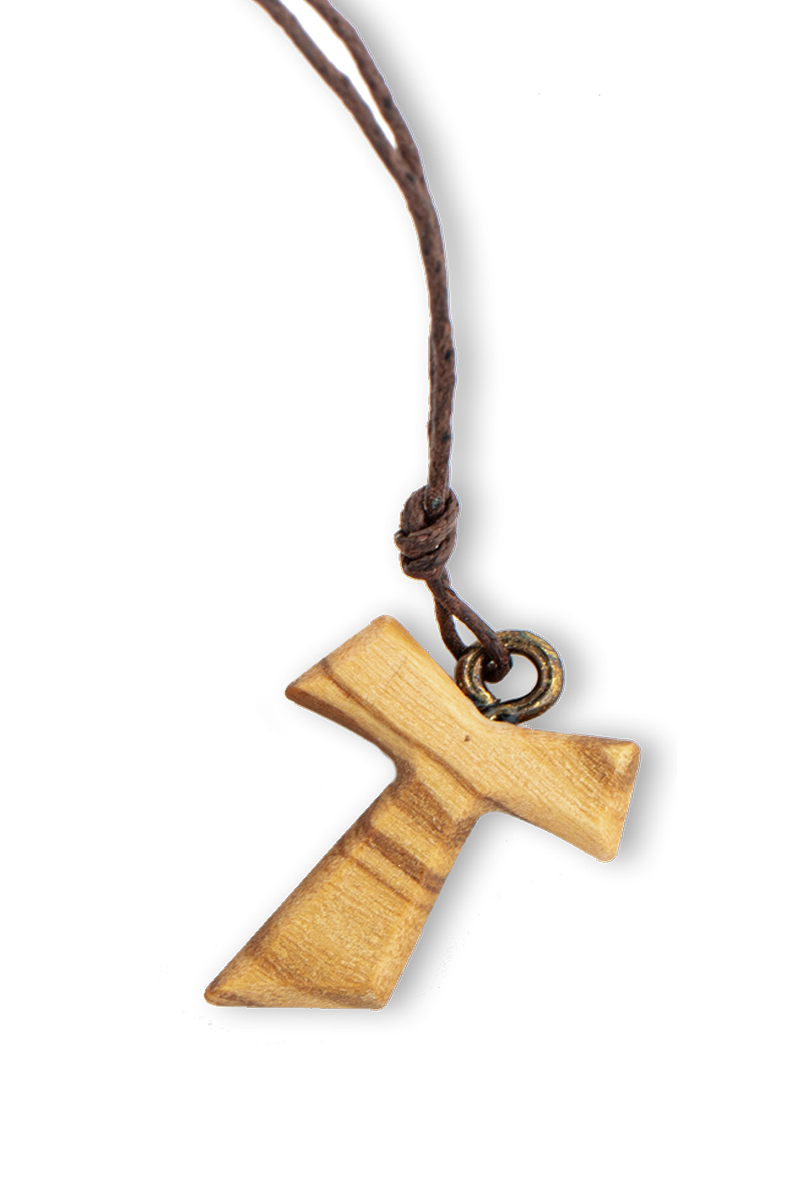
Here is an example of a Franciscan cross similar to the one we used on our pilgrimage. If you don’t have a cross necklace, perhaps its time to get a simple one like this to remember that your pain is seen by God.
 Thoughts on Faith