Homily, The Fruit of Good Works
The Fourteenth Sunday after the Pentecost, Proper 17A (2026)
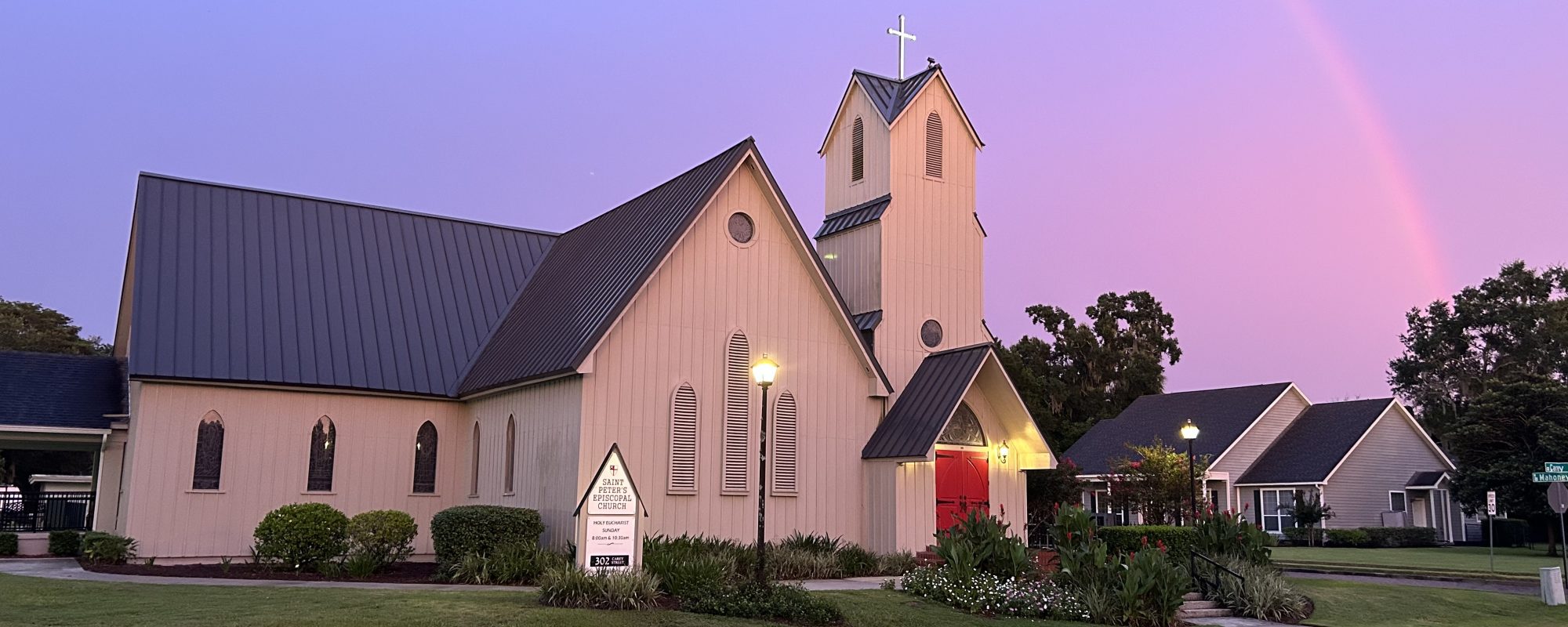
St. Peter’s Episcopal Church
Plant City, FL
The Rev. Derek M Larson, TSSF
Today’s Lectionary Readings:
Jeremiah 15:15-21
Psalm 26:1-8
Romans 12:9-21
Matthew 16:21-28
In the name of God: Father, Son, and Holy Spirit. Amen.
A Poem by Mabel Watts according to Molly Whuppie:
A little seed for me to sow,
A little earth to make it grow,
A little sun, a little shower,
A little wait, and then, a flower.
Isn’t that cute? I’m sharing it with the kids a little later at the family mass and I wanted to share it with you as well.
Have you ever noticed how often our prayers and Scriptures use stories and imagery from agriculture? From farming and gardening and working in the yard?
As often as it happens, we don’t get a Scripture passage like that day, but notice it does show up in our Collect of the Day, the prayer at the beginning of service. “Graft in our hearts the love of your name.” You notice that? In the prayer we ask God to put the love of God in our hearts. To connect it. To fuse it. To adopt it into our heart. Like a little branch being grafted into another tree.
And then the prayer goes on. “Nourish us with all goodness.” Like a little tomato plant that needs water and good earth. And then, “bring forth in us the fruit of good works.” The implication being that good works are not something we actively and independently do, they are the things that grow out of us from the love of God and God’s nourishment. A spirituality of agriculture.
I think that’s helpful for our epistle reading from Romans today. In it, St. Paul delivers a long and beautiful list of the lovely things that all Christians should be doing. Loving one another. Rejoicing. Being patient. Giving to those in need. Showing kindness to those that would do us harm. Being at peace with everyone. Overcoming evil with good.
It’s a great list. The question is how? How do we go about doing all the things on this list? How do we maintain patience and love and forgiveness and all of that. It sounds like a lovely world Paul is describing, but not a very realistic one. The truth is, most of us simply are not capable of living up to these expectations.
And that is where I think this Collect and these agricultural images can be so helpful. Because in reality, the things that Paul tells us are not things that we so much do ourselves, they are things that are done in us. They are the fruit that comes up from us because of the seeds of love that have been planted in us. In another place Paul calls them the fruits of the Spirit. Because they are the Spirit’s work in us, and not our own.
The only way we can live the life that Paul describes in this passage is not by effort or willpower or discipline. The only way we can live the life that Paul describes is by getting out of the way, and allowing the fruit of God’s work to grow in us.
And we do that by cultivating within our hearts a place ready for the Spirit to work.
An orange tree doesn’t grow tall from willpower. It grows when it has been given the right conditions and the nourishment for growth to happen by the unseen forces within with which God has infused the whole world. It doesn’t produce oranges through some kind of decision process. It produces fruit when it is time and when it is healthy.
If we want to live that life that Paul calls us to. The answer is not willpower. It is the quiet cultivation of a heart ready to receive the work of the Holy Spirit.
If you want to love your neighbor, first you must pray for God to graft in your heart love. If you want to be patient in suffering, first you have to be in the quiet place where God meets you in suffering. If you want to show kindness to those who would do you harm, first you have to be nourished yourself by the kindness of God.
The fruit of good works comes from the work of God within. Our job is to cultivate the soil. To make it ready to produce that fruit.
In other words, really our job is to pray. If we want live the life that Paul describes, we have to pray. Day by day we have to spend time in the presence of God. The love of neighbor, patience in suffering, kindness to the unkind, it all comes from prayer.
If you want to know why you do the things you do and live the life you life, look at your prayer. For everything that comes out of us. All of our actions and inactions, all of our thoughts and intentions, all of our gifts and desires, all of our attitudes and demeanors are the direct result of our prayer. For it is in prayer that little by little the Holy Spirit works in us to produce the fruits of good works. Not all at once. But little by little over a long period of time.
But if we do not offer our time and attention to prayer, we can expect the work of the Holy Spirit to be stunted and withered.
Look at Peter in our gospel. “You are not setting your mind on Godly things, but only on human things” Jesus tells him.
But little by little the fruit of good works comes from the love of God grafted in us, the nourishment of goodness from God’s grace, and the cultivation of a heart ready for the Holy Spirit to do the work.
So I rewrote that little song for our children. A song that perhaps God sings within us.
It goes like this.
A little peace for me to sow,
A little love to make it grow,
A little prayer, a little wisdom,
A little joy, and then, God’s kingdom.
May the love of God be grafted in our hearts and nourished in goodness so that we may produce the fruit of good works. Amen.
Questions for Reflection
- In what areas of my life do I feel the need for God’s love to be more deeply grafted into my heart, and how can I invite that love in through prayer?
- How can I create a nurturing space within my heart and mind to allow the Holy Spirit to cultivate the fruits of good works?
- What specific actions can I take this week to embody the principles of kindness, patience, and love that St. Paul describes in Romans 12?
- How can I incorporate prayer into my daily routine to strengthen my connection with God and foster the growth of positive qualities in my life?
- Reflect on a recent situation where I struggled to show love or kindness. What steps can I take in the future to respond differently, drawing on my spiritual resources?

