Homily, The Politics of Love
The Twenty-Second Sunday after the Pentecost, Proper 25A (2026)
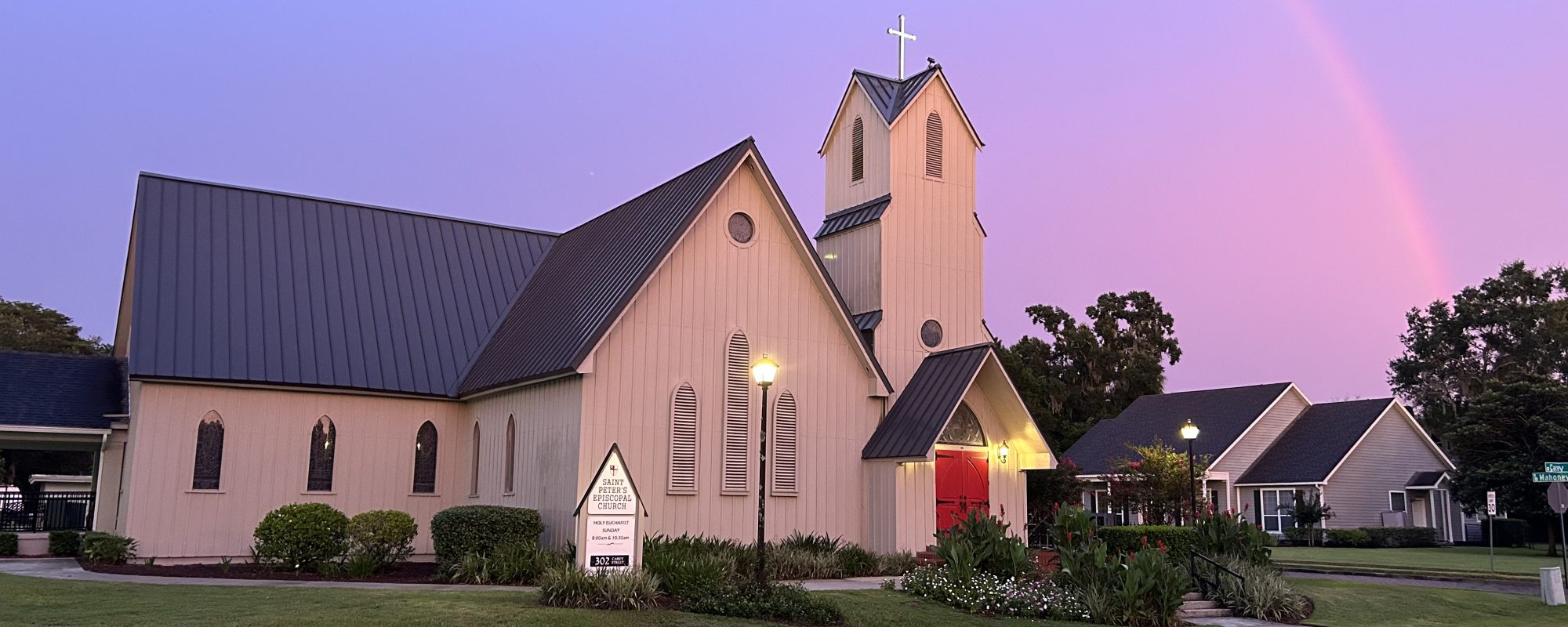
St. Peter’s Episcopal Church
Plant City, FL
The Rev. Derek M Larson, TSSF
Today’s Lectionary Readings:
Leviticus 19:1-2,15-18
Psalm 1
1 Thessalonians 2:1-8
Matthew 22:34-46
In the name of God: Father, Son, and Holy Spirit. Amen.
“Early voting in Florida is underway!” Are you getting text messages like these?
My phone is filled with them.
“So and so LIED to Florida voters.”
“I’ve spent my whole career fighting for this country.”
“Your voice matters! Vote for me.”
“Don’t let your tax dollars go to fraud and abuse.”
It’s exhausting, isn’t it? And I understand that elections are important and that we should all exercise our civil responsibility to show up at the polls, but the attack ads are just too much for me.
I wonder what kind of text messages Jesus got in ancient Israel. Okay, maybe not text, but certainly street corner shouting.
“Join the Pharisees, God’s real righteous ones!”
“Down with the Sadducees, the religious elite!”
“Death to Rome!”
Jesus’ world was just as politically divisive as our own, and sometimes we forget that.
In fact, our gospel reading today is the end of a series of political and religious debates between the major parties of the day and Jesus himself, the crowd standing by watching to decide who they should support.
It started when Jesus entered Jerusalem riding on a donkey like some kind of king. The chief priests and the elders demanded to know where he received his authority. In other words, what party affiliation did he have (Matthew 21:23).
Then the Pharisees came trying to trap him in a political witch-hunt by asking what he thought about the Roman tax system (Matthew 22:15).
Next the Sadducees came trying to trip up with a ridiculous question about the resurrection, which they themselves did not belief in (Matthew 22:23).
And finally in today’s reading we hear about a lawyer with the local Pharisaic group who challenges Jesus with a question.
One after the other after the other. Attacks. Propaganda. Half truths. You can imagine the dings on Jesus’ iPhone. Everyone’s got an opinion. And everyone is against someone (and most of all, Jesus).
But today, we hear that last question.
“What commandment in the law is the greatest?”
It’s helpful to know there 613 laws in the Torah. And so there are plenty to choose from. And whichever one you choose, there are plenty of reasons why you chose the wrong one. If you were with the Pharisees you might choose one, but if you were with the Sadducees you might choose another. If you were with the zealots you might emphasize a certain few, but if you were with the Hellenists, you might raise some others. And all eyes are on Jesus. Which is the greatest?
But Jesus, rooted deeply in his tradition, knows the Torah well. And even more importantly, through his prayer and faith, knows his Father well. And so he cites Deuteronomy 6:5, the Shema, “Love the Lord your God with all your heart and with all your soul and will all your mind.” And then he adds another for good measure, Leviticus 19:18, “Love your neighbor as yourself.”
What’s brilliant about Jesus’ response is that no-one could argue with it. That, of course, is the right answer. But more importantly, when everyone else is focused on things you should do and things you should not do and things you should believe and things you should not believe, Jesus is focused on who you should love.
Jesus, here is not focused on political theory, or theological doctrine, or ethics, he is focused on relationships.
Love is relational. It is emotional connection. It is shared life. And when we begin with love, we have a foundation to engage in the other conversations about life.
You can talk all you want about authority, resurrection, taxes; and you can join the Sadducees, Pharisees, Zealots, and Hellenists, but if you’re not talking about love, you’re missing the point.
Love is the foundation of our life in this world. We are called to love God. Not just to believe in God, or to respect God, or to pray to God, or to serve God, or to fight for God, but first and foremost to love God. To have a relationship with God. A shared life with God. And emotional connection with God. It is not even enough to simply to obey God, we are called to love God.
Love is the foundation of our life in this world. We are called to love our neighbor. Not just to tolerate our neighbor, or respect our neighbor, or be polite with our neighbor, or correct our neighbor, but first and foremost to love our neighbor. To have a relationship with them. A shared life with them. An emotional connection with them. We are called to love our neighbor.
And of course there are 611 other commandments. There are details for the best way to live out those first two. And debates and conversations and interpretations have to happen in order to figure that out. But the 611 are summed up by the first 2. Loving God and loving neighbor give the other 611 their aim, their purpose, their focus, and without them the other 611 fall apart. Love has to be the foundation.
Too often, our politics have nothing to do with love. They are about the economy and tariffs and immigration and reproductive rights and foreign policy, but love is left out of the equation. Too often our politics are more about who we are against than who we are for. And as Christians seeking to live in the way of Jesus, we are for something—we are for love, and more specifically the love of God, and the love of each and every neighbor.
It’s a messy system, politics. And most of the time there are no perfect answers. There’s lots of compromise. But as we get ready to go to the polls, let us remember how little Jesus cared about political and religious affiliation and how much he cared about loving all people, no matter who they belonged to. When people come to you like they came to Jesus trying to trip you up with a question. When they ask you about your political affiliation, your vote, and your policy stance: tell them it’s love. Let that be your starting place for every conversation. Every encounter. Every debate. And if you want to go deeper, go deeper, but start there. Start with love. For love is the best candidate. Love is the strongest of policies. Love is the most important affiliation.
When they asked Jesus what is the greatest commandment, his answer was love. Love God. And love your neighbor. On these two commandments hang all the law and prophets. Let us also, hang on these two, all our politics. Amen.
Questions for Reflection
- How can I deepen my personal relationship with God, ensuring that my love for Him is at the forefront of my spiritual life?
- In what practical ways can I demonstrate love to my neighbors, especially those who may have different views or backgrounds from my own?
- How do my political beliefs and actions align with the call to love God and love my neighbor? Are there areas where I fall short?
- When faced with divisive issues, do I prioritize love and compassion in my conversations and decisions, or do I focus more on being right or winning an argument?
- How can I incorporate the principle of love into my daily interactions, politics, and engagements within my community?

