Homily, Weeds and Wheat
Eighth Sunday after Pentecost, Proper 11A, 2023
Good Shepherd Episcopal Church
Tequesta, FL
The Rev. Derek M Larson, TSSF
Today’s Lectionary Readings:
Genesis 28:10-19a
Psalm 139: 1-11, 22-23
Romans 8:12-25
Matthew 13:24-30,36-43
In the name of God: Father, Son, and Holy Spirit. Amen.
My mother’s father, my Papa, loved landscaping. He took pride in his home and spent countless hours planting trees and bushes. Building flower beds and garden decks. Keeping the lawn immaculate. And I loved helping him. Some of my fondest memories with Papa involved spending time with him in the backyard, our hands full of dirt and shirts off in the Florida heat.
However much Papa loved landscaping though, I know he loved me more, because while he always let me join in, I don’t think I was all that helpful. I was small and inexperienced and couldn’t really do much besides pull some weeds. And even that I wasn’t particular good at. Papa had to show me over and over again the difference between weeds and his beloved plants. I didn’t see the difference. In my eyes some of the things he called “weeds” were beautiful little flowers with bright, yellow petals. And some of the things he called “plants,” were just nondescript, little, green sprouts. Why did we pull one and leave the other?

You know the funny thing about weeds is that there is really no such thing. There is no plant whose true name is weed. Instead weeds are simply plants that have been described that way by someone who doesn’t want them where they are. In one part of the world a plant might be called a weed, in another it might be called food, or medicine, or beautiful. Weeds are social constructs.
Of course I’m talking about weeds today because that’s what our gospel passage is about! In it Jesus tells a parable of a farmer who plants a field with good seed but then in the night an enemy comes and fills it with the seeds of weeds. And as the plants start to grow the farmhands suspect there is a problem, because some of the wheat is looking an awful lot like something other than wheat. And maybe they should start trying to pull out those weeds. But surprisingly the farmer tells them to wait and let the weeds and wheat grow together.
The farmer in this parable says, “In gathering the weeds you would uproot the wheat along with them.” The word weed in this passage refers to a plant called darnel, which sometimes is nicknamed, “false wheat” because it so closely looks like wheat that it can be hard to tell the difference until it is ready to be harvested. The farmer knows that if the farmhands start trying to pull up the weeds now, they will inevitably pull up the wheat as well. They won’t be able to tell the difference.
I think Jesus tells this story because he knows that, like my Papa’s grandson, people are notoriously bad at identifying weeds. Time and time again we call “good” what God has called bad, and we call “bad” what God has called good. And when something is good and bad, we only see the bad, and when something is bad and good, we only see the good. We are entirely too simplistic in our judgments and entirely too eager to condemn.
And so Jesus offers for us, in this parable, an image of ambiguity. This is a field that is filled with both wheat and weeds, with both good and bad. And while we might be tempted to divide them into clear categories, the reality is that sometimes that’s simply going to be impossible. Sometimes our definitions of good and bad are more socially constructed than they are based on God’s intentions.
And so Jesus is essentially telling his listeners to give it up. It’s not your job to distinguish the weeds from the wheat. Your job is simply to grow where you are planted, sharing soil with those who have been planted where you grow. It’s God’s job to figure out the rest.
How often do we cast our judgment on those around us? How often do we condemn whole groups of people? How often do we treat people like weeds? Like they are unseemly? Unwanted? Unsightly? Like they deserve to be plucked up from where they were planted?
Sometimes we do that with people of different beliefs or political parties. Sometimes we do that with people with different types of jobs or income levels. Sometimes we do that with people of different geographical origins or skin tones.
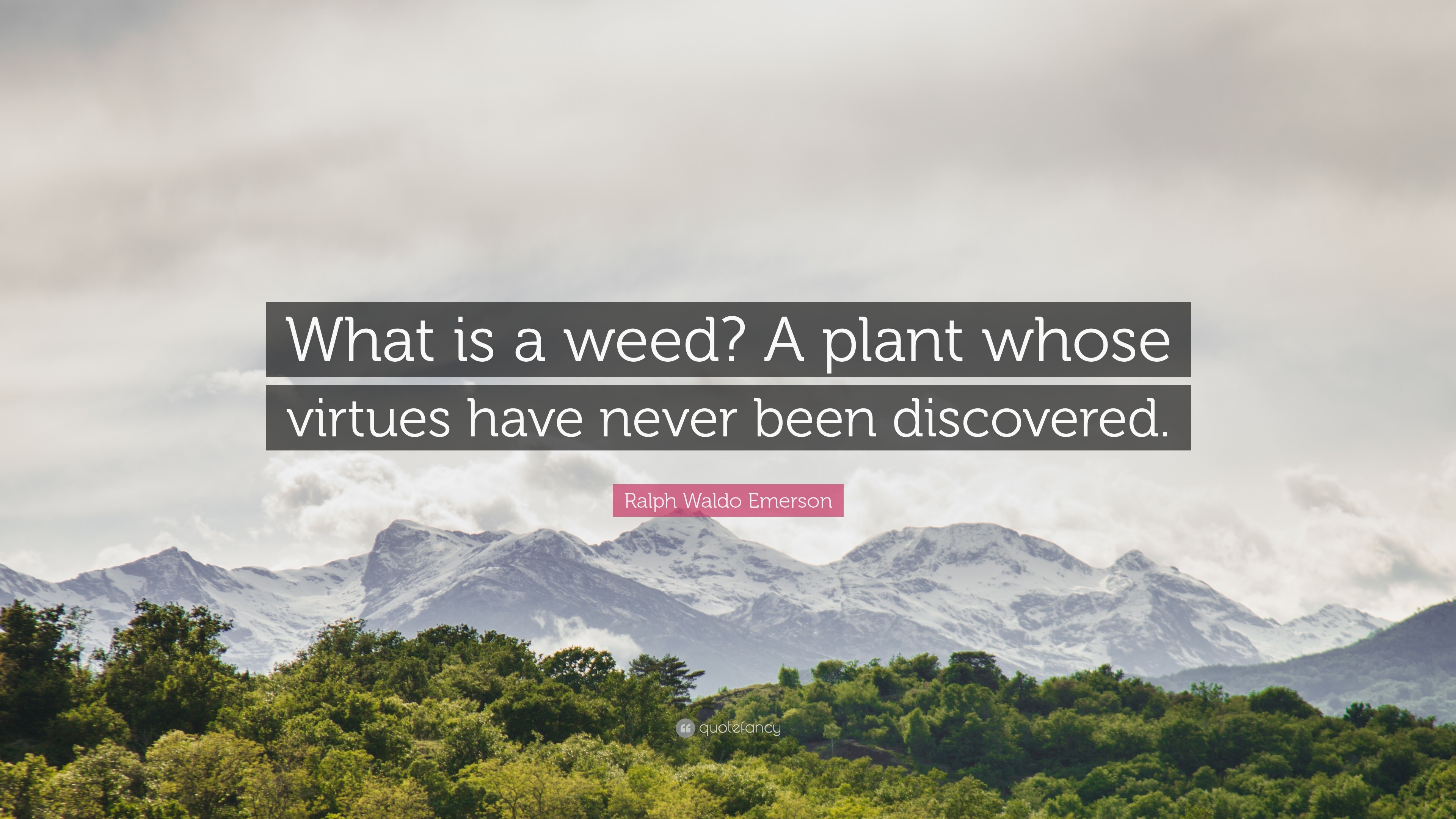
Really we can do that with anyone. We point at something we don’t like and call it a weed, when in reality, maybe it’s not. Maybe what looks like a weed to us is wheat to God. As Ralph Waldo Emerson once said, “A weed is a plant whose virtues have not yet been discovered.”
Now there’s a lot more that could be said about this passage. It’s another difficult one, particularly towards the end when it speaks about the end of the world. Yikes! But you know, that’s not the important part of this passage. To focus too much on that part would be to miss the point of the parable, which is that it is not our job to worry about judgement! We can trust that the goodness and love of God will sort it all out in the end.
But in the meantime, we are called to simply grow where we have been planted, sharing soil with those who have been planted where we grow. And if we can do that, if we can withhold our judgments of who is in and out, who is weed and who is wheat, we may just be surprised to learn there is a lot more wheat in the world than we ever realized. Amen.
 Thoughts on Faith