
Homily, When the World is Against You: An Alternative Reading of the Ten Bridesmaids
Twentieth-Fourth Sunday after Pentecost, Proper 27A, 2023
Good Shepherd Episcopal Church
Tequesta, FL
The Rev. Derek M Larson, TSSF
Today’s Lectionary Readings:
Joshua 24:1-3a, 14-25
Psalm 78:1-7
1 Thessalonians 4:13-18
Matthew 25:1-13
In the name of God: Father, Son, and Holy Spirit. Amen.
Do you ever feel like the whole world is against you? Do you ever feel like you can’t do anything right? Do you ever feel like one thing goes wrong after another, after another?
I imagine that’s how five of the bridesmaids felt in the parable from today’s gospel passage. Nothing seems to go right for them. They show up on time to greet the bridegroom, but he is late, so they have to sit there and wait. They thought they packed enough oil, but evidently they didn’t, because they are quickly running out. They thought the other bridesmaids were their friends, but it turns out they aren’t friendly enough to help out. They go to buy more oil, but its midnight and it takes forever because everything is closed. And then, when they finally get to the party, the bridegroom says he doesn’t even know them and won’t let them in. Evidently it’s okay for him to be late, but not them. So now it looks like the whole thing was for nothing. And on top of it all, the one telling their story calls them foolish and lectures them about staying awake, when everybody fell asleep! Not just them! Could this night get any worse?
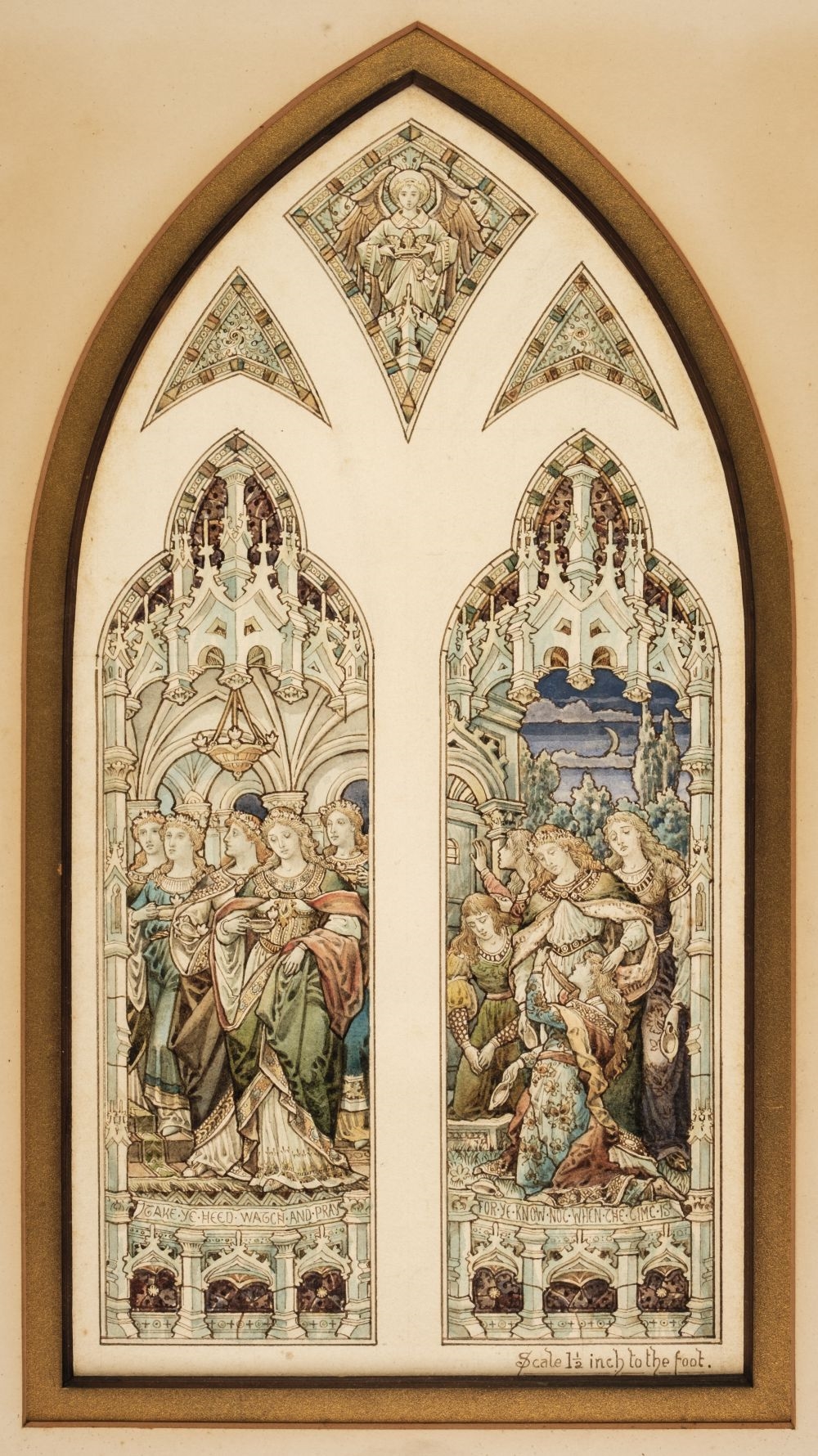
What do we do with a story like this? How is this good news? When Jesus says, “the kingdom of heaven will be like this,” what does he mean? I can appreciate the interpretation that most people come to about the importance of being prepared and being alert and ready for the coming of Christ, but the story itself—the way we get there—seems entirely inconsistent with the teachings of Jesus in the rest of the gospels.
For example, while here in this parable five bridesmaids are called wise because they have packed something extra in preparation for the unexpected, in Matthew 10 Jesus sends out the disciples with the explicit instruction to take nothing extra for their journey so that they might be solely dependent on God and the hospitality of others.
While here in this parable five bridesmaids refuse the request of the other five to give them oil, in Matthew 5:42 Jesus says, “Give to the one who asks of you, and do not refuse anyone who wants to borrow from you.”
While here in this parable the five bridesmaids who arrive late are shut out from the party by their Lord, the bridegroom, just two chapters earlier in Matthew 23:13 Jesus criticizes the pharisees for locking people out of the kingdom of heaven.
And how does this passage fit with the story Jesus tells in Matthew 13 about leaving behind the ninety-nine sheep just to find the one that is lost? Or Luke’s story of the prodigal son? Are these not five prodigal bridesmaids who have come home after finding themselves lost?
Perhaps another way of interpreting the passage is warranted. In the Jewish tradition, the reading of Scriptures is often compared to holding a diamond in the light: as you hold and turn it the light reflects in different ways, revealing different things. Rather than a single meaning, a passage of Scripture might hold a hundred meanings. So what would happen if we held this passage up to the light another way?
This section of Scripture is sometimes called Jesus’ second Sermon on the Mount. It begins in chapter 24 and takes place on the Mount of Olives with his disciples, rather than with a crowd. And it begins with a warning to them, “Beware that no one leads you astray. For many will come in my name saying ‘I am the Messiah!’ and they will lead you astray…Then they will hand you over to be tortured and will put you to death, and you will be hated by all nations because of my name…But the one who endures to the end will be saved.”
What if this parable is about those opening words? In which case, what if this parable’s message isn’t to be prepared or else you’ll be forgotten by God? Perhaps the message is to be prepared to be forgotten by the world. To be shut-out by the world. What if the message is not to stay awake so that you won’t be forgotten, but to stay awake to the one who will never forget you, even when others do?
If this were the case, the “lord, lord” that the bridesmaids call out to would not be referring to Christ the Lord, it would refer to those in the world who claim to be lord over others—those who assign worth only to those who have value to them, and thus lead them astray. The bridesmaids would be called foolish not by the standards of Christ, but by the standards of the world. Because they did not have, they were rejected. Because they were not useful, they were forgotten.
This would be contrasted with the parable at the end of this chapter where Jesus says that the people of the nations would be separated like sheep and goats not based on what they have, but by what they give to those that do not have. “I was hungry and you gave me food, I was thirsty and you gave me something to drink, I was a stranger and you welcomed me, I was naked and you gave me clothing, I was sick and you took care of me, I was in prison and you visited me.’”
Perhaps the bridegroom is not Christ at all, but the opposite of Christ. Someone claiming to be him. Someone who leads others astray. Someone who shuts the have-nots out in the dark.
If, then, in the parable, the bridegroom does not represent Christ, then where can we find Christ in this story? Well of course, Christ is out on the street with the foolish bridesmaids. Christ stands with the broken and the outcast. Christ cares for the have-nots and the rejected. Later in this very chapter Jesus says, “Truly I tell you, just as you [cared for] the least of these, you [cared] for me.” And with the diamond held up in this light—in this upside down, backwards reading of the parable—it is the groom left out of Christ’s presence, only not because Christ has shut a door on him, but because he has shut a door on Christ. Jesus is out on the streets with the foolish!
The traditional reading of this parable is to be prepared. To stay awake. Nothing wrong with that. But the reality is, there will always be times in life when we come up short. No doubt about it, at some point in our lives we will be left out in the cold and forgotten. Whether it be because of a mistake or a bad decision we make, whether it be because of some aspect of our identity, whether it be because of tragedy or a natural disaster, we can’t always be the “winners.” We can’t always be the haves. Sometimes we will be the have-nots. And we must be prepared for that and stay awake to who the real Lord is, not the one who abandons us, but the one who stands with us.
And so today, as you hear this parable, if you find yourself identifying more with the foolish bridesmaids than the wise, know that you are not alone. And that while you may feel shut out by the world, you are not shut out by Christ. Amen.
 Thoughts on Faith