Homily, With Sighs Too Deep for Words
Pentecost Sunday, Year B, 2024
Good Shepherd Episcopal Church
Tequesta, FL
The Rev. Derek M Larson, TSSF
Today’s Lectionary Readings:
In the name of God: Father, Son, and Holy Spirit. Amen.
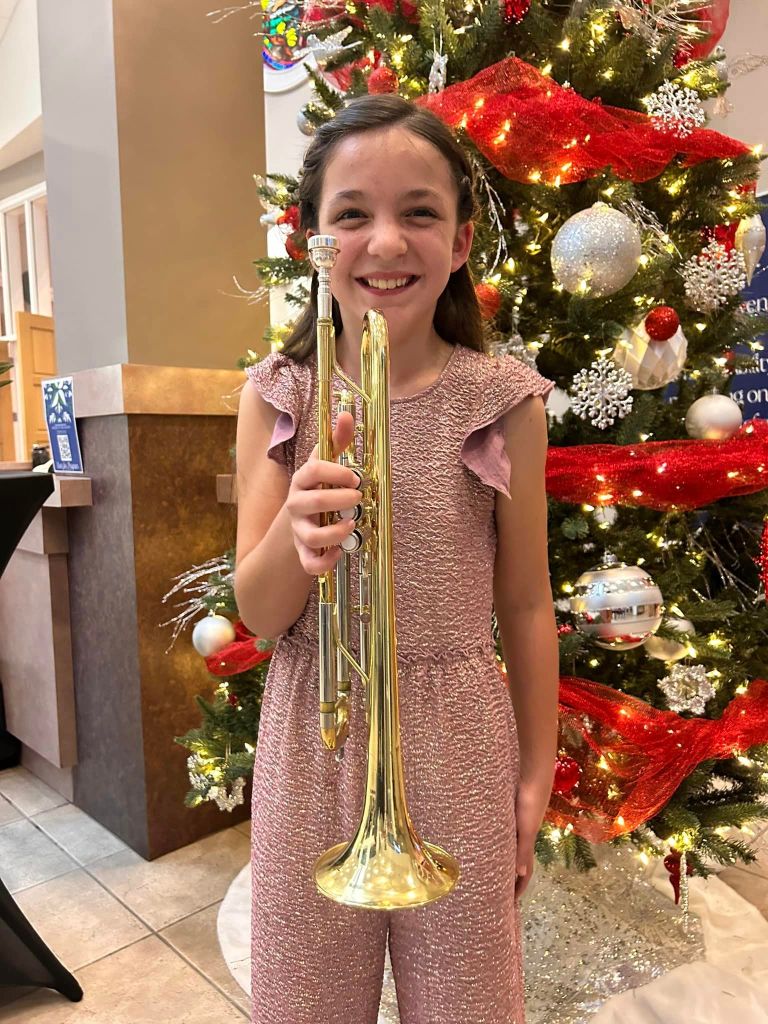
My niece, who is just finishing up 5th grade, plays the trumpet, and recently she was asked by her teacher to try out for the symphonic band, which is usually reserved for the older, more experienced students. Ellie has only been playing trumpet for a few months, but she is really quite good. Her tone is strong and rich and beautiful. Something I was never able to fully accomplish when I played trumpet back in middle school. In fact, I can remember once meeting with a music instructor to get better, and after listening to me for a couple minutes he asked me to put the trumpet down.
No, I wasn’t that bad, but he did ask me to put the trumpet down because he noticed one key thing I was doing wrong. So I set down the trumpet, and he asked me to lie down on the floor and then put a book on my belly. He said, “Now raise the book just by breathing in.” I couldn’t do it. All my breath was coming from up here, in my head and chest. And so he told me, “Go home and practice raising the book with your breath, and then pick up the trumpet.”
With time I did get better, though I didn’t practice as much as I could have. It turns out that even though the trumpet is held up as high as the head, its mostly played from down low in the gut. You can make a sound and play the notes up here, but to make the sound rich and steady and full, you have to play from down here.
You know, I think sometimes we say our prayers like I used to play the trumpet. We can play the notes and say the words, we can read the music and memorize the lines, but sometimes our prayers can feel like they don’t have much power. We can feel shaky or unsure in our prayers. We can lack confidence or lose interest in them quickly. Sometimes, perhaps, we feel so disconnected from our prayers that we’re not sure we can see the point in saying them at all.
But it’s in times like that we can lean on the words of St. Paul in our passage from Romans today which speak to us like a music instructor with a student: “put down your words for a while, and learn to pray from a deeper place within you.”
Paul was writing to a community that was struggling with their faith. They had put their faith in Christ, but amidst the daily ups and downs, and the worldly pain and suffering they weren’t always so sure how their prayers would be able to carry them through the storms of life. And so Paul offers them a message of hope, and then says to them, “we ourselves do not know how to pray as we ought, but the Spirit intercedes with sighs too deep for words. And God, who searches the heart, knows what is the mind of the Spirit.”
I love that line, “with sighs too deep for words.” What Paul is essentially saying in this passage is that when our words fail us, whether because we don’t know what to say, or because we don’t understand what we say, or because we don’t feel what we say, deep within us is still the Holy Spirit of God, carrying us in prayer. And what is most important in prayer is not necessarily our words, but staying attentive to the Holy Spirit within us.
In the Episcopal tradition, often our prayers come primarily from up here—from the mind and the intellect—we’re careful and precise about what we say, we like to read our prayers off the page of a book, but sometimes our prayers can lack any real feeling or resonance down here, in the heart, the dwelling place of the Holy Spirit. And there’s nothing wrong with praying from up here, after all the mind is an important part of our faith, but if we want to grow in our relationship with God, at some point our prayers have to also come from down here, through the power of the Spirit. And that’s the kind of prayer Paul speaks about when he says that great line, “with sighs too deep for words.”
What would it look like to put down our worded prayers at times? Words are important in prayer, just as the trumpet itself is important for learning to play the trumpet. But what would it look like to put aside our words and the thoughts of the mind to focus on what’s going on in that deeper place within us? What would it look like to take 30 seconds, 5 minutes, 20 minutes to simply pause our thoughts and words to pay attention to those sighs too deep for words? My spiritual director, Charlie, puts it this way, “Fold the wings of the mind. And place the mind in the heart. And come into the presence of God.”
If you can do that, if you can carefully turn your awareness to that place in your center, you will feel it. There, within you, is a deep and strong presence. It mingles with everything else you keep deep inside. It mingles with your woundedness. It mingles with your joy. It mingles with your grief. There, the Holy Spirit lives. There, the Holy Spirit intercedes for us with sighs too deep for words.
The goal is that with practice, little by little, all of our prayers will be grounded in that presence within us. That when we pray, we will pray with both the mind and the Spirit. But just like playing the trumpet, it does take practice. And there are different ways to practice that I can share with you if you’d like to go deeper. But sometimes we need to put away our words, so that we can focus on the Spirit.
The Spirit. That which we celebrate today, on Pentecost Sunday. The day we remember that the Holy Spirit came down to live within us and to empower us to walk with God in this world. The Spirit. The Advocate. The Intercessor. God in us.

So today, tomorrow, this week, as we celebrate the coming of that Spirit, let us spend some time with our words set aside, to commune with the God within, so that our prayers will be strong and rich and beautiful like the sound of music that comes from the soul. Amen.
Resources
For more reflection on this passage from Romans and the practice of wordless prayer see some of the following, and never hesitate to reach out for a conversation!
Song: Spirit Move! (Keep on Moving) by the Porter’s Gate
This song based on Romans 8:22-27 is from a new album by one of my favorite music artists, The Porter’s Gate. It was the soundtrack for the writing of this sermon.
Web Article: Learning to Pray from the Spirit and the Heart by Fr. Jack N. Sparks
This web posting is an adaptation of an old teaching on prayer from the 16th century by priest, Lorenzo Scupoli. I found it really helpful in framing the different types of prayer and praying from the Spirit/heart.
Organization: Contemplative Outreach
https://www.contemplativeoutreach.org/
One of the methods of wordless prayer that has been part of my practice is called Centering Prayer, inspired by the ancient monastic tradition and contemporarily developed by Fr. Thomas Keating, a Trappist Monk. Contemplative Outreach is the primary organization that teaches about centering prayer and organizes groups around the country. Below are a few more resources on Centering Prayer.
Group: Centering Prayer Group at Jupiter FIRST Church
Meets on the fourth Monday of each month
https://www.jupiterfirst.org/spiritualformation/
Book: Open Mind, Open Heart by Thomas Keating
Book: Centering Prayer and Inner Awakening by Cynthia Bourgeault
 Thoughts on Faith