Homily, You are What You Eat
The Thirteenth Sunday after the Pentecost, Proper 15B, 2024
First Homily as Rector at St. Peter’s Episcopal Church
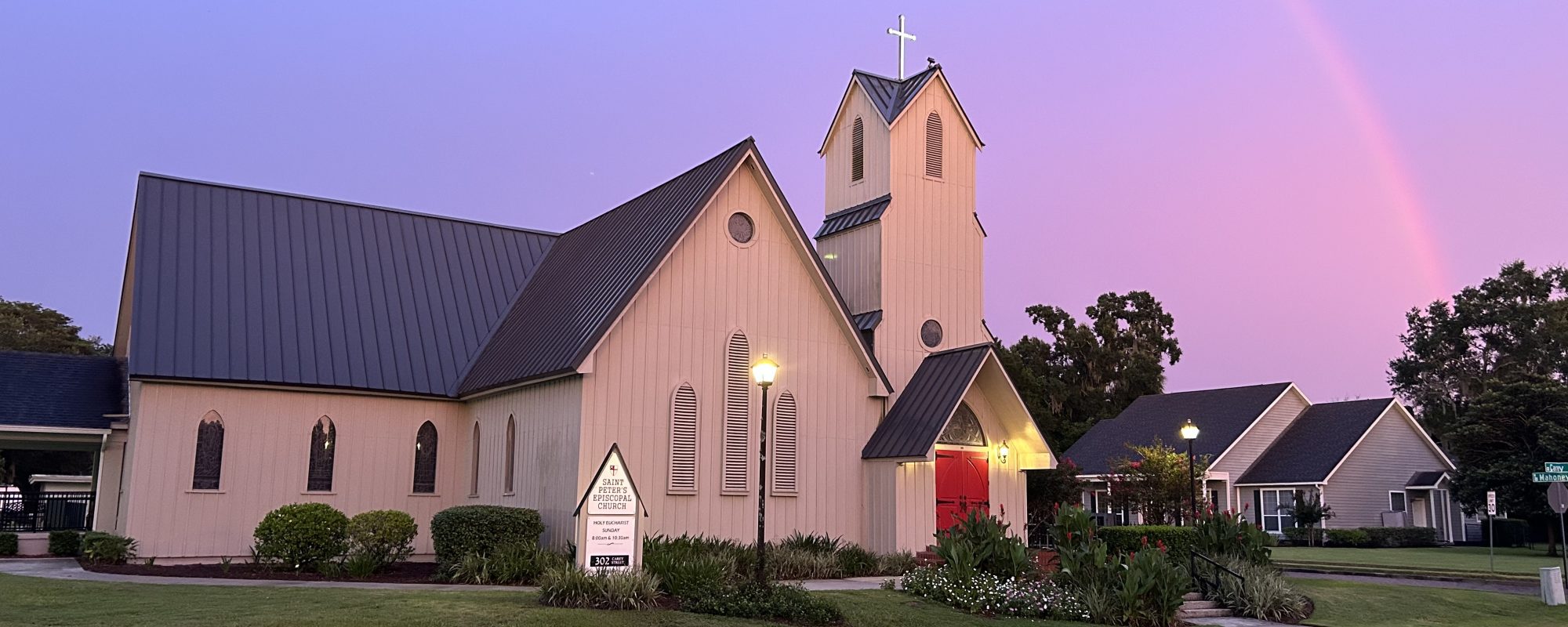
St. Peter’s Episcopal Church
Plant City, FL
The Rev. Derek M Larson, TSSF
Today’s Lectionary Readings:
1 Kings 2:10-12; 3:3-14
Psalm 111
Ephesians 5:15-20
John 6:51-58
In the name of God: Father, Son, and Holy Spirit. Amen.
Who here is a sweets person? Who here prefers a salty snack? Anybody like spicy food? How about something bitter? Do you like sour?
Good! This is very helpful!
You know it’s said that you can learn a lot about someone by the food they eat.
I was reading an article this week based on a study that went so far as to connect personality type with food preference. A survey of almost a 1000 Americans suggested, for example, that those who prefer sweets, tend to have more bubbly and social personalities, and those who prefer bitter snacks tend to be more introverted. If you like spicy food, you may be someone who tends to be a little sensation-seeking, but if you prefer to keep your diet bland, than you’re probably not a risk taker.
Those who who love a traditional Asian diet may value balance in their lives. Those who eat healthy foods tend to be disciplined. Those who love Southern food (and with 80 people at Engage Cafe this week, I think that may be you) tend to be nostalgic and family oriented. And those who, like my family, are vegetarians, well we’re probably just strange.
Apparently “You are what you eat!” as the old saying goes.
Our gospel passage is about eating this morning. Though perhaps not in a very appealing way. “Those who eat my flesh and drink my blood abide in me, and I in them.” It’s a hard saying. A disturbing image. And Jesus does that from time to time, especially in the Gospel of John. He uses striking and strange images like eating his flesh and being born again. And he does for a few reasons, to capture the attention of his audience (what did he say?), to provoke them to ponder his teaching (what did he mean?), and to connect with their common experience (in this case, the experience of eating).
And while it’s a strange metaphor, it’s not one that we’re all together unfamiliar with. How many of you have ever heard someone say to a little baby, “You’re so cute! I could just eat you up!” A bit disturbing when you think about it, but its a common image.
The idea behind the metaphor here is that to consume is to become close to. To consume is to become part of. That which we eat becomes part of us. And we in turn become part of that which we eat. There is a union in the combining of two things, so that what was once separate now becomes one. And so to consume Jesus is to become one with him.
John Chrysostom, an early Church Father, uses the word “comingle”. To consume Jesus is to comingle with him. To allow him to seep into our lives in such a way that he not only walks beside us but exists within us, shaping us, forming us deeper into his image.
For Jesus, it’s not enough to have him as some kind of advisor you can consult, or friend you can call, or king you can pay homage to. No, Jesus wants to become part of you. And in turn, for you become part of him. It’s what he means when he says, “[they] will abide in me, and I in them.”
To consume Jesus, is to become so shaped by him, that you become, in some sense, Jesus. You become part of him. Which is what the word ‘Christian’ actually means. It doesn’t mean those who believe in Christ. It doesn’t mean those who follow Christ. In Greek it literally means those who are “Little Christs.” Those who have become the body of Christ for the world.
You are what you eat.
And in fact, that is precisely what Eucharistic theology has said for centuries: You are what you eat. We gather around this table to share in the body of Christ. Because we are the body of Christ. St. Augustine while lifting up the bread said to the congregation “Behold what you are, become what you see.” “Behold what you are” (flesh and blood), “Become what you see.” (The Body of Christ). This whole sacrament of consumption, of eating, is about being united with and shaped by Christ.
And not for our own sake, but for love of this world. Jesus says, “My flesh is the bread that I will give for the life of the world.
Today begins a new chapter in the life of St. Peter’s. And I don’t want overemphasize that point, it is only a chapter. You have been writing the story of St. Peter’s for well over a hundred years, and that story will continue to be written well after I’m gone. But it is a new chapter. For which I am profoundly grateful to be a part.
And in this new chapter, we may, perhaps, see some changes. And we will see some things stay the same. We will see new births. We will see new deaths. We will face easy things. We will face some hard things. We will find ourselves in comfortable agreement. We will find ourselves in passionate disagreement. We will experience together profound joy and we will experience together profound grief. We will see people come. We will see people go.
But through it all, there must be one thing that remains the same. Christ must be our daily bread. We must become what we eat. We must be shaped by the life and the love and the teachings and the grace and the power of Jesus Christ. So that our life together, in Christ, can become life for the world. And in particular, life for Plant City.
It is not enough for us to simply have opinions about Jesus and about the world. It is not enough for us to simply talk about Jesus and about the world. We have to become Jesus for the world. And the only way we can do that, is to make Jesus our daily bread.
To come weekly before this altar and share in this sacrament. To spend time daily in prayer. To let go of that which drives us to anxiety and hate. To take up that which invites us to grace and peace. And to embrace the world with God’s love.
So then, as we come to the table this morning, let this be our commitment, at the beginning of a new chapter, to keep Christ as our daily bread, so that we might become that which we eat for the life of the world. Amen.
 Thoughts on Faith