Author: Derek Michael Larson
Derek is an Episcopal priest and a Franciscan tertiary in the Third Order, Society of St. Francis. Derek currently serves as Associate Rector at Good Shepherd Episcopal in Tequesta, FL. Derek has also worked as a school chaplain, a youth minister, worship leader, and bilingual (Spanish-English) preacher. He lives with his wife, two sons, and two cats in Jupiter, FL.
New Homily- On this Rock I am building my Church
A note to the white church: resources to build Trinitarian unity and diversity
As I mention in today’s sermon, much of the division we see in the world today comes at the hands of the Church, particularly that part of the Church whose members are white.
Slavery and segregation were both defended in large part by the white Church. Even today, we who carry white privilege have a difficult time seeing racism in ourselves and in the world around us. Some of us actively deny it. Others who see it in others can’t see it in ourselves. Having white privilege doesn’t mean we haven’t had challenges, but it does mean those challenges do not come from being part of a historically racially oppressed group of people. We do not carry the generational trauma inherited from those who were enslaved. We do not experience violence, prejudice, suspicion, or micro-aggressions in public spaces for not looking like most of those around us.
Some of us can’t read the paragraphs above without feeling angry and defensive. Our defensiveness is a sign of the need to practice repentance. The practice of repentance is not just for those we have harmed (though it is crucial if we mean to stop harming them), but it is also for the benefit of our own journey with Christ.
I want to offer a few resources to you that might help you work through your feelings of defensiveness and frustration and work towards repentance and justice. Please contact me if you need a dialogue partner to work through some of these. I’m not a person of color or an expert on racial justice but I may be able to help connect you with those who are. Another great idea is to start a book club with some friends to work through these resources.
If we answer the call of Christ to embody the work of the Trinity in our communities, to affirm unity and diversity in loving relationship, it is essential that we as white people do the work of reflection on our own experience of race and privilege and repent when we uncover the ways we have fallen short.
Absalom Jones Center for Racial Healing
We are very fortunate in the Diocese of Atlanta to be the home of the Absalom Jones Center for Racial Healing directed by Dr. Catherine Meeks. This is an Episcopal community here in the Diocese of Atlanta which offers trainings and resources for the work of racial justice and healing. All church staff, leadership, and vestry are required to go through its training on Dismantling Racism, but all are welcome and are encouraged to participate in these trainings!
Explore the website: http://www.centerforracialhealing.org/
Dr. Catherine Meeks
Dr. Catherine Meeks, who directs the Absalom Jones Center for Racial Healing, is a powerful voice for racial healing and justice. Here are a few podcasts and videos from her:
Finding Brave Spaces, a YouTube Series by Dr. Meeks
A Brave Space with Dr. Meeks (A Podcast Series)
A Time of Lament: A Recent Service from St. Luke’s in Atlanta with Dr. Meeks and the Rev. Ed Bacon
A Discussion of Racial Healing from the Episcopal Youth Ministry in ATL Podcast
Key Books on White Privilege and the Work of Anti-Racism:
White Fragility: Why its So Hard for White People to Talk about Racism by Robin DeAngelo
This book is extremely helpful for white people to reflect on what it means to be white in America, something we rarely think about.
How to Be an Anti-Racist by Ibram X. Kendi
This book is wonderful about clearly defining terms, such as racism, anti-racism, colorism, etc. The major claim of the book is that nothing is ever neutral. It is either racist or anti-racist (either discriminatory/ oppressive or inclusionary/liberative).
me and white supremacy by Layla F. Saad
This is another book for white people to do the work of reflecting on their own racial identity and its role in society. This one, however, includes questions and journaling assingments. It’s a workbook! And it would be excellent to use in a book study with others (that’s what I’ll be doing this summer).
Martin Luther King Jr. on White Moderates
Martin Luther King Jr. has become less of a controversial figure today and is widely praised for his work of racial justice during the civil rights movement. Even then he had much to say to who he called the white moderates. Many of us might even classify ourselves that way today. We are politically moderates or centrists. Some of us may say we are progressives and actually moderates. In any case, here are two things (a letter and a speech) from MLK that give the white community a lot to think about.
The Episcopal Church’s Exhaustive List of Resources for Addressing Racism
New Homily: Trinity, Unity, Diversity
“Go therefore and make disciples of all nations, baptizing them in the name of the Father and of the Son and of the Holy Spirit,”
Today is Trinity Sunday and we hear in our lectionary readings this morning the glimpses of Holy Threeness experienced by the early Church. The Trinity is a tricky thing that baffles most of our minds.
* Drone footage taken at Lakeland Highland Scrubs in Lakeland, FL, just down the road from where Derek grew up.
Reflections on what it means to be a Franciscan
Some of you may know I belong to a Franciscan religious order called the Third Order, Society of St. Francis. While our order has traditional friars and nuns who make vows of poverty, chastity, and obedience, the Third Order is for folks like me with families and jobs. We still live by a rule of life and take life vows, but they are adapted to our context. After 4 or 5 years of formation, I made my life vows as a Franciscan on July 31, 2016.
Recently a friend of mine was making his life vows in the order and asked me to share some reflections on what it means to be a Franciscan. Here is what I shared:
The Life of a Franciscan
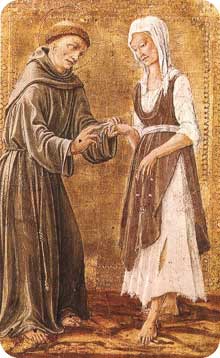
The life of a Franciscan is a life of poverty. I will go so far as to say there are no rich Franciscans, unless by rich we mean the great riches gained in giving up everything.
When I say a life of poverty I mean at least three things:
First, I mean the material poverty that causes us to depend upon God and others for our survival and wellbeing. The poverty that for some of us is imposed by the injustice of society and for others is chosen in the renouncing of all the “things” that compete for our attention. The poverty that forsakes the extravagance of society for the extravagance of God’s creation. Lest we think vows of poverty are solely for first order brothers and sisters, the life of a tertiary is not an exception to poverty but a life of contextual poverty. We adopt an attitude of simplicity which meets the need of our own context, but nothing more.
Second, by life of poverty I mean the poverty we encounter in the communities which we are called to serve. Communities which feel the weight of the world’s social sins: racism, white supremacy, sexism, homophobia, classism, greed, and power. We have always on our minds the world’s increasing wealth inequality, the limits to who can afford healthcare, and the walls which separate refugees from shelter. As Francis embraced the most rejected and forgotten of his society, we dedicate our lives not simply to the work of charity, but to the bonds of relationship and compassion with those forced to the margins, remembering that just as we do for the least of these, we do for Jesus (Mt 25:40).
Finally, by life of poverty I mean the spiritual poverty to which Jesus ascribes blessing in Matthew 5. The poverty that calls us to have the same mind as Christ, “who, though he was in the form of God, did not regard equality with God as something to be exploited, but emptied himself taking the form of a servant” (Phil 2:6-7). As Jesus prayed in the garden, “not my will but your will be done” (Lk 22:42), we seek to let go of our desires for worldly power, affection, and security to foster a spirit of continual praise of the Father and Provider of all.
And yet hidden in each of these things there is a surprise gift.
The first poverty teaches us humility and gives us freedom from the prison of materialism and capitalistic competition. Without a stack of things to defend, Franciscans may be open to experiencing the beauty and gratitude of a world that all belongs to God and has been graciously and hospitably shared with creation. The things we hold become sacred and priceless because their worth comes not from market value but from Divine generosity.
The second poverty teaches us love and gives us authentic friendships and intimacy, for the basis of our relationships comes not from the exchange of material goods but the exchange of mutual affection. Instead of segregation between groups of rich and poor, black and white, American and foreigner, documented and undocumented, we perceive all people as our siblings and fellow children of God.
The third poverty teaches us the meaning of joy by walking us into the very presence of God. It invites us to become participants in the unity of Divine Trinitarian love where we find our deepest and truest self as belonging to God.
Yes, the life of a Franciscan is a life of great wealth. I will go so far as to say there are no poor Franciscans, unless by poor we mean the great riches gained in giving up everything.
Find our more about the Third Order, Society of St. Francis at www.tssf.org.
New Homily: When the Lord is our Shepherd…
The Lord is my shepherd, I shall not want.
What does it mean to want for nothing?
What does it mean to want for nothing in an age of growing economic disparity. Half of Americans own just 2% of the nations wealth and the top 10% own 70% of the nations wealth?
Worship with us at St. George’s!
I was invited by my sponsoring parish, St. George’s Episcopal Church in Griffin, GA, (the church that walked with me through discernment for the priesthood) to officiate and preach for their digital worship this weekend. It was such a joy to participate! You can find the whole service below and you can find the sermon text and video here. Worship with us!
Alleluia! Christ is risen!
Una canción para el Jueves Santo
Una canción para el Jueves Santo de la capilla del jardín trasero. Bendiciones!
A song for Maundy Thursday from the backyard chapel. Blessings!
Jesús, Jesús, enséñanos cómo
amar y a servir
a toda tu creación
1. Kneels at the feet of his friends,
Silently washed their feet,
Master who acts as a slave to them.
Jesu, Jesu, fill us with your love,
Show us how to serve
the neighbors we have from you.
2. Pobres y Ricos serán
de toda rasa y color,
de todo pueblo y nación también.
Jesús, Jesús, enséñanos cómo
amar y a servir
a toda tu creación
3. These are the ones we should serve,
These are the ones we should love;
All these are neighbors to us and you.
Jesu, Jesu, fill us with your love,
Show us how to serve
the neighbors we have from you.
4. Nos capacita el amor,
humildemente a servir;
demos así de vivir en ti.
Jesús, Jesús, enséñanos cómo
amar y a servir
a toda tu creación
Jesu, Jesu, fill us with your love,
Show us how to serve
the neighbors we have from you.
Backyard Chapel
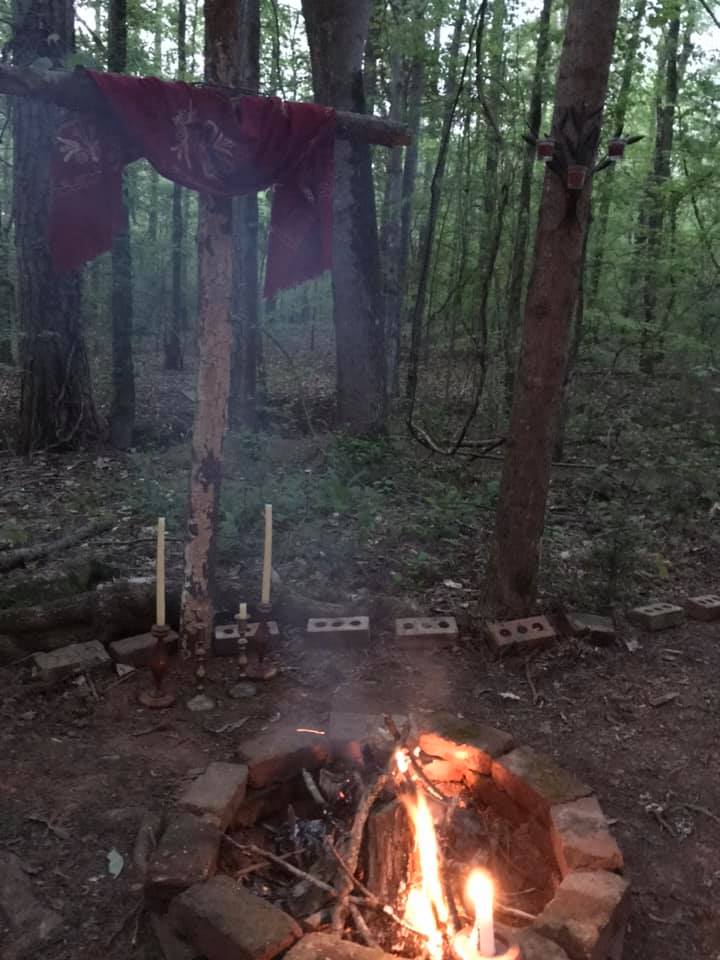
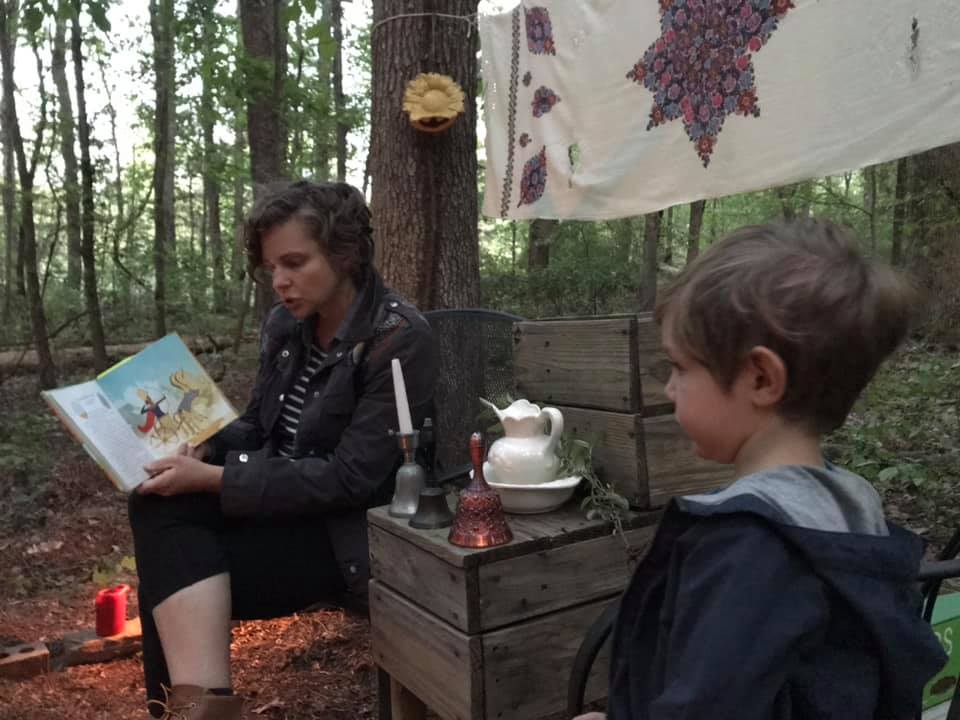
We are blessed to have a little bit of woodland in our backyard and so I helped Bear create an outdoor chapel today for Holy Week. Such a peaceful little place.


 Thoughts on Faith