New Sacred Story: Juggling Oranges for God: A Medieval Christmas Story

In this Sacred Story, Fr. Derek tells us the medieval Christmas story of Barnaby, the Juggler for God, and how everybody has a gift to give.

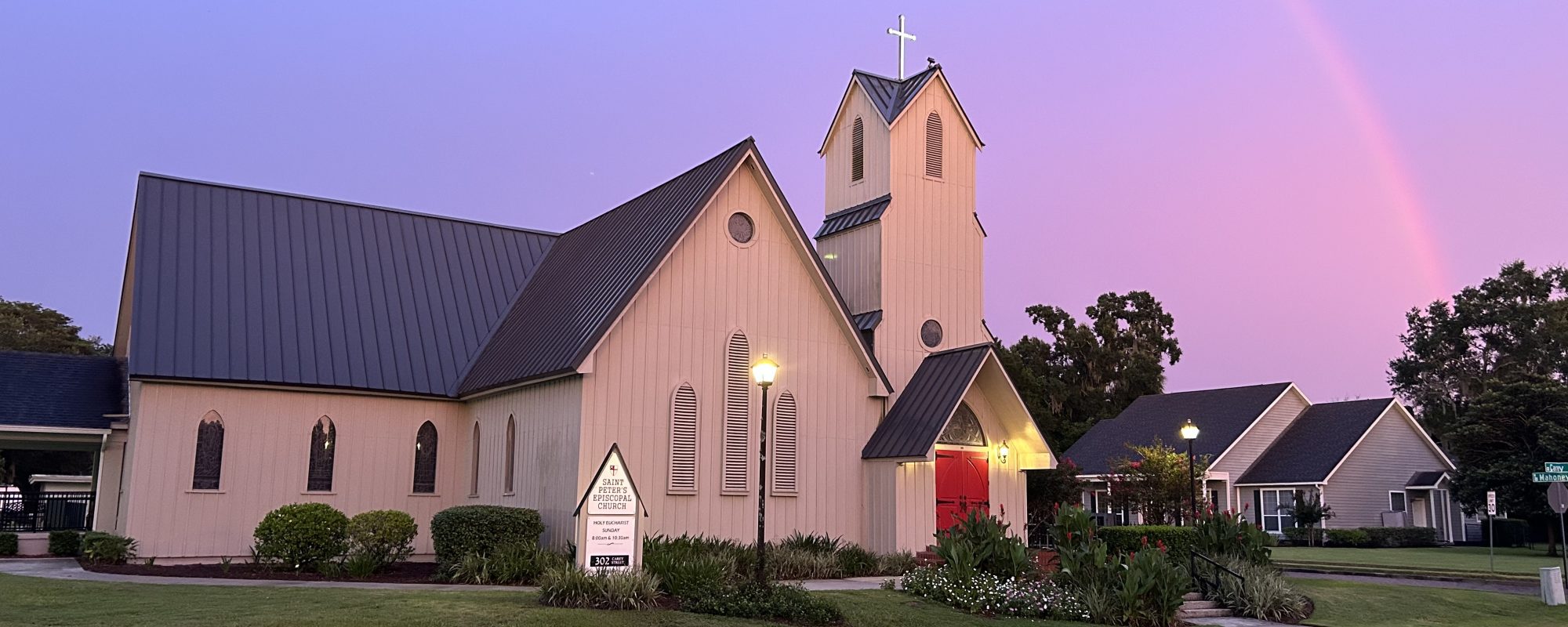
Sacred Stories with Fr. Derek is a collection of short children’s homilies by the Rev. Derek Larson, TSSF, priest at St. Peter’s Episcopal Church in Plant City, FL. The homilies are also given live on the last Sunday of the month at our family service at 10:30am.

You can find out more about our community here: http://www.StPetersPlantCity.com.

New Christmas Homily: God and Our Bodies

Find the full text of the homily here.

A Poem by St. Symeon the New Theologian

We awaken in Christ’s body,
As Christ awakens our bodies
There I look down and my poor hand is Christ,
He enters my foot and is infinitely me.
I move my hand and wonderfully
My hand becomes Christ,
Becomes all of Him.
I move my foot and at once
He appears in a flash of lightning.
Do my words seem blasphemous to you?
Then open your heart to Him.
And let yourself receive the one
Who is opening to you so deeply.
For if we genuinely love Him,
We wake up inside Christ’s body
Where all our body all over,
Every most hidden part of it,
Is realized in joy as Him,
And He makes us utterly real.
And everything that is hurt, everything
That seemed to us dark, harsh, shameful,
Maimed, ugly, irreparably damaged
Is in Him transformed.
And in Him, recognized as whole, as lovely,
And radiant in His light,
We awaken as the beloved
In every last part of our body.

Questions for Further Reflection

  1. In what ways can we embody the message of the Incarnation in our daily lives, particularly in how we treat our own bodies and the bodies of others?
  2. How does the poem by St. Symeon the New Theologian resonate with your own experience of being in your body? What feelings or insights arise as you consider the interconnectedness of Christ and our physical selves?

New Christmas Homily: The First Breath of God

Find the full text of the homily here.

Questions for Further Reflection

  1. What does it mean for you to be a “reliquary” that holds the breath of God? How does this understanding shape your self-identity?
  2. In what ways can the image of Jesus’ first breath encourage you to approach relationships with compassion and reverence?
  3. What practices or rituals can you incorporate into your life to help you remember and honor the sacredness of each breath you take?

Resources for Further Reflection

Book: Caesar’s Last Breath by Sam Kean

This is the book mentioned in the sermon. It just so happens that Sam Kean was a seminary of our very own Dr. John Santosuosso!

New Homily: The Darkness of the Womb

Find the full text of the homily here.

Questions for Personal Reflection

  1. In what areas of my life do I currently feel like I am in a state of darkness or uncertainty? How can I embrace this time as an opportunity for growth and transformation?
  2. Reflecting on my past experiences, can I identify moments when I felt lost or directionless, but later recognized them as times of formation? What insights did I gain from those experiences?
  3. How can I be more attentive to the ways God might be shaping me in this current season? Are there specific actions I can take to nurture my spiritual well-being during this time?

Resources for Further Reflection

Children’s Book: God’s Holy Darkness by Sharei Green, Beckah Selnick, and Nikki Faison

In this beautifully illustrated book, the authors explore some of the moments in Scripture which present darkness as something holy.

Children’s Book: Silent Night by Lara Hawthorne

In this rendition of the famous Christmas hymn, the illustrations are strikingly dark in color and wonderfully moving.

Poetry: Advent Poems by Tania Runyan

In this collection of poems for Advent, Tania Runyan imagines Jesus speaking to his mother from the womb, each poem from another stage of the journey of pregnancy. Much of the imagery of this homily was inspired by Runyan’s poems, which I encountered throughout this season of Advent.
New Homily: John’s Call to Transformation

Find the full text of the homily here.

Questions for Deeper Reflection

  1. In what areas of my life do I feel a need for transformation or change? How can I invite God’s love into those areas?
  2. How do I perceive God’s love in my life? Am I more focused on trying to deserve that love, or on receiving it fully?
  3. What are some specific “fruits” I can bear in my daily actions and relationships that reflect God’s love and transformation?
  4. Reflecting on the examples from John the Baptist, what does it mean for me to change the way I hold my possessions, engage in my work, or exercise my privilege?
  5. How can I create space in my heart and life this Advent season to truly listen to the call for transformation, and what steps can I take to live into that change?

New Homily: Wilderness Moments

Find the full text of the homily here.

Questions for Further Reflection

  1. How do the “wilderness moments” in my own life allow me to hear and connect with God more deeply?
  2. In what ways can I intentionally carve out time during this Advent season to step away from my daily distractions and enter into silence?
  3. How can the message of John the Baptist challenge me this Advent season to prepare my heart for the coming of Christ amidst the busyness of holiday celebrations?

New Homily: The Coming of Grandma and Grandad and Christ

Find the full text of the homily here.

Questions for Further Reflection

  1. In what moments do you find yourself feeling weighed down by worry, and how might shifting your focus to the anticipation of Christ’s coming help alleviate those burdens?
  2. What practices or habits can you implement to help raise your awareness of God’s presence throughout your day?
  3. Reflect on a time when you felt overwhelmed by worry. How might the message of Advent reshape your understanding of that experience?

Resources for Further Reflection

Essay: “On Living in an Atomic Age” by C.S. Lewis
I came across this letter/ essay by C.S. Lewis this week that he wrote in response to a letter expressing fear and anxiety around the beginning of the atomic age (this essay was published in 1948). While the atomic age continues to be something very concerning, I thought C.S. Lewis’ somewhat direct response of realism was relevant for all fears and worries that weigh us down, atomic or otherwise. In it he writes,

“This is the first point to be made: and the first action to be taken is to pull ourselves together. If we are all going to be destroyed by an atomic bomb, let that bomb when it comes find us doing sensible and human things praying, working, teaching, reading, listening to music, bathing the children, playing tennis, chatting to our friends over a pint and a game of darts—not huddled together like frightened sheep and thinking about bombs. They may break our bodies (a microbe can do that) but they need not dominate our minds.”

C.S. Lewis “On Living in an Atomic Age”

You may find the rest of the essay interesting and can find it at the link above.

New Homily: Jesus, the Midwife

Find the full text of the homily here.

Questions for Further Reflection

  1. In what ways can we identify moments in our own lives when fear feels overwhelming, and how might we apply the message of “do not be alarmed” to those situations?
  2. What does the metaphor of Jesus as a cosmic midwife mean to you, and how can it encourage you during times of personal turmoil or fear?
  3. How can we cultivate trust in our lives, as described in the homily, amidst the uncertainties and challenges we face in today’s world?
  4. In what practical ways can we support others who may be feeling like their world is ending, reflecting the calm and steady presence of the midwife as portrayed in this message?

New Homily: It’s Bad Math, but Good Theology.

Find the full text of the homily here.

Questions for Further Reflection

  1. In what areas of my life do I often feel inadequate or overwhelmed, and how can I shift my perspective to see that even my small contributions can hold great value when offered in love?
  2. How do I define “enough” when it comes to my time, resources, and energy? Am I too focused on what I lack rather than what I can offer?
  3. What specific actions can I take this week to practice giving what I have—whether it’s time, support, or resources—with intention and love?