How do the “wilderness moments” in my own life allow me to hear and connect with God more deeply?
In what ways can I intentionally carve out time during this Advent season to step away from my daily distractions and enter into silence?
How can the message of John the Baptist challenge me this Advent season to prepare my heart for the coming of Christ amidst the busyness of holiday celebrations?
In what moments do you find yourself feeling weighed down by worry, and how might shifting your focus to the anticipation of Christ’s coming help alleviate those burdens?
What practices or habits can you implement to help raise your awareness of God’s presence throughout your day?
Reflect on a time when you felt overwhelmed by worry. How might the message of Advent reshape your understanding of that experience?
Resources for Further Reflection
Essay: “On Living in an Atomic Age” by C.S. Lewis I came across this letter/ essay by C.S. Lewis this week that he wrote in response to a letter expressing fear and anxiety around the beginning of the atomic age (this essay was published in 1948). While the atomic age continues to be something very concerning, I thought C.S. Lewis’ somewhat direct response of realism was relevant for all fears and worries that weigh us down, atomic or otherwise. In it he writes,
“This is the first point to be made: and the first action to be taken is to pull ourselves together. If we are all going to be destroyed by an atomic bomb, let that bomb when it comes find us doing sensible and human things praying, working, teaching, reading, listening to music, bathing the children, playing tennis, chatting to our friends over a pint and a game of darts—not huddled together like frightened sheep and thinking about bombs. They may break our bodies (a microbe can do that) but they need not dominate our minds.”
C.S. Lewis “On Living in an Atomic Age”
You may find the rest of the essay interesting and can find it at the link above.
In what ways can we identify moments in our own lives when fear feels overwhelming, and how might we apply the message of “do not be alarmed” to those situations?
What does the metaphor of Jesus as a cosmic midwife mean to you, and how can it encourage you during times of personal turmoil or fear?
How can we cultivate trust in our lives, as described in the homily, amidst the uncertainties and challenges we face in today’s world?
In what practical ways can we support others who may be feeling like their world is ending, reflecting the calm and steady presence of the midwife as portrayed in this message?
In what areas of my life do I often feel inadequate or overwhelmed, and how can I shift my perspective to see that even my small contributions can hold great value when offered in love?
How do I define “enough” when it comes to my time, resources, and energy? Am I too focused on what I lack rather than what I can offer?
What specific actions can I take this week to practice giving what I have—whether it’s time, support, or resources—with intention and love?
In this Sacred Story, Fr. Derek tells us about St. Francis, Matthew 11:25, and the special job children have at church.
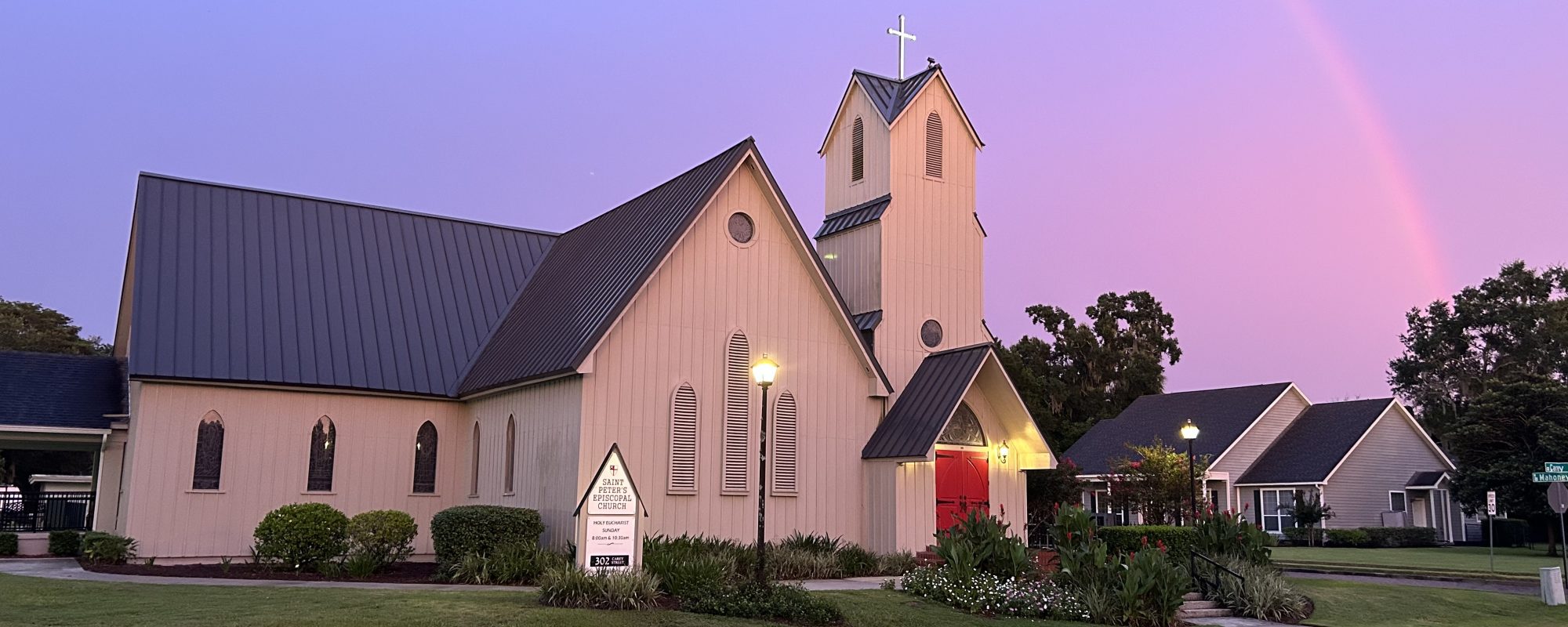
Sacred Stories with Fr. Derek is a collection of short children’s homilies by the Rev. Derek Larson, TSSF, priest at St. Peter’s Episcopal Church in Plant City, FL. The homilies are given live on the last Sunday of the month at our family service at 10:30am.
How can I embrace a childlike faith characterized by trust, innocence, and a willingness to learn from others, especially from the children around me?
What words would I use to describe young children in my life? Could I use those words to describe myself?
How do I perceive the role of children in our faith community, and how can I incorporate their perspective to deepen my own spiritual journey?
In what ways can I support the children in my life to grow in faith while also allowing their example to challenge and inspire my own growth as a “little one” in Christ?
Resources for Further Reflection
Comic Book: Francis: Brother of the Universe In this genuine Marvel comic book from 1982 you can find the story of St. Francis, including his encounter with the Pope asking for recognition by the church to be a holy order. It’s a classic and a fun (and childlike) way to engage the story of Francis, even though there are many well-done biographies about him as well (in fact I have a sizable Franciscan section in my office if you’d like to borrow anything).
Religious Order: Third Order, Society of St. Francis I belong to a religious order called the Society of St. Francis. The friars are those in the first order. The cloistered nuns are those in the second order. I belong to the third order, a dispersed Anglican order for lay people and clergy, married people and single, men, women, and all people who would like to follow Christ in a deeper way through the Franciscan path. It has been a wonderful experience that I highly recommend to anyone interested in Franciscan spirituality who wants to deepen their faith.
Children’s Book: God’s Dream by Archbishop Desmond Tutu In the homily I speak about Jesus’ big dream, which is actually a small dream. In saying that, I am using the language of a beautiful children’s book by Archbishop Desmond Tutu, called God’s Dream. I highly recommend it!
In what ways do I currently prioritize the presence of children in my community, and how might I shift my perspective to recognize the lessons they can teach me?
How can I create a welcoming environment that allows children to bring their own experiences of Christ into our shared community?
What specific qualities or characteristics of children inspire me to reflect on my own faith journey and humility?
As I think about my role in supporting children’s spiritual growth, how can I also be open to their influence on my understanding of God and faith?
In what areas of my life do I feel challenged to “grow down” and embrace a more childlike perspective, particularly in my interactions with others?
Resources for Further Reflection
Movie: Mary Poppins (1964) A classic film. If you haven’t seen it recently, watch it again! And this time notice how the film may actually be about Mr. Banks growing down rather than the children growing up.
Movie: Mary Poppins Returns (2018) This is a rare instance when a sequel made for a classic does an incredible job. This movie honors the first while balancing a timeless feel and contemporary relevance. This is one of the Larson family’s favorite films, which we watch a few times a year. Since first seeing it, I’ve thought a lot about how Mary Poppins carries a lot of Christological characteristics in this film, particularly in the notion of returning. I’ve pondered offering a Bible study with Mary Poppins Returns as an Advent series.
Book: The Gifts they Bring: How children in the Gospels can Shape Inclusive Ministry by Amy Lindeman Allen This is a great book by a New Testament Scholar which analyzes a select passages of Scripture with a lens focused on the presence of children. After interpreting the passage, Allen then offers some possible applications and reflections for contemporary children’s ministry. I liked the book a lot, and I used it to teach a Bible Study series once before.
 Thoughts on Faith