New Homily: Listen

Find the full text of the homily here.

Questions for Reflection

  1. How do I typically respond during moments of silence in my prayer life? Do I feel the need to fill the silence with words, or can I simply be present?
  2. In what ways do I try to control or domesticate my experiences with God? How might I let go of this impulse and invite a deeper sense of trust?
  3. What distractions or internal chatter prevent me from fully listening to God? How can I create a more peaceful environment for myself to hear His voice?
  4. As I prepare for Lent, what specific practices or habits can I adopt to cultivate silence and listening in my daily life?
  5. How might dedicating time to simply be present with God, without the need to do or say anything, transform my relationship with Him?

Resources for Further Reflection

My personal practice of silence is called Centering Prayer. Here are some resources where you can learn more.

Book: Centering Prayer and Inner Awakening by Cynthia Bourgeault

In Centering Prayer and Inner Awakening, Cynthia Bourgeault introduces readers to a simple yet profound prayer practice designed to deepen one’s relationship with God through silent contemplation. Aimed at those unfamiliar with contemplative prayer, this accessible guide explains how to engage in Centering Prayer, encouraging parishioners to quiet their minds and open their hearts to divine presence. Through practical insights and gentle guidance, Bourgeault invites readers to embark on a transformative journey of inner stillness and spiritual awakening, enhancing their faith and connection with God.

Book: Open Mind, Open Heart by Thomas Keating

In Open Mind, Open Heart, Thomas Keating (the spiritual father of this practice) offers an accessible introduction to Centering Prayer, a method of silent prayer that invites individuals to deepen their relationship with God. Through clear guidance and practical insights, Keating shares the principles of this contemplative practice, helping readers to quiet their thoughts and open their hearts to God’s presence. This book serves as both a thoughtful exploration of the spiritual journey and a gentle encouragement for those seeking to experience the transformative power of silence and stillness in their prayer life.

Website: Contemplative Outreach

Contemplative Outreach is a dedicated organization focused on promoting the practice of Centering Prayer, a method of silent prayer that opens individuals to a deeper relationship with God. The website serves as a rich resource for anyone interested in exploring this transformative spiritual practice.

Visitors to the Contemplative Outreach website can find a wealth of materials, including:

  • Introductory Resources: These include guides and articles that explain the principles of Centering Prayer, making it accessible for those new to the practice.
  • Training Opportunities: The site offers information on workshops, retreats, and online courses designed to help individuals deepen their understanding and experience of contemplative prayer.
  • Books and Publications: A curated selection of literature, including works by renowned authors in the contemplative tradition, provides further insights into Centering Prayer and its spiritual benefits.
  • Community Engagement: The website fosters a sense of community among practitioners, featuring group prayer opportunities, forums, and local chapters where individuals can connect and practice together.
  • Meditation Resources: Visitors can access guided meditations, audio recordings, and other tools that support silent contemplation and enhance one’s prayer journey.
New Christmas Homily: God and Our Bodies

Find the full text of the homily here.

A Poem by St. Symeon the New Theologian

We awaken in Christ’s body,
As Christ awakens our bodies
There I look down and my poor hand is Christ,
He enters my foot and is infinitely me.
I move my hand and wonderfully
My hand becomes Christ,
Becomes all of Him.
I move my foot and at once
He appears in a flash of lightning.
Do my words seem blasphemous to you?
Then open your heart to Him.
And let yourself receive the one
Who is opening to you so deeply.
For if we genuinely love Him,
We wake up inside Christ’s body
Where all our body all over,
Every most hidden part of it,
Is realized in joy as Him,
And He makes us utterly real.
And everything that is hurt, everything
That seemed to us dark, harsh, shameful,
Maimed, ugly, irreparably damaged
Is in Him transformed.
And in Him, recognized as whole, as lovely,
And radiant in His light,
We awaken as the beloved
In every last part of our body.

Questions for Further Reflection

  1. In what ways can we embody the message of the Incarnation in our daily lives, particularly in how we treat our own bodies and the bodies of others?
  2. How does the poem by St. Symeon the New Theologian resonate with your own experience of being in your body? What feelings or insights arise as you consider the interconnectedness of Christ and our physical selves?

New Homily: The Darkness of the Womb

Find the full text of the homily here.

Questions for Personal Reflection

  1. In what areas of my life do I currently feel like I am in a state of darkness or uncertainty? How can I embrace this time as an opportunity for growth and transformation?
  2. Reflecting on my past experiences, can I identify moments when I felt lost or directionless, but later recognized them as times of formation? What insights did I gain from those experiences?
  3. How can I be more attentive to the ways God might be shaping me in this current season? Are there specific actions I can take to nurture my spiritual well-being during this time?

Resources for Further Reflection

Children’s Book: God’s Holy Darkness by Sharei Green, Beckah Selnick, and Nikki Faison

In this beautifully illustrated book, the authors explore some of the moments in Scripture which present darkness as something holy.

Children’s Book: Silent Night by Lara Hawthorne

In this rendition of the famous Christmas hymn, the illustrations are strikingly dark in color and wonderfully moving.

Poetry: Advent Poems by Tania Runyan

In this collection of poems for Advent, Tania Runyan imagines Jesus speaking to his mother from the womb, each poem from another stage of the journey of pregnancy. Much of the imagery of this homily was inspired by Runyan’s poems, which I encountered throughout this season of Advent.

New Homily and More: The Little Ones of Christ (Part Two in the Growing Down Sermon Series)

The audio of this week’s homily. You can find the full text of the homily here.

Questions for Deeper Reflection

  1. How can I embrace a childlike faith characterized by trust, innocence, and a willingness to learn from others, especially from the children around me?
  2. What words would I use to describe young children in my life? Could I use those words to describe myself?
  3. How do I perceive the role of children in our faith community, and how can I incorporate their perspective to deepen my own spiritual journey?
  4. In what ways can I support the children in my life to grow in faith while also allowing their example to challenge and inspire my own growth as a “little one” in Christ?

Resources for Further Reflection

Comic Book: Francis: Brother of the Universe
In this genuine Marvel comic book from 1982 you can find the story of St. Francis, including his encounter with the Pope asking for recognition by the church to be a holy order. It’s a classic and a fun (and childlike) way to engage the story of Francis, even though there are many well-done biographies about him as well (in fact I have a sizable Franciscan section in my office if you’d like to borrow anything).

Religious Order: Third Order, Society of St. Francis
I belong to a religious order called the Society of St. Francis. The friars are those in the first order. The cloistered nuns are those in the second order. I belong to the third order, a dispersed Anglican order for lay people and clergy, married people and single, men, women, and all people who would like to follow Christ in a deeper way through the Franciscan path. It has been a wonderful experience that I highly recommend to anyone interested in Franciscan spirituality who wants to deepen their faith.

Children’s Book: God’s Dream by Archbishop Desmond Tutu
In the homily I speak about Jesus’ big dream, which is actually a small dream. In saying that, I am using the language of a beautiful children’s book by Archbishop Desmond Tutu, called God’s Dream. I highly recommend it!

New Homily and More: Growing Down: Welcoming Christ in Children

It’s the beginning of a new sermon series! Find the full text of the homily here.

Questions for Reflection

  1. In what ways do I currently prioritize the presence of children in my community, and how might I shift my perspective to recognize the lessons they can teach me?
  2. How can I create a welcoming environment that allows children to bring their own experiences of Christ into our shared community?
  3. What specific qualities or characteristics of children inspire me to reflect on my own faith journey and humility?
  4. As I think about my role in supporting children’s spiritual growth, how can I also be open to their influence on my understanding of God and faith?
  5. In what areas of my life do I feel challenged to “grow down” and embrace a more childlike perspective, particularly in my interactions with others?

Resources for Further Reflection

Movie: Mary Poppins (1964)
A classic film. If you haven’t seen it recently, watch it again! And this time notice how the film may actually be about Mr. Banks growing down rather than the children growing up.

Movie: Mary Poppins Returns (2018)
This is a rare instance when a sequel made for a classic does an incredible job. This movie honors the first while balancing a timeless feel and contemporary relevance. This is one of the Larson family’s favorite films, which we watch a few times a year. Since first seeing it, I’ve thought a lot about how Mary Poppins carries a lot of Christological characteristics in this film, particularly in the notion of returning. I’ve pondered offering a Bible study with Mary Poppins Returns as an Advent series.

Book: The Gifts they Bring: How children in the Gospels can Shape Inclusive Ministry by Amy Lindeman Allen
This is a great book by a New Testament Scholar which analyzes a select passages of Scripture with a lens focused on the presence of children. After interpreting the passage, Allen then offers some possible applications and reflections for contemporary children’s ministry. I liked the book a lot, and I used it to teach a Bible Study series once before.

New Homily and More: The Cross We Carry

Find the full text of the homily here.

Questions for Reflection

  1. Jesus asked his disciples, “Who do you say that I am?” An extension of that question is this: What does the symbol of the cross mean to you? Is it protection? A badge? A reminder? A scandal? A symbol of status? A symbol of humility? What does it mean to you?
  2. What pain in your life are you being called to acknowledge? What does it mean to take it up and follow Jesus?
  3. What pain in the world are you being called to acknowledge? What does it mean to walk beside those in pain as they carry their cross?

Resources for Further Reflection

Book: The Universal Christ: How a Forgotten Reality Can Change Everything We See, Hope for, and Believe by Richard Rohr

Richard Rohr is a Franciscan, Catholic Priest who writes a lot about spirituality and the Franciscan tradition. In this book, Rohr writes about how the notion of Christ is much bigger than we often recognize. He also spends some time talking about the cross and the crucifixion. In chapter twelve he writes a beautiful meditation about the cross as the place to acknowledge our suffering and be seen by God.

Song: “Come, All Who Are Weary” by the Porter’s Gate

The same Jesus who said, “Take up your cross and follow me” is the one who said, “Come to me, all you who are weary and are carrying heavy burdens, and I will give you rest” (Matthew 11:28). This week’s sermon has really been a wrestling of the tension between these two sayings of Jesus. What if they aren’t so opposite as they seem? Listen to this song from my favorite music group and let the words of Jesus wash over you.

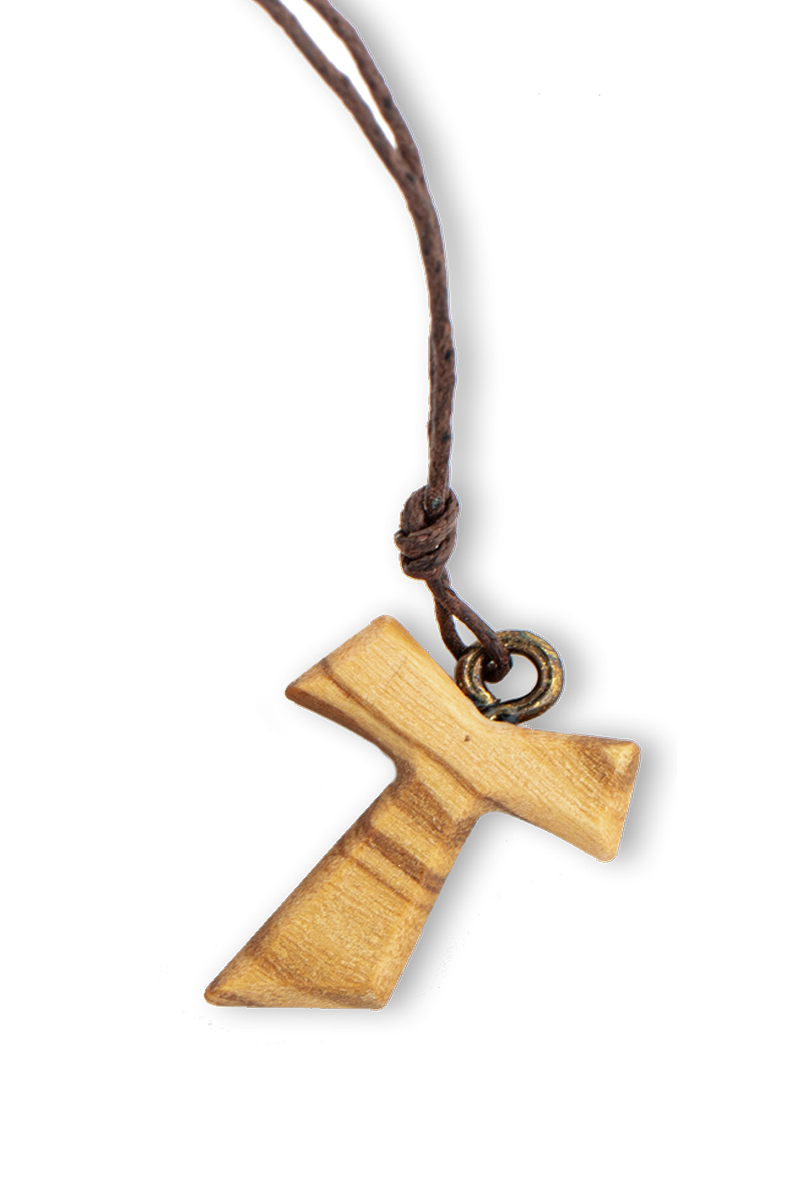
Religious Jewelry: Tau Franciscan Cross Necklace

Here is an example of a Franciscan cross similar to the one we used on our pilgrimage. If you don’t have a cross necklace, perhaps its time to get a simple one like this to remember that your pain is seen by God.

Why Vegetarian?

LauraAnn and I have been vegetarians now for more than 12 years, and our boys have grown up with only a vegetarian diet. Sometimes we get questions about what that means and why we choose a vegetarian diet, so I thought I’d write a short blog post about.

I want to be upfront that our choice of a vegetarian diet is completely personal. We do not believe that everyone should be a vegetarian, and we do not cast judgment on those who eat meat. We don’t at all mind people eating meat around us, and we don’t even mind meat being in our house. We just don’t eat it personally, that’s all. Here’s what that means for us.

What is a Vegetarian Diet?

To be vegetarian family simply means that we don’t eat meat. Or to be more direct, we don’t eat animals. There are similar diets that we have tried in the past (such as vegan or pescatarian), but they are different. A vegan diet means that you don’t eat animals or anything that comes from them (including dairy, eggs, and sometimes honey). A pescatarian diet means that you eat seafood but no other meat. As vegetarians, we do eat dairy and eggs (though we try to be more conscious of where they come from), but we do not eat fish or any other animals. 

Why a vegetarian diet?

For me, there are four reasons. 

1. Compassion for animals.

    The vast majority of meat produced in the United States and other places comes from abused animals. I mean this in quite a literal way. What you’d go to jail for doing to a dog, is the normal treatment of cows, pigs, and chickens in factory farming. Most of us simply would rather not know “how the sausage is made.” When LauraAnn and I learned a bit about the meat industry, meat lost its appeal. 

    That said, there are non-abusive ways of getting meat. Hunting or buying from your local farm is a great alternative. We just decided to keep it simple and not eat meat at all. 

    2. Compassion for our bodies.

      From our research, a plant-based diet that reduces the consumption of meat (especially red meat), is significantly better for the body. And taking care of our bodies is important.

      3. Compassion for the environment.

        Surprisingly, the meat industry is one of the biggest contributors of carbon emissions and thus climate change. My understanding is that eating a vegetarian diet has a greater positive impact on the environment than even switching to an electric vehicle.

        4. Compassion for the poor. 

          It takes a lot of food and land to produce livestock, and we’d have more food to feed the global hungry if those resources were redirected directly to people rather than the animals we raise to eat. We decrease the amount of food available to the human population when we eat meat.

          These four reasons have guided us to our family’s decision to eat a vegetarian diet. I don’t write as an expert on these issues, just as someone doing the best I can to cultivate compassion in the world and in our family life. Lots of others come to other decisions, and that’s perfectly okay! No judgement here. I encourage us all to prayerfully do the best we can with the information that is given to us.

          Vegetarianism and Faith

          You’ll notice that in my reasons I haven’t explicitly cited Scripture or my faith. Faith is certainly a huge influence in my intention for being a vegetarian, but it is not a Scriptural or doctrinal mandate. There is nowhere in Scripture that says you should reduce your meat consumption and there is no Christian doctrine that says you should be a vegetarian. That said, there are many Christians throughout the centuries that have become vegetarians or have had plant-based leaning diets. I think that’s because when we cultivate compassion in our lives and seek to find God’s presence in everything around us, it inevitably effects the way we see animals and the way we eat as well. Does my faith have something to say about the way I eat? I say, yes. Some of the Christians and religious leaders that influenced me the most in my vegetarian diet may surprise you: early Christian monks and nuns, Francis of Assisi, John Wesley, Leo Tolstoy, Mahatma Gandhi, and… Mr. Rogers!

          What do the larsons eat?

          We eat a lot! And especially fruits and vegetables, of course! These days though there is a vegetarian substitute for almost everything, even hot dogs. So our diet doesn’t actually look that different from a lot of others. We just substitute the meat for something else. Impossible Burgers and Beyond Burgers are delicious! Generally though, we eat lots of Italian and Mexican foods, which are easy to make vegetarian. We’re always up for trying a new vegetarian dish.

          Honestly, after 12 years of not eating meat, we hardly even think about our diet anymore. It’s not something hard to do, though at first there might be a learning curve. People tell me all the time that “they could never be a vegetarian,” and maybe that’s true, but when I became a vegetarian I didn’t even like vegetables. I started small. I reduced red-meat consumption. I ate vegetarian for Lent. I tried new things. It was something I learned and came to love. Maybe you would like it to!

          New Homily and More: The Face of Jesus

          Find the full text of the homily here.

          Resources for Further Reflection

          Song: Turn Your Eyes Upon Jesus

          If I were a baptist or pentecostal preacher, this is the song I’d ask the band to play at the altar call after the homily (and Shane and Shane do it so well!). It preaches the message much better than I have. I like to listen to this song while praying with an icon of Jesus, and looking upon his face. Perhaps it will help calm your fears as it has mine.

          Book: Moments with Jesus: Encounter Bible by Bill Johnson, Eugene Luning and Illustrated by Kristen & Kevin Howdeshell

          Alongside of the text of this homily, I’ve posted pictures from one of my favorite children’s Bibles, Moments with Jesus. What is unique about this Bible (and it is NOT just for children) is that it tells the story in the second person as an imagined, meditative experience and includes reflection questions. Plus the illustrations are beautifully fantastic! In the book’s telling of Jesus calming the storm, it invites the reader to imagine what it would have been like to be on the boat. It also asks these two sets of questions: (1) Have you ever felt as scared as the disciples in the storm? What made you afraid? and (2) Picture that scary moment in your imagination, but this time picture Jesus there with you. Is He scared? What is He doing? What is He saying? How do you feel about that

          New Homily (and More): With Sighs Too Deep for Words

          Find the full text here.

          Also, I’m trying out something new on the website. With each homily I’m going to start posting some resources connected to the Scripture passage and message I spoke on for deeper reflection. Below are the resources for this week. You can also find them on the homilies page. Let me know if you find it helpful or if you have suggestions!

          Resources

          For more reflection on this passage from Romans and the practice of wordless prayer see some of the following, and never hesitate to reach out for a conversation!

          Song: Spirit Move! (Keep on Moving) by the Porter’s Gate
          This song based on Romans 8:22-27 is from a new album by one of my favorite music artists, The Porter’s Gate. It was the soundtrack for the writing of this sermon.

          Web Article: Learning to Pray from the Spirit and the Heart by Fr. Jack N. Sparks
          This web posting is an adaptation of an old teaching on prayer from the 16th century by priest, Lorenzo Scupoli. I found it really helpful in framing the different types of prayer and praying from the Spirit/heart.

          Organization: Contemplative Outreach
          https://www.contemplativeoutreach.org/
          One of the methods of wordless prayer that has been part of my practice is called Centering Prayer, inspired by the ancient monastic tradition and contemporarily developed by Fr. Thomas Keating, a Trappist Monk. Contemplative Outreach is the primary organization that teaches about centering prayer and organizes groups around the country. Below are a few more resources on Centering Prayer.

          Group: Centering Prayer Group at Jupiter FIRST Church
          Meets on the fourth Monday of each month
          https://www.jupiterfirst.org/spiritualformation/

          Book: Open Mind, Open Heart by Thomas Keating

          Book: Centering Prayer and Inner Awakening by Cynthia Bourgeault