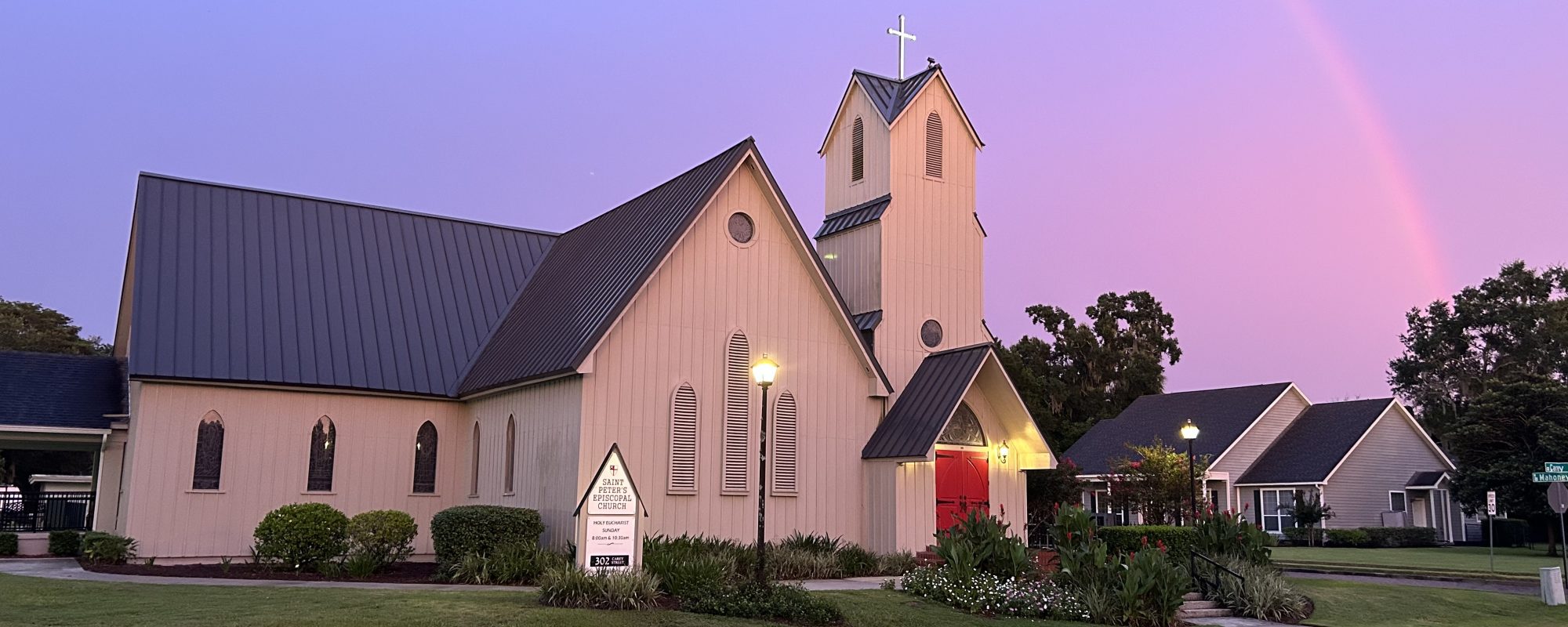
New Christmas Homily: God and Our Bodies

Find the full text of the homily here.

A Poem by St. Symeon the New Theologian

We awaken in Christ’s body,
As Christ awakens our bodies
There I look down and my poor hand is Christ,
He enters my foot and is infinitely me.
I move my hand and wonderfully
My hand becomes Christ,
Becomes all of Him.
I move my foot and at once
He appears in a flash of lightning.
Do my words seem blasphemous to you?
Then open your heart to Him.
And let yourself receive the one
Who is opening to you so deeply.
For if we genuinely love Him,
We wake up inside Christ’s body
Where all our body all over,
Every most hidden part of it,
Is realized in joy as Him,
And He makes us utterly real.
And everything that is hurt, everything
That seemed to us dark, harsh, shameful,
Maimed, ugly, irreparably damaged
Is in Him transformed.
And in Him, recognized as whole, as lovely,
And radiant in His light,
We awaken as the beloved
In every last part of our body.

Questions for Further Reflection

  1. In what ways can we embody the message of the Incarnation in our daily lives, particularly in how we treat our own bodies and the bodies of others?
  2. How does the poem by St. Symeon the New Theologian resonate with your own experience of being in your body? What feelings or insights arise as you consider the interconnectedness of Christ and our physical selves?
New Homily: The Darkness of the Womb

Find the full text of the homily here.

Questions for Personal Reflection

  1. In what areas of my life do I currently feel like I am in a state of darkness or uncertainty? How can I embrace this time as an opportunity for growth and transformation?
  2. Reflecting on my past experiences, can I identify moments when I felt lost or directionless, but later recognized them as times of formation? What insights did I gain from those experiences?
  3. How can I be more attentive to the ways God might be shaping me in this current season? Are there specific actions I can take to nurture my spiritual well-being during this time?

Resources for Further Reflection

Children’s Book: God’s Holy Darkness by Sharei Green, Beckah Selnick, and Nikki Faison

In this beautifully illustrated book, the authors explore some of the moments in Scripture which present darkness as something holy.

Children’s Book: Silent Night by Lara Hawthorne

In this rendition of the famous Christmas hymn, the illustrations are strikingly dark in color and wonderfully moving.

Poetry: Advent Poems by Tania Runyan

In this collection of poems for Advent, Tania Runyan imagines Jesus speaking to his mother from the womb, each poem from another stage of the journey of pregnancy. Much of the imagery of this homily was inspired by Runyan’s poems, which I encountered throughout this season of Advent.

New Homily and More: The Cross We Carry

Find the full text of the homily here.

Questions for Reflection

  1. Jesus asked his disciples, “Who do you say that I am?” An extension of that question is this: What does the symbol of the cross mean to you? Is it protection? A badge? A reminder? A scandal? A symbol of status? A symbol of humility? What does it mean to you?
  2. What pain in your life are you being called to acknowledge? What does it mean to take it up and follow Jesus?
  3. What pain in the world are you being called to acknowledge? What does it mean to walk beside those in pain as they carry their cross?

Resources for Further Reflection

Book: The Universal Christ: How a Forgotten Reality Can Change Everything We See, Hope for, and Believe by Richard Rohr

Richard Rohr is a Franciscan, Catholic Priest who writes a lot about spirituality and the Franciscan tradition. In this book, Rohr writes about how the notion of Christ is much bigger than we often recognize. He also spends some time talking about the cross and the crucifixion. In chapter twelve he writes a beautiful meditation about the cross as the place to acknowledge our suffering and be seen by God.

Song: “Come, All Who Are Weary” by the Porter’s Gate

The same Jesus who said, “Take up your cross and follow me” is the one who said, “Come to me, all you who are weary and are carrying heavy burdens, and I will give you rest” (Matthew 11:28). This week’s sermon has really been a wrestling of the tension between these two sayings of Jesus. What if they aren’t so opposite as they seem? Listen to this song from my favorite music group and let the words of Jesus wash over you.

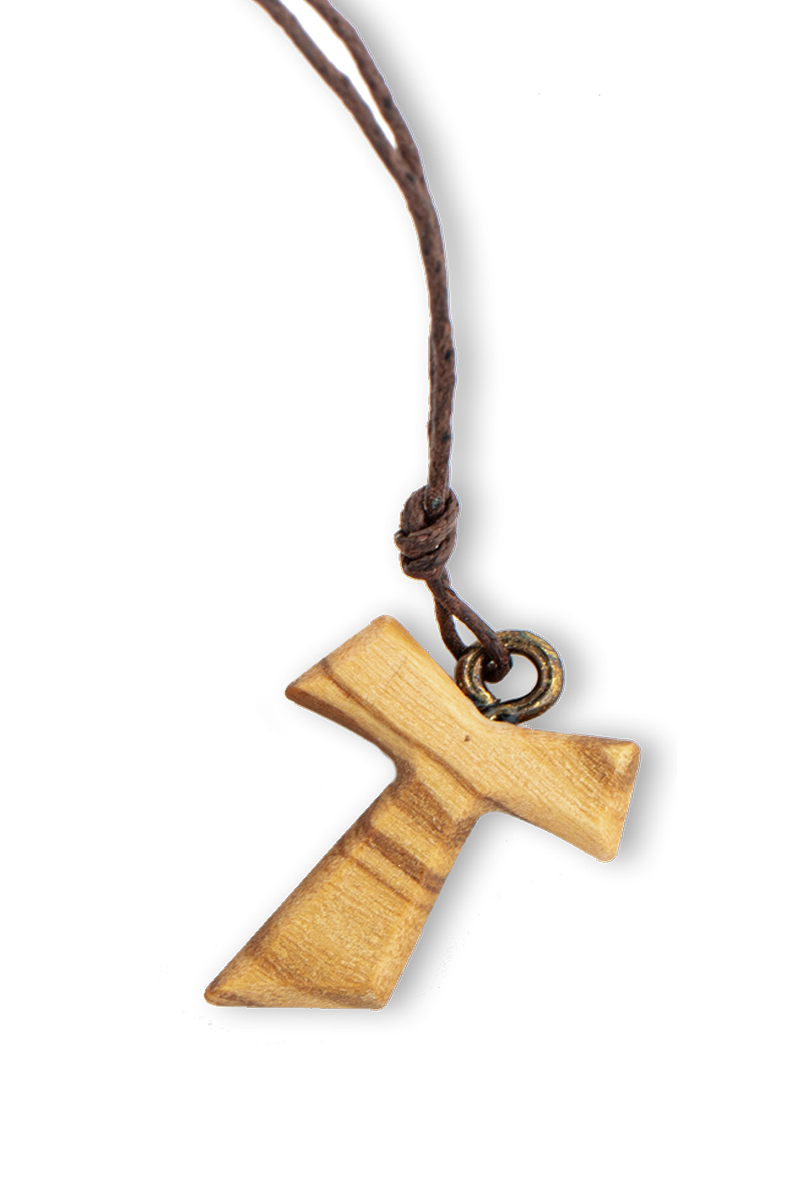
Religious Jewelry: Tau Franciscan Cross Necklace

Here is an example of a Franciscan cross similar to the one we used on our pilgrimage. If you don’t have a cross necklace, perhaps its time to get a simple one like this to remember that your pain is seen by God.

New Homily and More: Casting Out, Welcoming In

Find the full text of the homily here.

RESOURCES FOR FURTHER REFLECTION

Prayer Practice: The Welcoming Prayer

The prayer of welcoming grace into things unwanted or uncomfortable resonates with the Welcoming Prayer, developed by Mary Mrozowski, a lay contemplative, and Thomas Keating, a Trappist Monk. This has been one my core prayer practices. Click the above link to learn more about the practice.

Homily: The Welcoming Prayer

I also preached a sermon on the Welcoming Prayer a couple years ago. Find it at the link above.

Teaching from the Book of Occasional Services on Exorcisms

There is a very brief explanation of exorcisms in the Episcopal Church’s Book of Occasional Services. If you are interested in learning more, click the above link and scroll down to page 233. While you are there, look at some of the beautiful occasional services included in the book.

New Homily and More: The Face of Jesus

Find the full text of the homily here.

Resources for Further Reflection

Song: Turn Your Eyes Upon Jesus

If I were a baptist or pentecostal preacher, this is the song I’d ask the band to play at the altar call after the homily (and Shane and Shane do it so well!). It preaches the message much better than I have. I like to listen to this song while praying with an icon of Jesus, and looking upon his face. Perhaps it will help calm your fears as it has mine.

Book: Moments with Jesus: Encounter Bible by Bill Johnson, Eugene Luning and Illustrated by Kristen & Kevin Howdeshell

Alongside of the text of this homily, I’ve posted pictures from one of my favorite children’s Bibles, Moments with Jesus. What is unique about this Bible (and it is NOT just for children) is that it tells the story in the second person as an imagined, meditative experience and includes reflection questions. Plus the illustrations are beautifully fantastic! In the book’s telling of Jesus calming the storm, it invites the reader to imagine what it would have been like to be on the boat. It also asks these two sets of questions: (1) Have you ever felt as scared as the disciples in the storm? What made you afraid? and (2) Picture that scary moment in your imagination, but this time picture Jesus there with you. Is He scared? What is He doing? What is He saying? How do you feel about that

New Homily and More: Hallowed Rest

Find the full text of the homily here.

Resources for Further Reflection

For more reflection on Sabbath rest and a deeper engagement with this passage, check out the following resources that inform my thinking on the topic. 

Book: The Sabbath by Abraham Joshua Heschel

Rabbi Heschel is one of the most influential theologians and teachers of Judaism in the 21st century. Dr. Martin Luther King, Jr. called Rabbi Heschel “his Rabbi” and “a truly great prophet”. Heschel’s book on the Sabbath is a short but incredible read that I highly recommend. It completely changed my perspective and I continue to reflect on its words.

Podcast: “Sabbath and the Art of Rest” from the Ezra Klein Show

In this episode, Ezra Klein interviews Judith Shulevitz about her book, The Sabbath World: Glimpses of a Different Order of Time. They speak not only about the observance of the Sabbath itself, but how the conception of time, morality, and community are shaped by its observance. 

TV Episode: “Relax” from the show, Bluey

This is the episode I reference in my homily from the award winning, relatable, and moving Australian children’s show, Bluey. I highly recommend not only this episode, but the others as well! Its on the Larsonage TV screen regularly.

Study Guide: “Sabbath Practices” from The Thoughtful Christian by Dorothy C. Bass and Carol A. Wehrheim

This little study guide (meant for groups, but can be used by individuals) was shared with me by our office coordinator, Mary Lou, and I found it really helpful and enlightening. If you would like to spend some time learning more about the tradition of keeping Sabbath and reflecting on how rest shows up in your life, I recommend it. 

Song: “Slow Me Down” by the Porter’s Gate

While not about the Sabbath specifically, this song by one of my favorite artists captures the call of the homily to slow down and rest in the deepness of God’s peace. The refrain’s use of “Good Shepherd” is an added bonus. 

Song: “Slow Me Down” by Robby Seay Band

Another song by another band, but with the same name, this song also captures the call to slow down in the presence of God. 

New Homily (and More): With Sighs Too Deep for Words

Find the full text here.

Also, I’m trying out something new on the website. With each homily I’m going to start posting some resources connected to the Scripture passage and message I spoke on for deeper reflection. Below are the resources for this week. You can also find them on the homilies page. Let me know if you find it helpful or if you have suggestions!

Resources

For more reflection on this passage from Romans and the practice of wordless prayer see some of the following, and never hesitate to reach out for a conversation!

Song: Spirit Move! (Keep on Moving) by the Porter’s Gate
This song based on Romans 8:22-27 is from a new album by one of my favorite music artists, The Porter’s Gate. It was the soundtrack for the writing of this sermon.

Web Article: Learning to Pray from the Spirit and the Heart by Fr. Jack N. Sparks
This web posting is an adaptation of an old teaching on prayer from the 16th century by priest, Lorenzo Scupoli. I found it really helpful in framing the different types of prayer and praying from the Spirit/heart.

Organization: Contemplative Outreach
https://www.contemplativeoutreach.org/
One of the methods of wordless prayer that has been part of my practice is called Centering Prayer, inspired by the ancient monastic tradition and contemporarily developed by Fr. Thomas Keating, a Trappist Monk. Contemplative Outreach is the primary organization that teaches about centering prayer and organizes groups around the country. Below are a few more resources on Centering Prayer.

Group: Centering Prayer Group at Jupiter FIRST Church
Meets on the fourth Monday of each month
https://www.jupiterfirst.org/spiritualformation/

Book: Open Mind, Open Heart by Thomas Keating

Book: Centering Prayer and Inner Awakening by Cynthia Bourgeault