New Homily and More: A Spirituality of Surprise

Find the full text of the homily here.

Questions for Reflection

  1. When have you been surprised by how God has shown up in your life?
  2. What stories do you tell yourself or have you been told that may prevent you from hearing God’s stories?
  3. What do you think about the idea that Jesus may be someone who could be surprised?
  4. In what ways can our community embody a “spiritual curiosity” as mentioned in the mission statement, and how can this openness to surprise deepen our connection with God and our expression of love to others?

Resources for Further Reflection

Article: “Why Humans Need Surprise” by Jill Suttie
In this article, the author reviews the book, Surprise: Embrace the Unpredictable and Engineer the Unexpected by Tania Luna and Leeann Renninger which argues that surprise is good for human health. The article also identifies important aspects to the process of surprise: (1) Freeze, (2) Find, (3) Shift, (4) Share, and ways to cultivate an ability to be more surprised in life. Reflecting on the implications of the article for a spirituality of surprise would be an interesting reflection.

Surprised by Joy by C.S. Lewis
The great and imaginative Anglican theologian, C.S. Lewis entitled his own autobiography “Surprised by Joy” and shows how both joy and surprise have been gifts from God throughout his early life, even in the midst of very difficult situations.

New Podcast: Growing into Grace

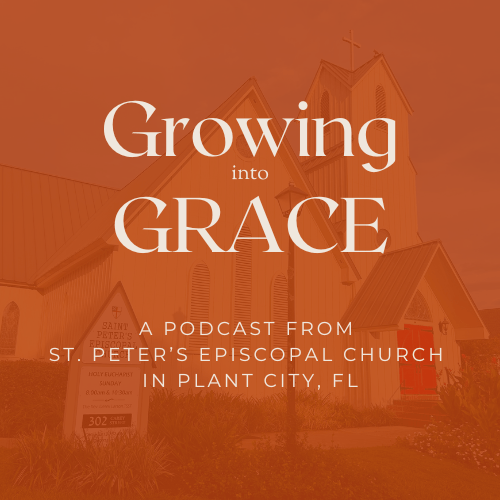
Growing into Grace is a weekly podcast from St. Peter’s Episcopal Church in Plant City, FL featuring homilies from the Rev. Derek Larson, TSSF and occasionally other guests. Tune in each week for Sunday’s homily, and, from time to time, other reflections on faith. Listen wherever you get your podcasts.

http://www.stpetersplantcity.com.
http://www.DerekMichaelLarson.com 

Encountering Christ in the Beloved Prayer Growing into Grace: A Podcast from St. Peter's Episcopal Church- Plant City

A homily preached on John 4:5-42 for the Third Sunday in Lent on March 8, 2026 by the Rev. Derek Larson, TSSF at St. Peter's Episcopal Church in Plant City, FL.Find the full text at http://www.DerekMichaelLarson.com.Find out more about our community at http://www.stpetersplantcity.com.
  1. Encountering Christ in the Beloved Prayer
  2. Encountering Christ in the Crucifix
  3. Encountering Christ in the Daily Examen
  4. Take It Home With You
  5. The Transfiguration of Fear

New Homily and More: To Be Loved

Find the full text of the homily here.

Resources for Further Reflection

Song: “How Sweet it is to be Loved by You” by James Taylor

This song has been on my mind playing over and over this week as this homily came together. I wonder how it, like the Song of Songs, could reflect the love God has for humanity and for each one of us?

Book: Meditations on the Song of Songs by St. Teresa of Avila

I briefly mention Teresa of Avila’s high regard for the Song of Songs in the homily. Here is a free version of a collection of her meditations on the book (link above). St. Teresa of Avila was a 16th century Spanish Carmelite nun and mystic extremely significant to the life of the historical church. She was the first woman ever named a “doctor of the church” which means her writings hold a special status for being timeless and theologically astute. She is also the one from whom we get the phrase “Christ has no body now but ours” in our Prayers of the People.

Book: Sermons on the Song of Songs by St. Bernard of Clairvaux

Again, I briefly mention Bernard of Clairvaux’s high regard for the Song of Songs as well. Here is a free version of a collection of his sermons on the book (link above). Bernard of Clairvaux was a 12th century French Cistercian/ Benedictine monk who was also named a “doctor of the church” by Pope Pius VIII in 1830.

Song: “Take it Easy” by the Porter’s Gate

Yet another song from my favorite contemporary worship group! The measure of our faith is how well we have received the love of God. Let this song be a prayer to help you internalize that truth.

New Homily and More: Into the Wardrobe

Find the full text of the homily here.

Resources for Further Reflection

Book: The Lion, the Witch, and the Wardrobe by C.S. Lewis (1950)
This delightful story by C.S. Lewis is the opening to the Narnia series. My son and I love to read these stories. They are quite accessible for kids starting around age 7, but I think its important for adults to read literature meant for children. I tend to prefer Tolkien over Lewis, though I love Lewis too. The Narnia stories are full of Christian allegory that opens the gospel in wonderful ways.

Song: Bind Us Together by the Porter’s Gate

The Porter’s Gate is a sacred ecumenical collective arts group that produces a couple albums of music a year around various themes relevant to the world and the Church. Their most recent project (currently underway) is called The After Party, which is a collection of songs addressing the political polarization we are experiencing in the United States from a Christian perspective. This song, “Bind Us Together” is a beautiful prayer for Christian unity, and speaks to the theme St. Paul wrote about in his letter to the Ephesians. I didn’t speak about the end of our lectionary passage from Ephesians in my homily this week, but Paul emphasizes the role of prayer in wearing the armor of God, and in particular, prayer for one another. As you reflect on the battles you are fighting, whether they be battles against people or the cosmic battle against evil and division, let this song be a prayer for the victory of God in the cosmic quest for reconciliation.

Book: The After Party: Toward Better Christian Politics by Curtis Chang and Nancy French
I have not yet read this book, so I recommend it with that caveat, but it is the book (and curriculum series) the Porter’s Gate are teaming up with to address the political polarization we are currently experiencing in the United States. I look forward to diving into this book.

Why Vegetarian?

LauraAnn and I have been vegetarians now for more than 12 years, and our boys have grown up with only a vegetarian diet. Sometimes we get questions about what that means and why we choose a vegetarian diet, so I thought I’d write a short blog post about.

I want to be upfront that our choice of a vegetarian diet is completely personal. We do not believe that everyone should be a vegetarian, and we do not cast judgment on those who eat meat. We don’t at all mind people eating meat around us, and we don’t even mind meat being in our house. We just don’t eat it personally, that’s all. Here’s what that means for us.

What is a Vegetarian Diet?

To be vegetarian family simply means that we don’t eat meat. Or to be more direct, we don’t eat animals. There are similar diets that we have tried in the past (such as vegan or pescatarian), but they are different. A vegan diet means that you don’t eat animals or anything that comes from them (including dairy, eggs, and sometimes honey). A pescatarian diet means that you eat seafood but no other meat. As vegetarians, we do eat dairy and eggs (though we try to be more conscious of where they come from), but we do not eat fish or any other animals. 

Why a vegetarian diet?

For me, there are four reasons. 

1. Compassion for animals.

    The vast majority of meat produced in the United States and other places comes from abused animals. I mean this in quite a literal way. What you’d go to jail for doing to a dog, is the normal treatment of cows, pigs, and chickens in factory farming. Most of us simply would rather not know “how the sausage is made.” When LauraAnn and I learned a bit about the meat industry, meat lost its appeal. 

    That said, there are non-abusive ways of getting meat. Hunting or buying from your local farm is a great alternative. We just decided to keep it simple and not eat meat at all. 

    2. Compassion for our bodies.

      From our research, a plant-based diet that reduces the consumption of meat (especially red meat), is significantly better for the body. And taking care of our bodies is important.

      3. Compassion for the environment.

        Surprisingly, the meat industry is one of the biggest contributors of carbon emissions and thus climate change. My understanding is that eating a vegetarian diet has a greater positive impact on the environment than even switching to an electric vehicle.

        4. Compassion for the poor. 

          It takes a lot of food and land to produce livestock, and we’d have more food to feed the global hungry if those resources were redirected directly to people rather than the animals we raise to eat. We decrease the amount of food available to the human population when we eat meat.

          These four reasons have guided us to our family’s decision to eat a vegetarian diet. I don’t write as an expert on these issues, just as someone doing the best I can to cultivate compassion in the world and in our family life. Lots of others come to other decisions, and that’s perfectly okay! No judgement here. I encourage us all to prayerfully do the best we can with the information that is given to us.

          Vegetarianism and Faith

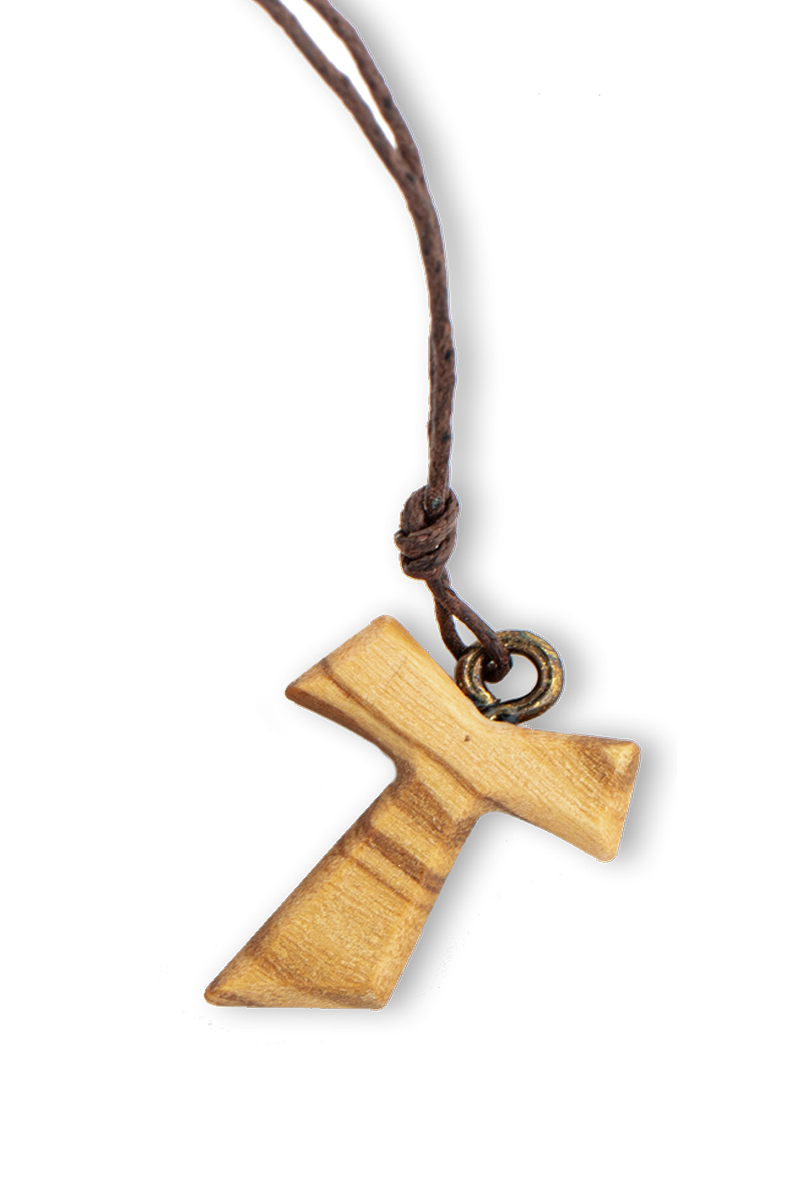
          You’ll notice that in my reasons I haven’t explicitly cited Scripture or my faith. Faith is certainly a huge influence in my intention for being a vegetarian, but it is not a Scriptural or doctrinal mandate. There is nowhere in Scripture that says you should reduce your meat consumption and there is no Christian doctrine that says you should be a vegetarian. That said, there are many Christians throughout the centuries that have become vegetarians or have had plant-based leaning diets. I think that’s because when we cultivate compassion in our lives and seek to find God’s presence in everything around us, it inevitably effects the way we see animals and the way we eat as well. Does my faith have something to say about the way I eat? I say, yes. Some of the Christians and religious leaders that influenced me the most in my vegetarian diet may surprise you: early Christian monks and nuns, Francis of Assisi, John Wesley, Leo Tolstoy, Mahatma Gandhi, and… Mr. Rogers!

          What do the larsons eat?

          We eat a lot! And especially fruits and vegetables, of course! These days though there is a vegetarian substitute for almost everything, even hot dogs. So our diet doesn’t actually look that different from a lot of others. We just substitute the meat for something else. Impossible Burgers and Beyond Burgers are delicious! Generally though, we eat lots of Italian and Mexican foods, which are easy to make vegetarian. We’re always up for trying a new vegetarian dish.

          Honestly, after 12 years of not eating meat, we hardly even think about our diet anymore. It’s not something hard to do, though at first there might be a learning curve. People tell me all the time that “they could never be a vegetarian,” and maybe that’s true, but when I became a vegetarian I didn’t even like vegetables. I started small. I reduced red-meat consumption. I ate vegetarian for Lent. I tried new things. It was something I learned and came to love. Maybe you would like it to!
          Final Homily at Good Shepherd

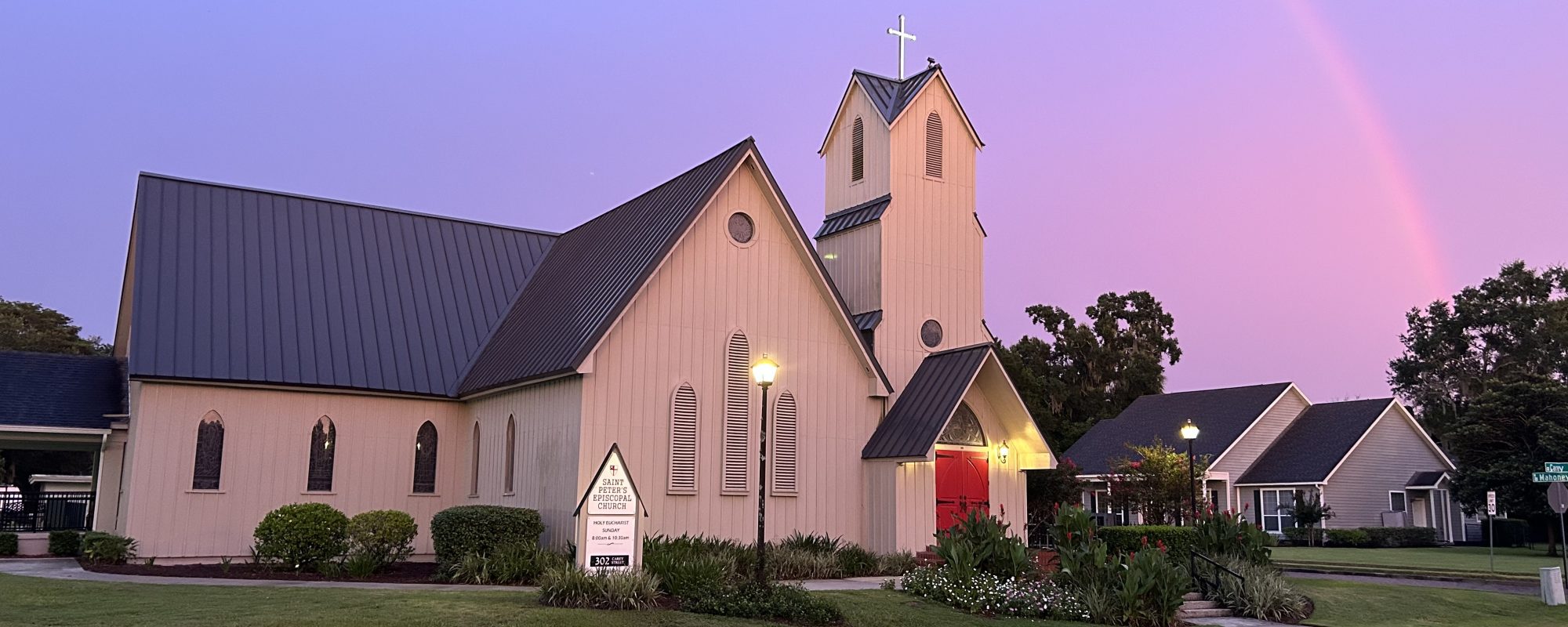
          Yesterday my family said goodbye to Good Shepherd after being with them for three years and 6 days. It was an amazing three years and six days, and we are incredibly grateful to have been part of such a wonderful community. We will miss them dearly, even while being excited to join our new parish family, St. Peter’s Episcopal Church in Plant City, FL.

          Here is my last homily at Good Shepherd. You can find the full text of the homily here.

          New Homily and More: Casting Out, Welcoming In

          Find the full text of the homily here.

          RESOURCES FOR FURTHER REFLECTION

          Prayer Practice: The Welcoming Prayer

          The prayer of welcoming grace into things unwanted or uncomfortable resonates with the Welcoming Prayer, developed by Mary Mrozowski, a lay contemplative, and Thomas Keating, a Trappist Monk. This has been one my core prayer practices. Click the above link to learn more about the practice.

          Homily: The Welcoming Prayer

          I also preached a sermon on the Welcoming Prayer a couple years ago. Find it at the link above.

          Teaching from the Book of Occasional Services on Exorcisms

          There is a very brief explanation of exorcisms in the Episcopal Church’s Book of Occasional Services. If you are interested in learning more, click the above link and scroll down to page 233. While you are there, look at some of the beautiful occasional services included in the book.

          Poem: Roommates

          I thought when peace moved in
          she’d send anxiety a notice of eviction.
          Instead she became his roommate.
          And at night when he paces the living room,
          she makes him a cup of tea.
          And in the morning when he snoozes the alarm clock,
          she lets in the sunlight.
          I thought when peace moved in
          anxiety would move out.
          But anxiety didn’t go anywhere.

          He’s still there.
          He’s just no longer alone.